

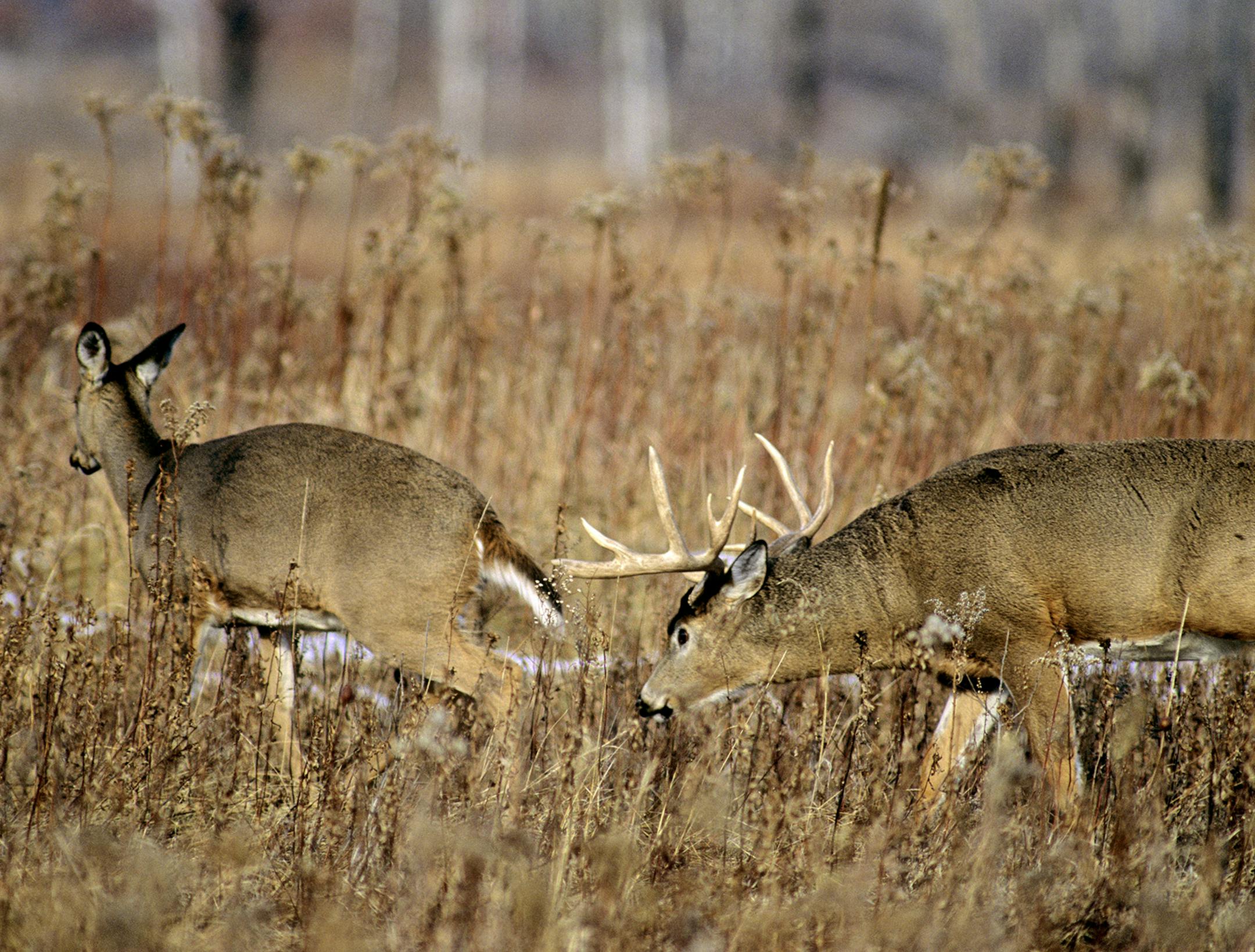
The best days of the Minnesota whitetail rut are nigh and evidence abounds.
Bucks, with necks swollen and antlers polished, have emerged from thick cover to patrol for does in the open. They're rubbing trees with their antlers and scraping the ground. The scent of estrus wafting from potential mates is starting to drive them crazy.
Other signs the rut is here? Blaze orange clothing hangs on porches from Winona to Warroad and hundreds of thousands of hunters are tuning up their guns. They know better than anyone that the Minnesota firearms season — opening Saturday statewide — is a can't-miss harbinger of peak breeding season in the whitetail kingdom.
Since 1959, the Minnesota firearms deer hunting season has opened on the Saturday nearest Nov. 6, inextricably linking it to the short window of time when bucks make themselves most vulnerable to ambush. Transfixed by romance in a physiological change triggered by length of day, they lose awareness of their surroundings.
Steve Merchant, a veteran wildlife expert for the state Department of Natural Resources (DNR), said he agrees with certain hunters who say more Minnesota bucks would live longer — growing bigger racks in the process — if the firearms season was delayed until after the rut. That's the way it works in Iowa and Wisconsin.
But harvesting deer during the rut is as cherished in Minnesota as fishing for walleyes is in mid-May. Trophy whitetail hunters and others who have fought in the past to delay the firearms season have all but given up on changing the prevailing mind-set.
"People don't like change," said Scott Bjornson, a member of Preston-based Bluffland Whitetail Association, a hunting group that advocates for improved deer management. "We've pitched it [a later hunting season] many times to the DNR, but in all fairness to them, the public support just isn't there.''
According to DNR deer harvest reports, it's typical for antlered deer to represent 50 percent of Minnesota's annual kill. If you were to include antlerless male fawns, the percentage of bucks harvested can range much higher. Last year, when female deer received the protection of restrictive permit allocation, 58 percent of the state harvest was antlered bucks.


