Ships these days may say they're aiming for islands or dropping anchor in the globe's most perfect ports. But, for most, the real goal of cruising isn't to go anywhere at all. It's to exist at sea. Sun and winds scrub the deck, everyone floats on an ocean of cuisine and eventually washes up at the bar or buffet.
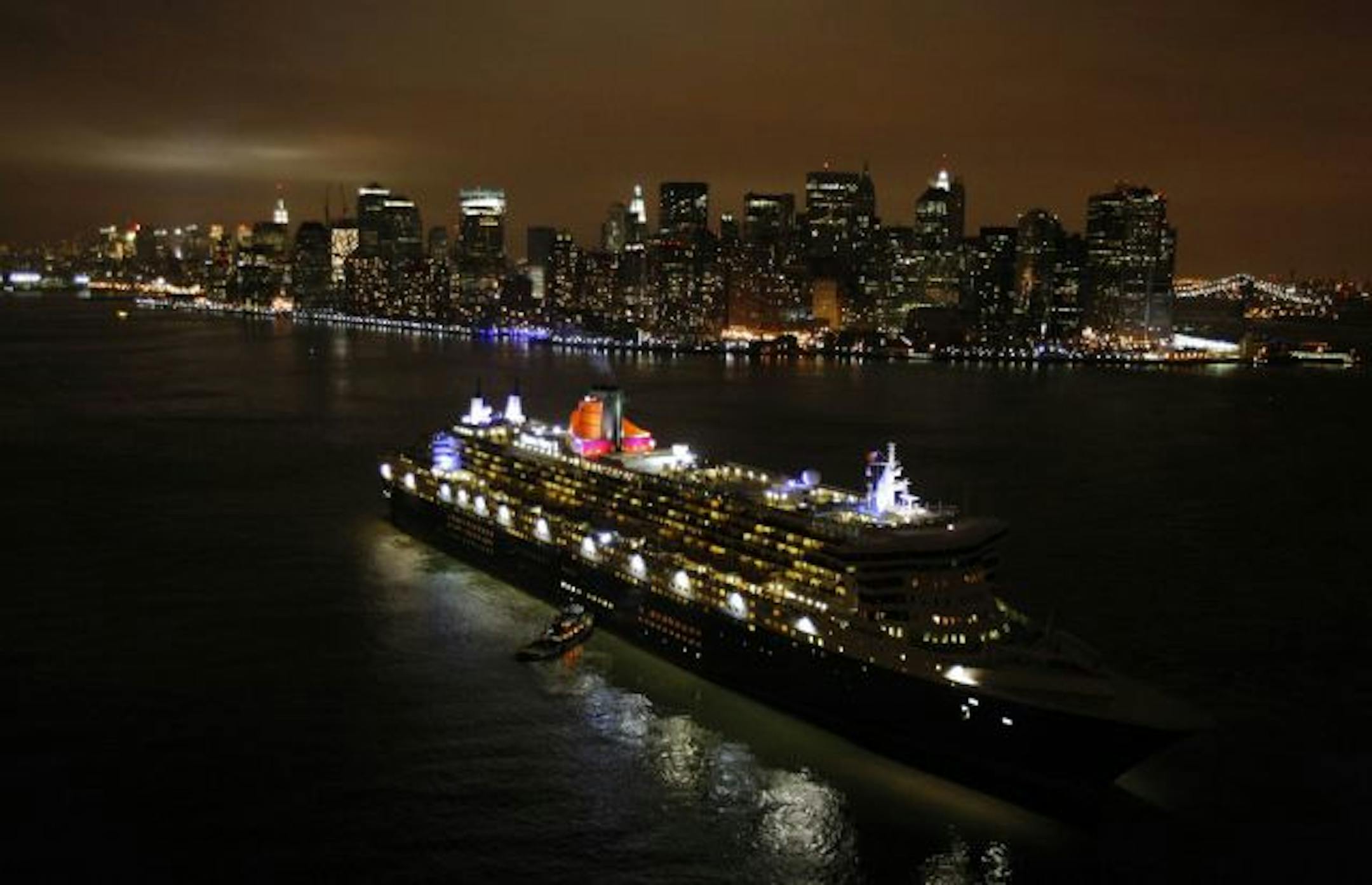
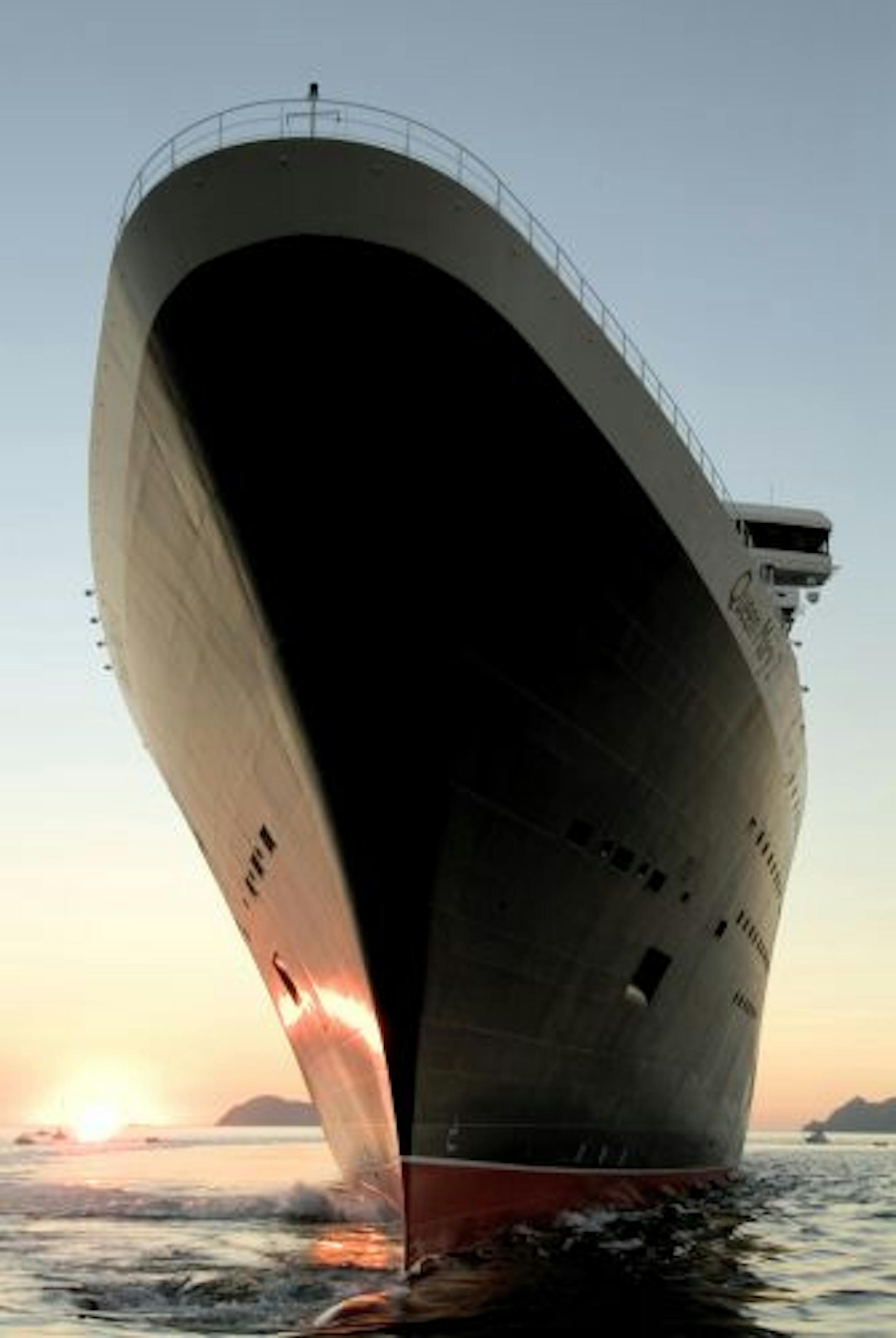
One of the best ways to enjoy pure sea -- plus an onboard life that isn't chopped up by stops and starts, gangplanks and tenders -- is to sign on for a six-day Atlantic crossing aboard the highbrow Queen Mary 2, one of the most classically styled ships afloat, which happens to be celebrating its fifth anniversary in 2009.
To this day it seems like a strange dream to me that nearly all of the Atlantic liners --the Queen Mary 2's direct ancestors -- are gone. Wooden deck chairs, tartan blankets, beef bouillon in bad weather, rope coils called "quoits." Little traditions like these filled up your five or six days out of sight of land. That, and making it through a high and deep domain that is as dangerous as the moon.
I grew up in Chelsea on Manhattan's West Side, watching from our rooftop as liners like the original Queen Mary, the France and the United States steamed up the choppy Hudson. I would bring binoculars to keep track as they obeyed their tugboats and disappeared into their piers. Then I'd run up the stairs again to see them sail back out, and wish I could invent a way to get aboard.
Later, I did sail out on the first Queen Elizabeth, when my parents moved us to London. My brother and I tried to explore every deck of this steel world and began to believe that it was a building like the one we lived in, one that was tipped on its side.
On my QM2 crossing from Southampton to New York this past June, I was glad to find that many of the old North Atlantic traditions are still alive onboard. And when the trip ran into spits of slanting rain and wind, this felt almost historic, like the black-and-white shots you see of travelers trying to balance on a tilted deck.
For me, a Caribbean cruise lacks the element of adventure. Take an ocean trip, like ours, and you end up in watery valleys that, unlike those in a landscape, are constantly being reshaped by wind and weather. The light in the Atlantic is more fickle than any other. One minute, silver sparkles from every wave. The next, the ocean has stolen the color of the seagulls that fly over it: blue-gray with tips of white.
Capt. Bates here