
Advertisement

Ackman reveals his candidates

The activist investor whose fund owns 7.8 percent of Target wants to seat directors friendly to his ideas for improvement.

May 12, 2009 at 4:26AM
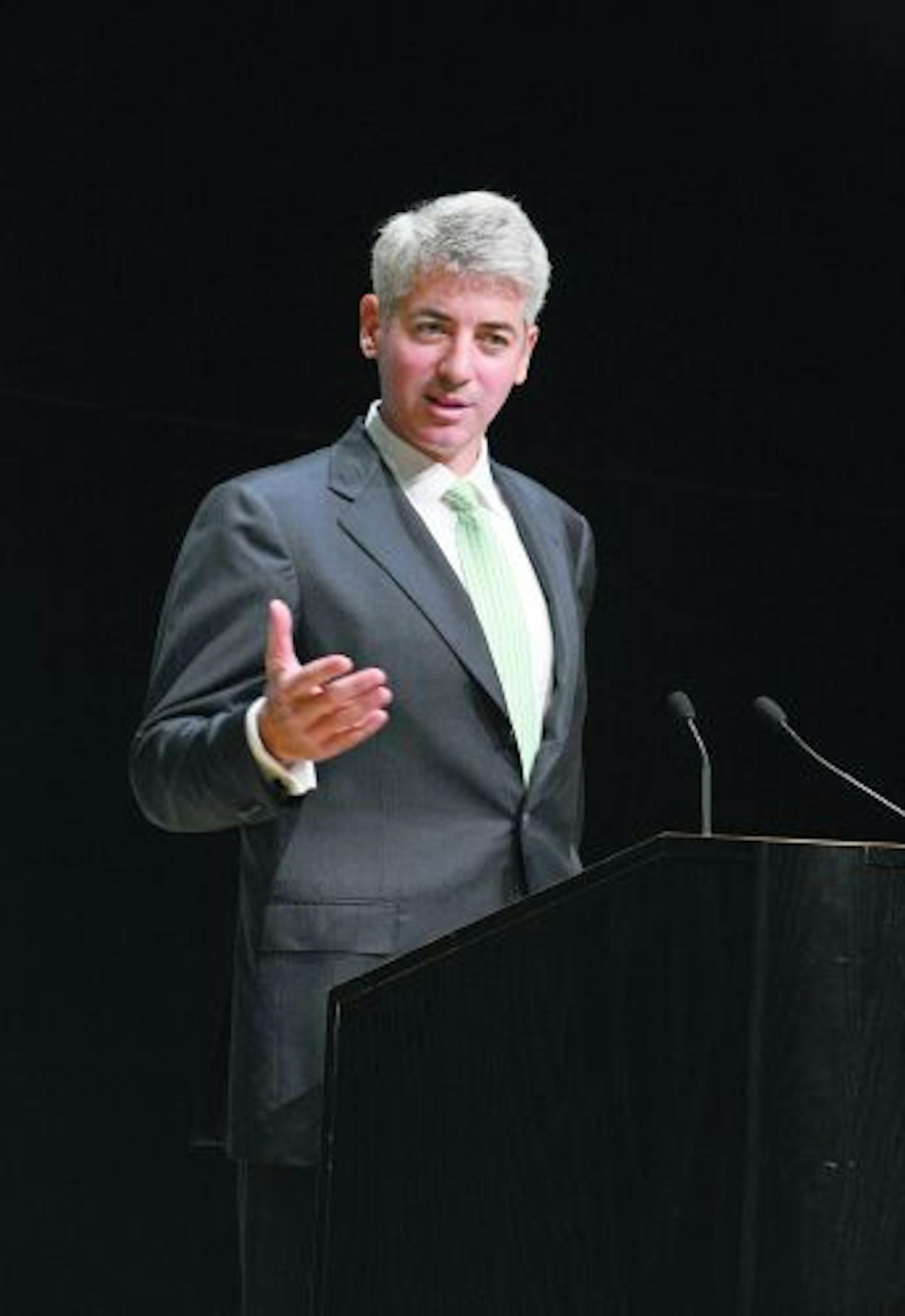
In October 2008, William Ackman spoke to investors at Lincoln Center. Ackman makes a lot of noise for someone in the hush-hush business of hedge funds. He harangues executives, goads boards, talks this stock up and that one down -- all in search of profit. On Thursday, someone listened. After a campaign by Ackman that had lasted for months, one of the nation's largest operators of shopping malls, General Growth Properties filed for bankruptcy protection.
In October 2008, William Ackman spoke to investors at Lincoln Center. Ackman makes a lot of noise for someone in the hush-hush business of hedge funds. He harangues executives, goads boards, talks this stock up and that one down -- all in search of profit. On Thursday, someone listened. After a campaign by Ackman that had lasted for months, one of the nation's largest operators of shopping malls, General Growth Properties filed for bankruptcy protection. (Associated Press - Nyt/The Minnesota Star Tribune)
Advertisement

In a proxy contest that is becoming more highly charged by the day, activist shareholder William Ackman on Monday introduced his nominees for Target Corporation's board, saying his slate would bring fresh ideas to an insular board with an average member tenure of 10 years.

"This board reminds me of a 'Friends of Bob' -- Bob Ulrich -- board," said Ackman, referring to Target's legendary CEO and board chair who retired in January after 41 years with the company.

"What's missing is people who can challenge the CEO, people that can add value to the CEO, people who can contribute to creating strategic value in the company," he said. "We think that's a key omission on the board."

Ackman and his four other nominees took to the stage in a New York auditorium for a two-hour presentation and webcast in which shareholders, the media and an online audience asked questions ranging from Ackman's contentious real estate plans to Target's credit card operations and grocery stores.

Ackman is pushing a slate of five candidates, which he calls "shareholder choice," that he believes will boost the board's experience in retailing, credit cards, real estate and corporate governance. Minneapolis-based Target backs the re-election of four members, saying they have experience as well as Target's long-term interests at heart.

The high-profile contest between the nation's second largest discount retail chain and the billionaire hedge fund manager is heating up as both sides lobby for votes before the May 28 shareholders meeting. Ackman said his Pershing Square Capital Management will spend $10 million pushing his slate, while Target estimates an outlay of $11.1 million.

Ackman blamed Target's board for strategic mistakes -- including not selling off all of its credit card receivables and being late to the grocery business -- that has led the retailer to lose ground to Wal-Mart during the recession.

"The company blames its underperformance on the economy," Ackman said. "Target is not Gucci. It's a business that should be able to do well even in difficult economic times. We think this is a miss."

Advertisement

Despite Ackman's insistence that his proxy fight is much larger than real estate, the discussion turned time and again to his proposal that Target sell the land under its stores -- which he said is worth $40 billion -- and put it into a real-estate investment trust.

Target has rejected the plan as too risky because it would put its credit rating at risk at a time of economic uncertainty, when the company wants to keep its balance sheet strong.

Ackman sought to portray himself and his candidates as flexible and open-minded, saying that his real estate plan may not be the best one, but that it deserves a full hearing, something he said Target's board refused to give it. He also called it significant that Target's directors own less than 0.3 percent of company stock.

Ackman has a 7.8 percent stake in Target, making him the third-largest investor, although much of that is in the form of riskier options. When he began the proxy fight, his fund, which only has Target shares, had lost more than 90 percent of its value, though the stock has recovered from a multiyear low in March, when it was $25.37. It closed Monday at $42.73.

Target never had faced a proxy battle, but it is matching Ackman's strikes with its own guns blazing.

Before Ackman's event began, Target filed a "list of questions attendees may want to ask at the Pershing Square Town Hall." The retailer also released a nearly 70-page presentation it made to an influential proxy advisory company in which it lays out its case for its candidates and its position. It underscored, in a press release issued Monday, that "the real reason Pershing Square launched this fight is because Target did not agree with Pershing Square's risky real estate agenda."

Advertisement

Ackman's slate also includes Michael Ashner, CEO of Winthrop Realty; Jim Donald, former CEO of Starbucks; Ron Gilson, a law professor and expert in corporate governance; Richard Vague, CEO, Energy Plus Holdings.

Target is backing Mary Dillon, executive vice president of McDonald's Corp., Richard Kovacevich, Chairman of Wells Fargo & Co.; George Tamke, Partner, Clayton, Dubilier & Rice Inc.; and Solomon Trujillo, CEO of Telstra Corp.,

Jackie Crosby • 612-673-7335

about the writer

about the writer

Jackie Crosby

Reporter

Jackie Crosby is a general assignment business reporter who also writes about workplace issues and aging. She has also covered health care, city government and sports. 

See Moreicon

More from Business

See More
card image
Renée Jones Schneider/The Minnesota Star Tribune

The Wayzata estate on Lake Minnetonka was quietly shopped in 2024 for $68 million and officially listed last year at $55 million before this latest re-marketing.

card image
card image
Advertisement