

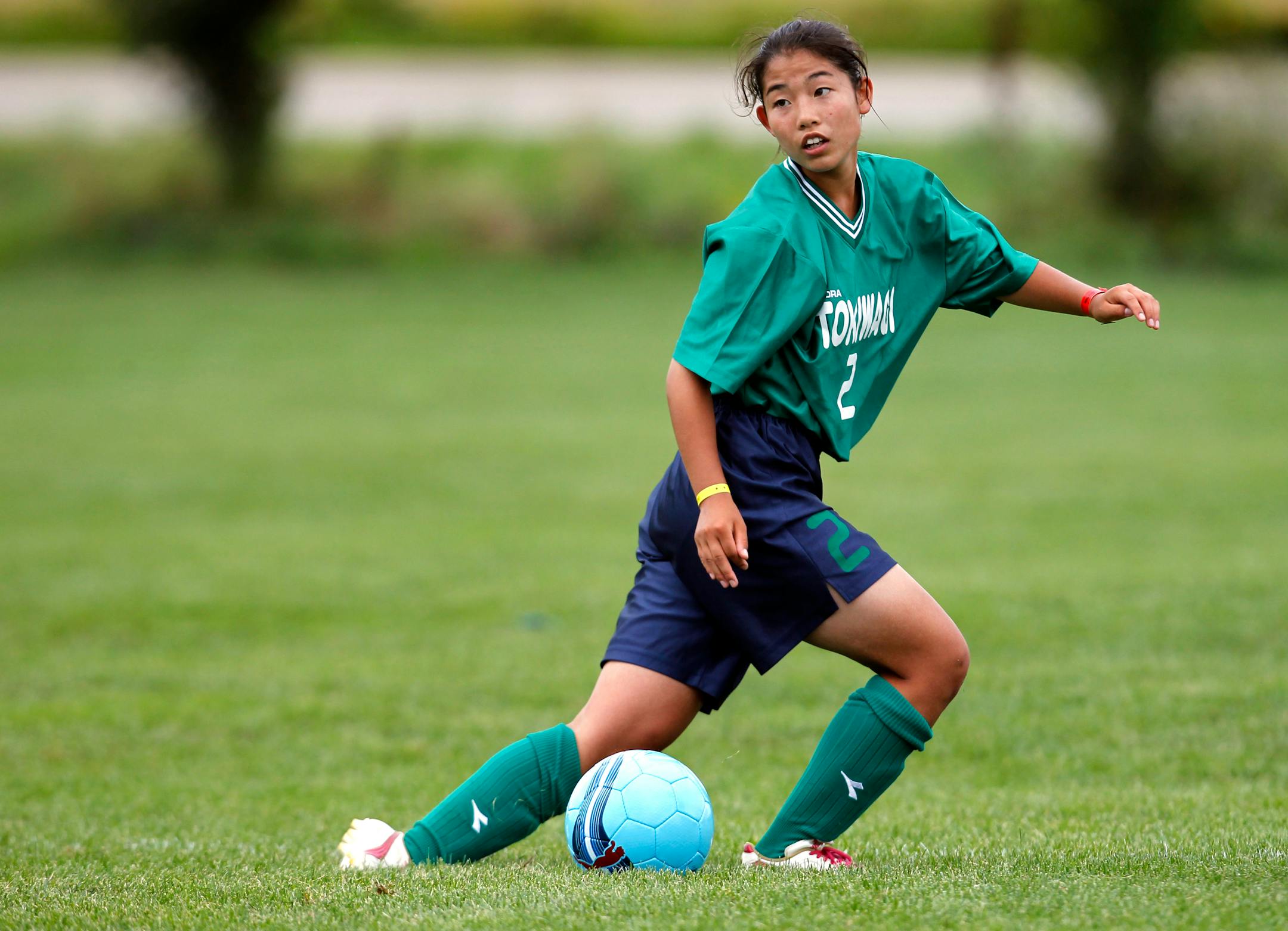
Haruka Nihei curled up in a corner inside her home, cringing in disbelief at the scene before her eyes.¶ Broken chairs, tables, shelves and other debris cluttered the room. Minutes before, a powerful earthquake hit her hometown, the coastal city of Sendai, Japan.
The frightened 16-year-old burst out the door of her home, seeking safety. Nearby, a fire crew barked orders for everyone to leave the streets. Nihei fled to the highest point in the city.
"There," Nihei said, referencing her location in a picture book that displayed a building in the midst of rubble chunks, clumps of dirt and wasteland. "I was there."
Nihei is part of the elite-level Tokiwagi Gauken contingent at the Schwan's USA Cup international soccer tournament in Blaine. On Wednesday, she remembered clearly that horrific day in March 2011 when the earthquake and tsunami struck her home country.
From atop the building -- a five-story school -- she watched the tsunami wave plow through her home, obliterating it piece by piece. She felt helpless. She felt sad, but thankful to be alive.
"I met my family at the school," Nihei said through a translator. "They knew where I would go."
The tsunami and the mega-thrust earthquake left the city decimated. Most of Sendai was underwater. The Fukushima Daiichi nuclear power plant reactors exploded. Rubble littered the land. Boats and vehicles lodged in buildings. Remains of homes were on fire.
More than a year later, the death toll in Japan is at more than 15,800, with at least another 2,900 missing.


