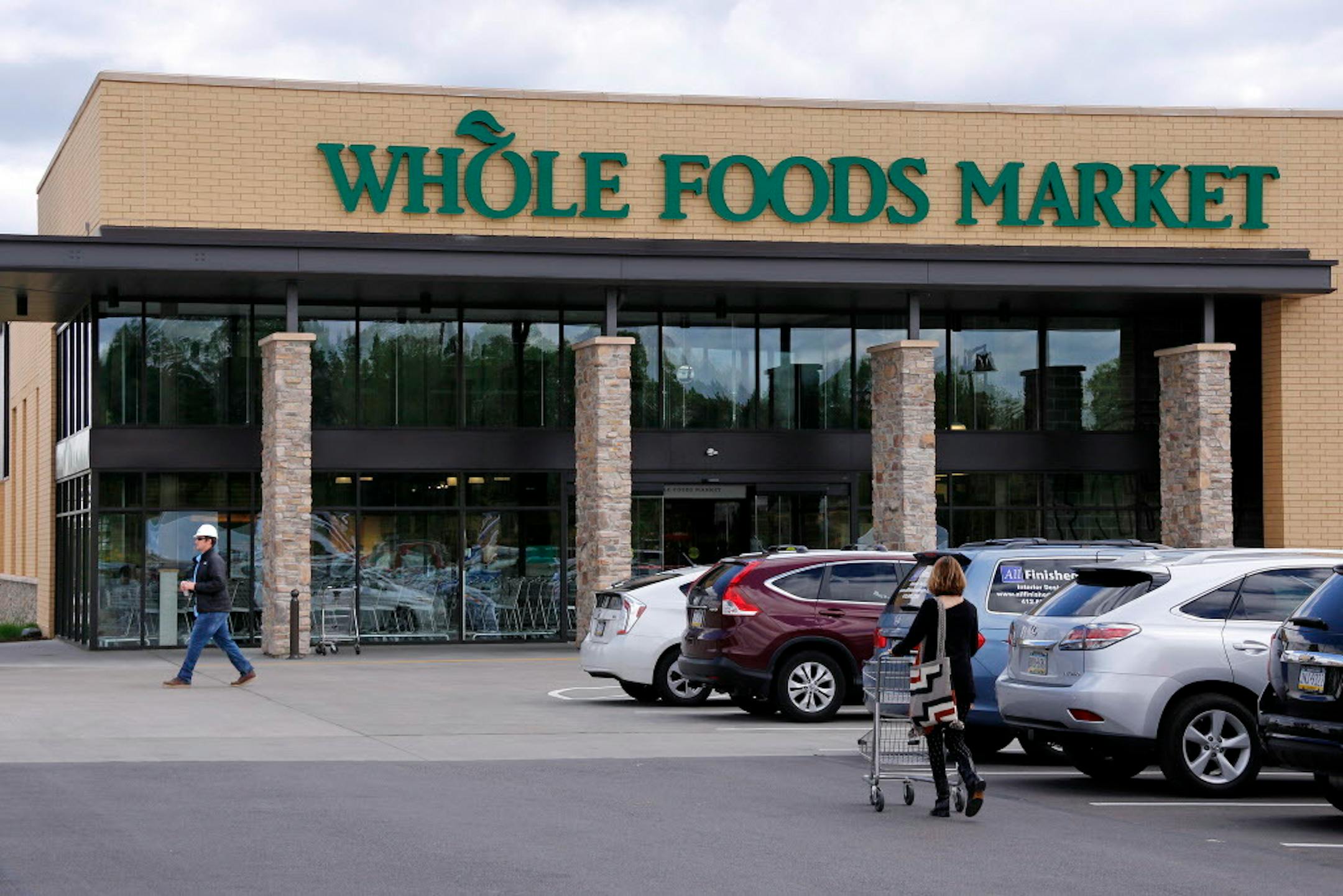
NEW YORK — Amazon is buying Whole Foods in a stunning move that gives it hundreds of stores across the U.S. — a brand-new laboratory for radical retail experiments that could revolutionize the way people buy groceries.
The deal valued at $13.7 billion unites the company that persuaded people to buy books — and then everything else — online with the grocery store chain that fell behind as shoppers found "good enough" alternatives to the organic and natural foods it helped popularize.
Amazon already offers grocery-delivery services in five markets, but the Whole Foods purchase would let it expand to many more. Amazon also offers grocery shipments elsewhere, but that's tough with perishable foods.
The deal could be "transformative," Moody's lead retail analyst Charlie O'Shea said, "not just for food retail, but for retail in general."
Groceries are already a fiercely competitive business, with low-cost rivals like Aldi putting pressure on traditional supermarket chains and another discounter, Lidl, opening its first U.S. stores just this week. Whole Foods itself had launched an offshoot chain named after its "365" private label brand in a nod to the popularity of no-frills chains.
The Amazon-Whole Foods combination could put even more pressure on those chains and other big grocery sellers. Walmart, which has the largest share of the U.S. food market, has been working on lowering prices, while Target has been struggling to turn around its grocery business.
"Dominant players like Walmart, Kroger, Costco, and Target now have to look over their shoulders at the Amazon train coming down the tracks," O'Shea said.
Online delivery of groceries so far has been tough for any company to pull off because of customers' concerns about the quality of meat and produce, Wedbush Securities analyst Michael Pachter said. But if customers know that what they are getting is the same as what they'd get at the local store, they are more likely to try it out.