Of the 150 or so cookbooks in my kitchen's library (I'm old school: I prefer my cooking instructions via Gutenberg rather than Jobs), I'm guessing that there are maybe 25 or 30 that are regularly pulled from the shelf. A half-dozen or so of those are referenced with some frequency. The rest? I'll crack them if I'm looking for inspiration, or give them a berth on my nightstand for bedtime reading, or recycle-and-replace with compelling new (or at least new to me) titles.
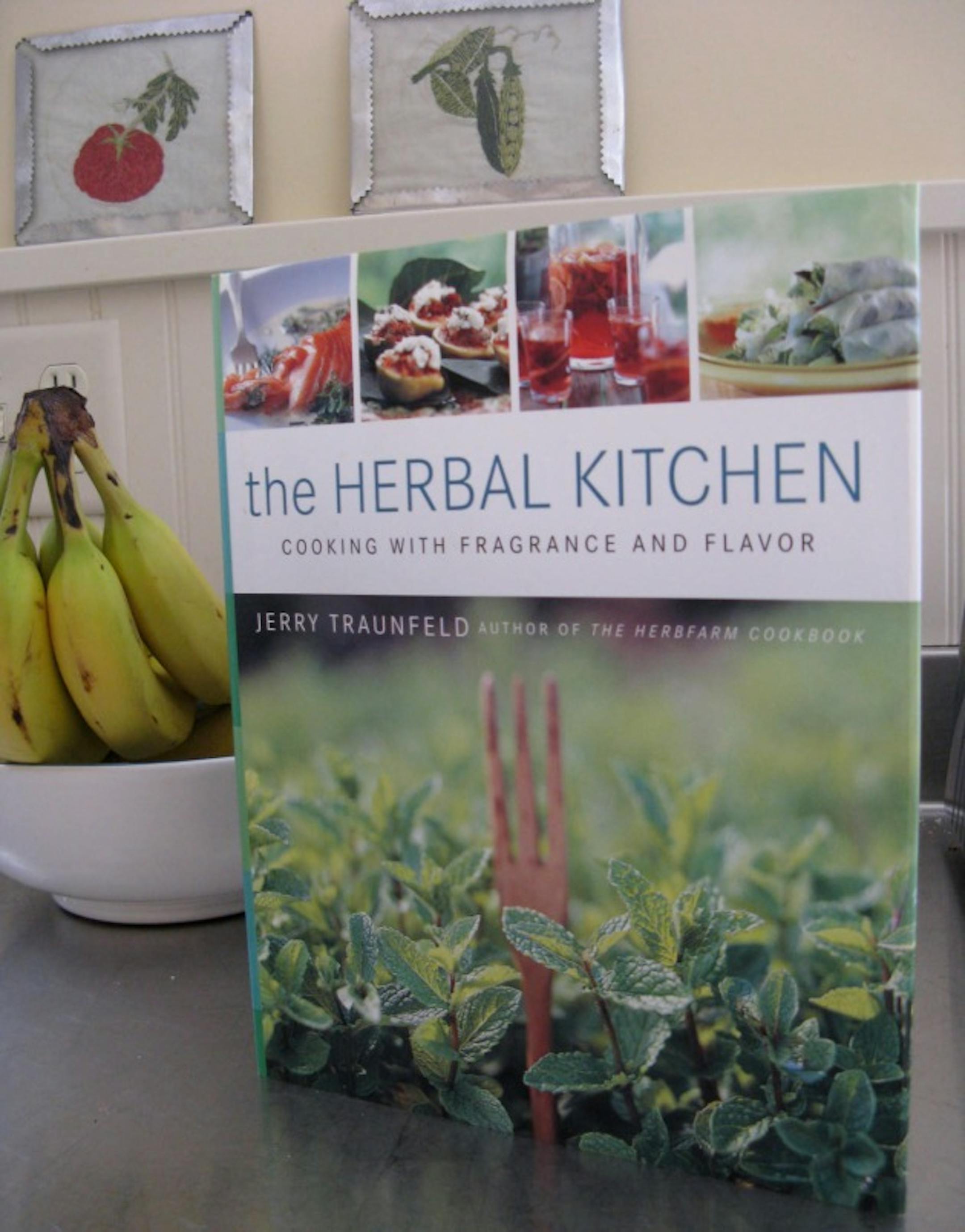
In the summer months, "The Herbal Kitchen" definitely belongs in that most-looked-at camp. In the seven years since Seattle chef Jerry Traunfeld published this beautiful and useful title (it's still in print), I've probably made a third of its recipes, some of them so often that I could prepare them from memory, including crostini topped with smoked trout and marjoram, smoked salmon stuffed eggs dressed with dill and chives, fettuccine tossed with herbs and ricotta, a rich basil-zucchini gratin, gin and tonics muddled with rosemary, a fizzy basil-lime soda and scallops served on a colorful summer succotash.
Traunfeld wrote the book near the tail end of his 17-year tenure at The Herbfarm, the extraordinary suburban Seattle farm/restaurant; since then, he has moved on to establish the critically acclaimed Poppy in that city's Capitol Hill neighborhood ("Traunfeld takes humble to haute levels," raved my pal Providence Cicero in the Seattle Times).
What I appreciate most about "The Herbal Kitchen" is that it's a home cook's book, not a restaurant chef's book. The recipes reflect Traunfeld's passion for garden-fresh herbs and vegetables, but he translates his expertise into layman's language and crafts workable, approachable recipes. Also, it's so seasonal that I'm tempted to carry the book along when I'm shopping the farmers' market.
Cooking from "The Herbal Kitchen" has been a learning experience, too. Like many cookbooks, Traunfeld devotes his first chapter to a brief herb tutorial, followed by some key techniques. Here's one that I found immediately useful: "When culinary school graduates first start working in my kitchen, they invariably want to chop herbs to dust," he writes. "Even many home cooks are inclined to finely mince fresh herbs, as if they shoulid look like the tiny flakes from jars of dried herbs. Easy does it! When you over-chop herbs they bruise and loose their identity. Unless you are making a pesto or puree, lean towards a coarser chop. Herbs can better express themselves in a dish if you can recognize them."
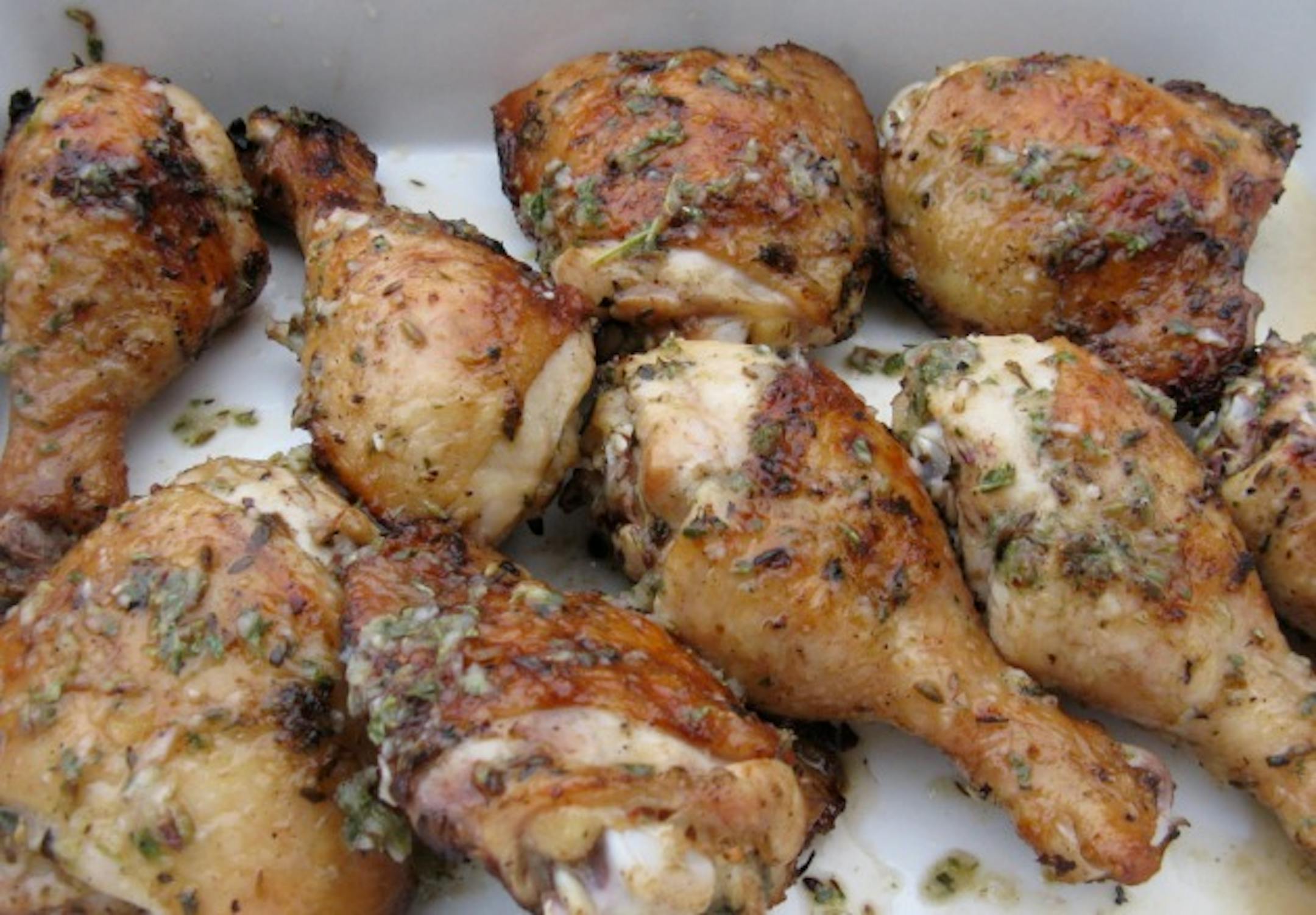
It has been ideal grilling weather this week, so I naturally turned to Traunfeld to tell me what to make for dinner. Easy: Chicken, marinated overnight in citrus, olive oil and herbs, served with a farmers market salad fortified with orzo. And it was easy. Rather than deal with a whole chicken -- which isn't exactly difficult, I know -- I bought the pieces I most prefer: drumsticks and thighs. The results were delicious, and the leftovers made for an excellent chicken salad.
As for the salad, I had picked up sweet corn and basil at the farmers market, so the rest was easy; I pulled it together while the grill was pre-heating (I sort-of skipped the refrigerate-for-an-hour instruction, although Traunfeld is right: it was even better the next day at lunch). I also cut the mixture of olive oil, vinegar and lemon juice in half (I was almost out of vinegar), and that worked well.
When we were clearing the table, all I could think was, 'Why don't we eat this way all year round?' And it got me thinking about my next "Herbal Kitchen" recipe: a lavender pound cake. I've already bookmarked page 242.