

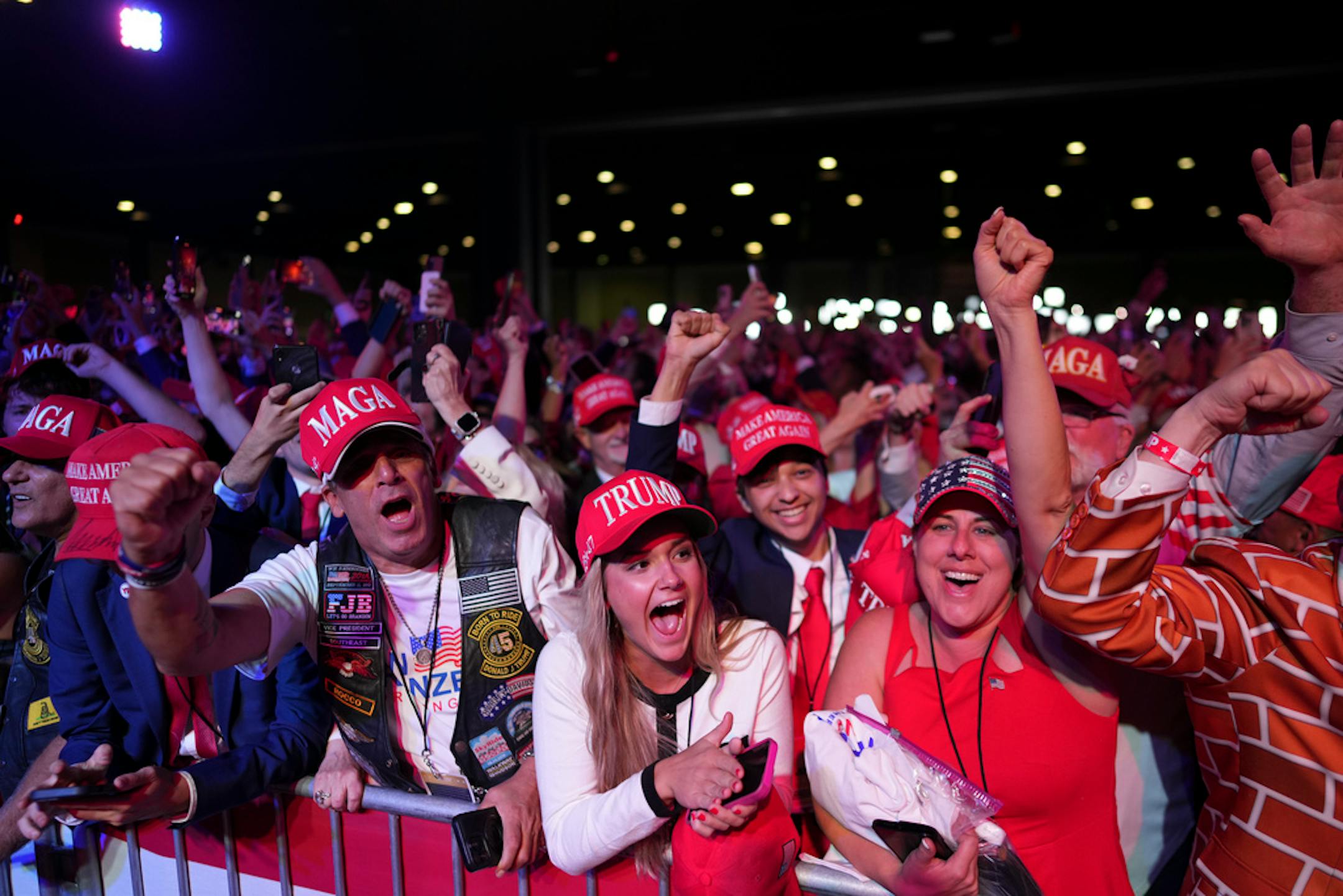
WASHINGTON — A disaffected electorate wanted former President Donald Trump to return to the White House, a blatant rejection of Vice President Kamala Harris and her nearly four years with President Joe Biden.
The Republican's victory came from a public so put off by America's trajectory that they welcomed his brash and disruptive approach. About 3 in 10 voters said they wanted total upheaval in how the country is run, according to AP VoteCast, a sweeping survey of more than 120,000 voters nationwide. Even if they weren't looking for something that dramatic, more than half of voters overall said they wanted to see substantial change.
Both nationwide and in key battleground states, the Republican won over voters who were alarmed about the economy and prioritized more aggressive enforcement of immigration laws. Those issues largely overshadowed many voters' focus on the future of democracy and abortion protections — key priorities for Harris' voters, but not enough to turn the election in her favor.
Trump's victory, however, wasn't a total mandate. Even as Trump prevailed in the electoral college, there were concerns about how he could wield his power. Most voters said they were very or somewhat concerned that electing Trump would bring the U.S. closer to being an authoritarian country, where a single leader has unchecked power. Still, more than 1 in 10 of those voters backed him.
Voters gave Trump the edge on their top concern: the economy
Anxiety about inflation was high nationally, and voters broadly believed that Trump would be better equipped than Harris to handle the economy and jobs. The key swing states of Pennsylvania and Wisconsin largely mirrored the mood of the nation.
The share of voters who said their family's financial situation was ''falling behind'' rose to about 3 in 10, up from roughly 2 in 10 in the last presidential election. Many voters were still reeling from inflation that spiked to a four-decade high in June 2022. About 9 in 10 voters were very or somewhat concerned about the cost of groceries, and about 8 in 10 were concerned about their health care costs, their housing costs or the cost of gas.
Trump eroded Democrats' traditional advantage among key groups


