

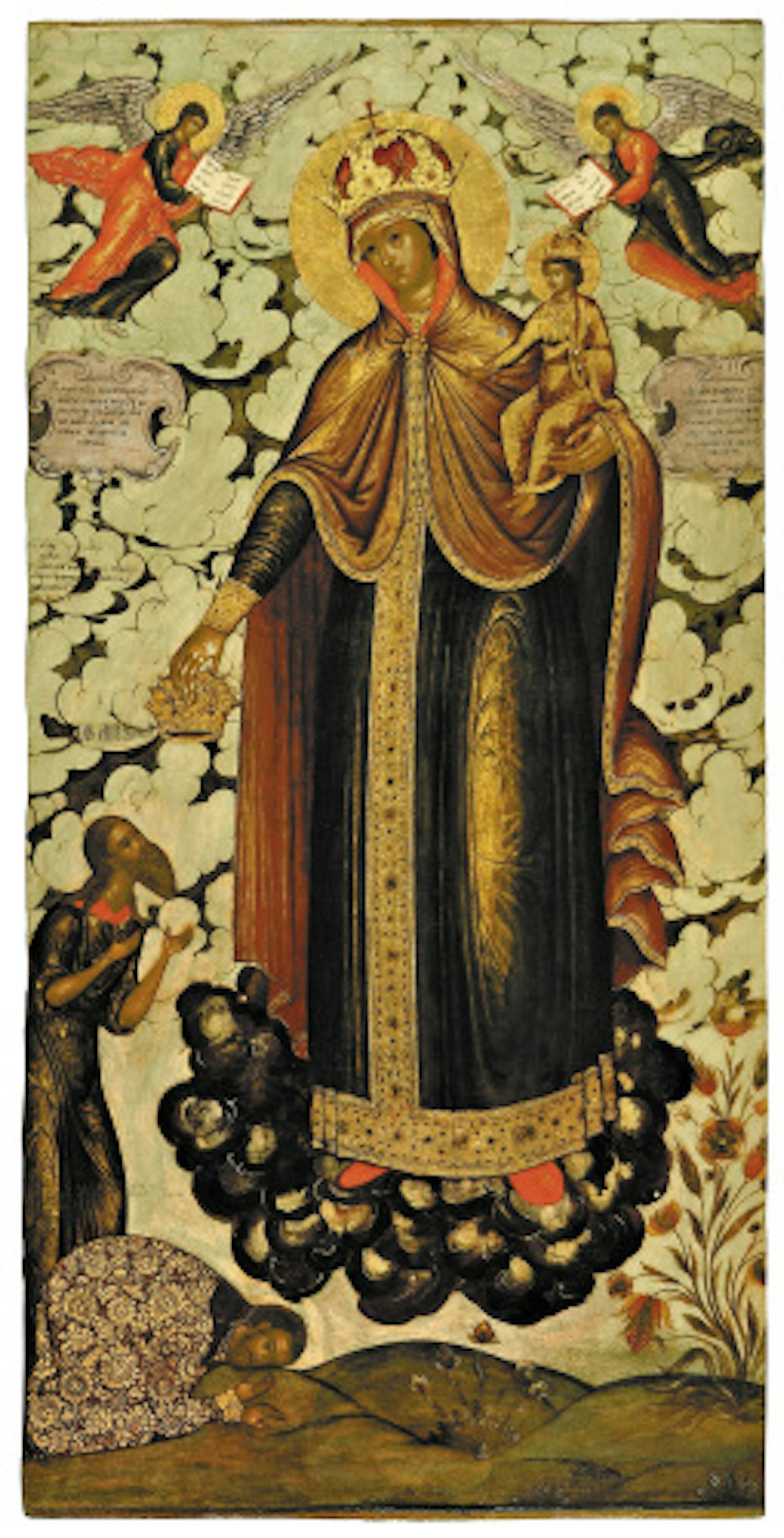
Although they're in an alien country thousands of miles from home, the 54 religious icons now at the Museum of Russian Art in south Minneapolis look supremely content in their temporary quarters in a former Congregational church.
During most of the past century -- through war, political turmoil and social unrest in their homeland -- these ancient paintings survived in a museum in Yaroslavl, Russia. Slated for destruction by Soviet authorities after the 1918 revolution, the icons were instead saved as folk art and preserved, virtually forgotten by the outside world, in a rustic metropolis on the Volga River about 175 miles northeast of Moscow.
Few, if any, of them have ever been exhibited outside Russia and they may never be seen again in such a harmonious setting. The museum's main gallery is the former church sanctuary where the paintings hang in alcoves painted in lustrous shades of pine green, purple and brown, colors that enhance the luminous gleam of the saint's gilded halos, lavishly brocaded garments, and the landscapes and village scenes around them.
Compared with icons more often seen in the United States, the Yaroslavl paintings are unusually large, 5 or more feet tall and about 4 feet wide. Along with figures from Russian religious history, they depict many of the characters and stories found in the religious art of Catholic Europe -- the Virgin Mary and her son, Jesus, his disciples, angels, God seated on a cloud, spirit birds, martyrs and saints.
Painted in northern Russia in the 1600s and 1700s, they are products of their time and culture, with olive-skinned people whose stylized features and lean, anatomically ambiguous bodies are common to Eastern Orthodox art. Executed in light, bright colors, their backgrounds feature richly detailed landscapes and buildings painted in vivid pink, azure and creamy ivory. In one large illustration of Christ's baptism, Jesus stands in a wide ribbon of green water as his childhood friend John anoints him from a set of stylized amber steps under the watchful gaze of red-robed angels wearing crimson booties. It's a scene of compelling action and mystery with crowds of elders nearby, God swirling overhead on a fluffy green powder puff, a grasshoppery Satan lurking in the distance, and gold-plate halos all around.
Personal journey to faith
Icons can be a tough go in these secular times, especially for nonbelievers unschooled in the finer details of Christian lore. But the sheer beauty and technical dexterity of the Yaroslavl paintings is likely to win over even skeptical viewers. Virtually everyone reacts to the unusual size of the paintings, said Maria Zavialova, the museum's Russian-born curator.
"There is always confusion that people worship icons, but that's not true. They're just part of the worship service," said Zavialova. "They're just there to bring this presence of the divine beings and to tell stories and serve as a focus for prayer. They were made for people who were illiterate but went to church from childhood, and listened to texts and knew prayers by heart. The icons illustrate every verse of the text and people would recognize this and follow the story."


