

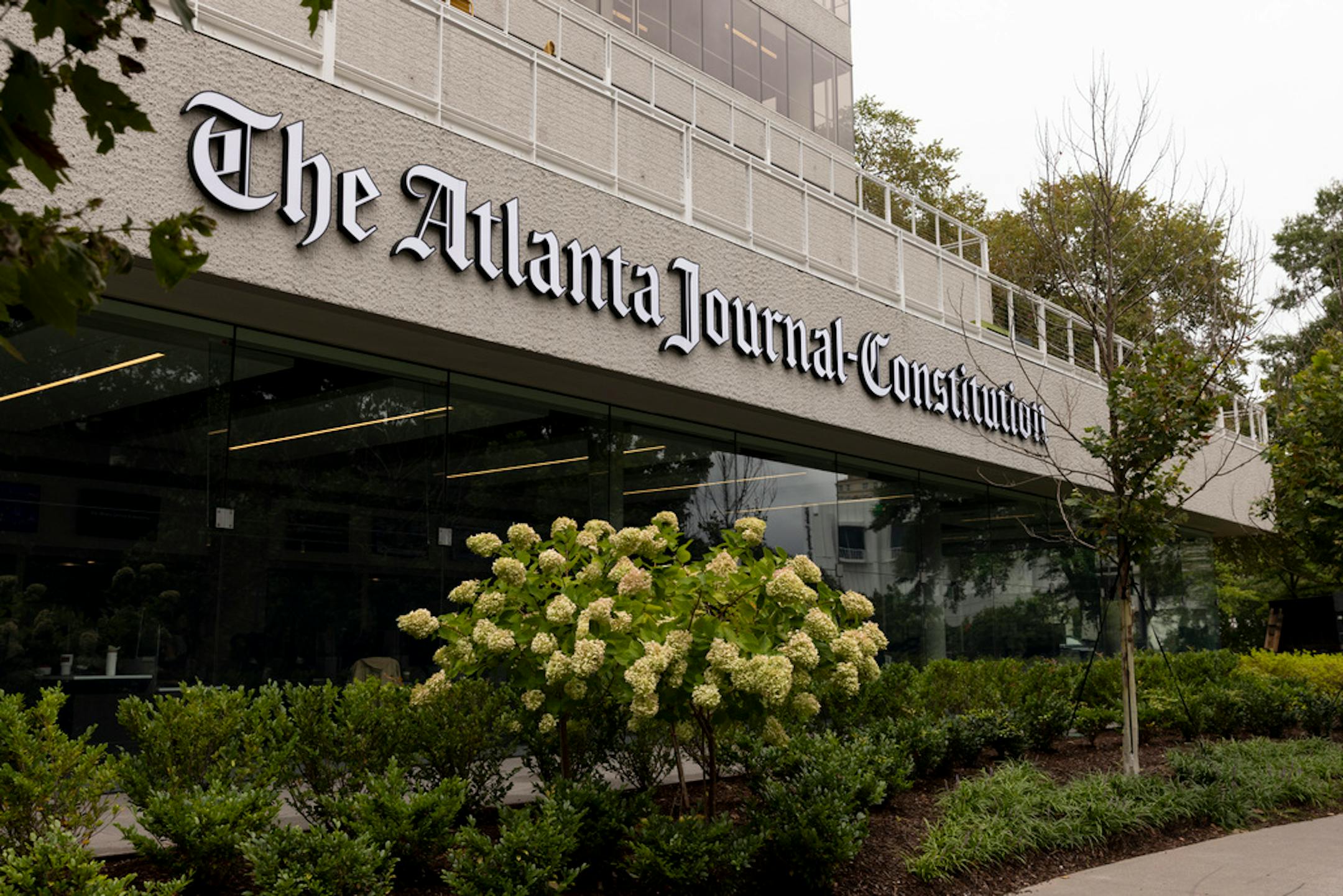
ATLANTA — When Andrew Morse joined the Atlanta Journal-Constitution as its president and publisher in January 2023, the company had plans to stop printing the newspaper by that June. He quickly hit the brakes.
The timing was not right, he told his new colleagues. The Journal-Constitution’s digital news product was not yet robust enough to compel enough readers to subscribe and make it profitable on its own.
Now, he said, the right time has come.
The Journal-Constitution will stop publishing a print newspaper at the end of the year, Morse said, and divert all of its resources into the digital news operation. The company has published in print since 1868.
“The fact is, printing newspapers and putting them in trucks and driving them around and delivering them on people’s front stoops has not been the most effective way to distribute the news in a very long time,” he said.
Still, the Journal-Constitution is one of the largest daily newspapers yet to abandon print. Local newspapers have faced precipitous declines in circulation for the past 20 years, and much of the advertising revenue long ago moved to online platforms. But most major American cities continue to have some version of a print newspaper, in part because the print editions often remain profitable, at least for the moment, unlike the online operations of many outlets.
Roughly a third of the country’s more than 1,000 remaining daily newspapers still print seven days a week, according to a 2024 report on the state of local news by Northwestern University. Many others have reduced their print frequency to cut costs: The same study found that about 180 newspapers that had once printed daily put out newspapers fewer than three days a week.
Some recent examples include the Star-Ledger, New Jersey’s paper of record, which stopped printing altogether in February after cutting back to six days a week in 2024. In Iowa, the Dubuque Telegraph Herald and the Cedar Rapids Gazette announced in January that they would cut their print frequency to three days a week, with the publisher of the Telegraph Herald blaming “the evolving landscape of news consumption and the economic realities of print media.”
