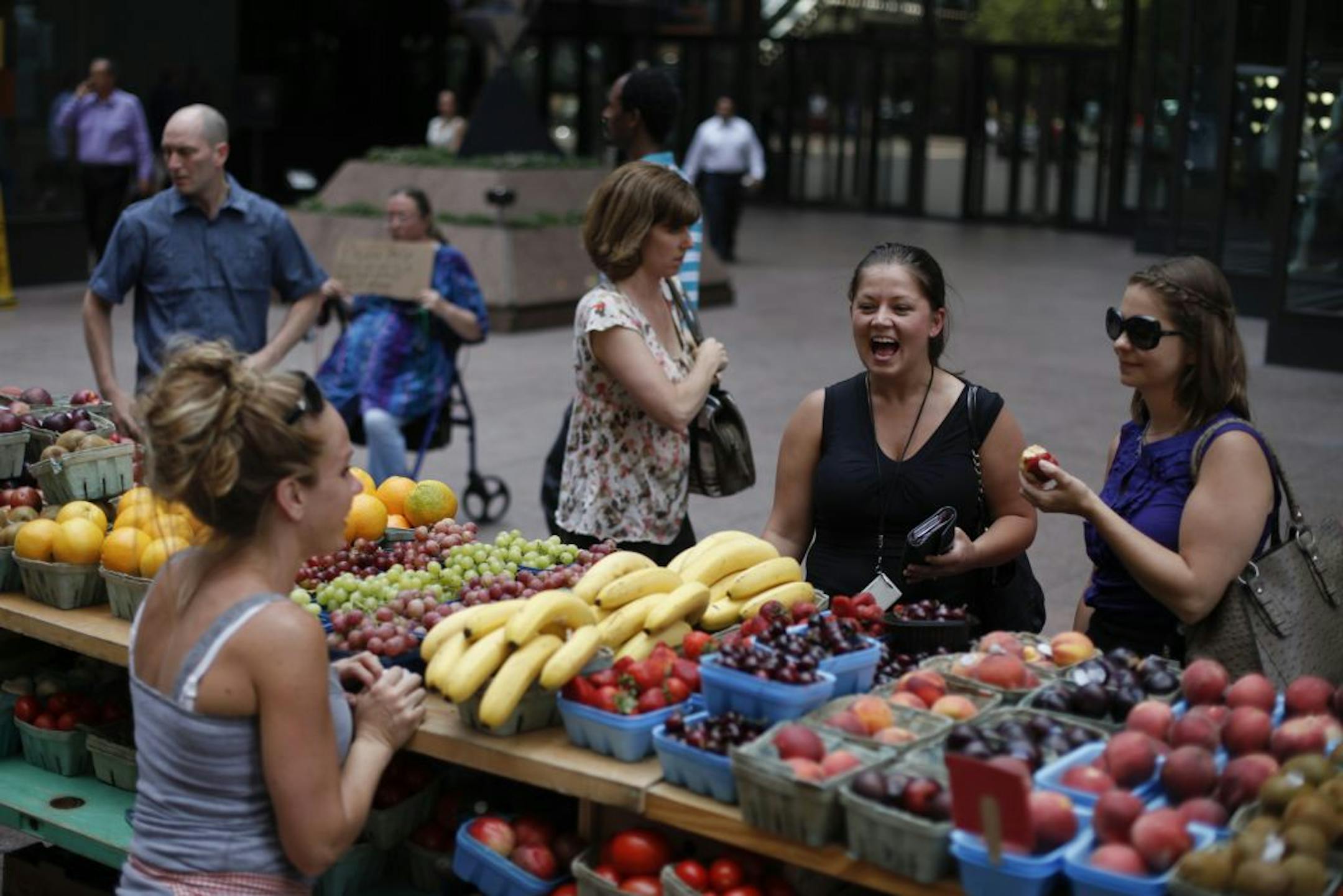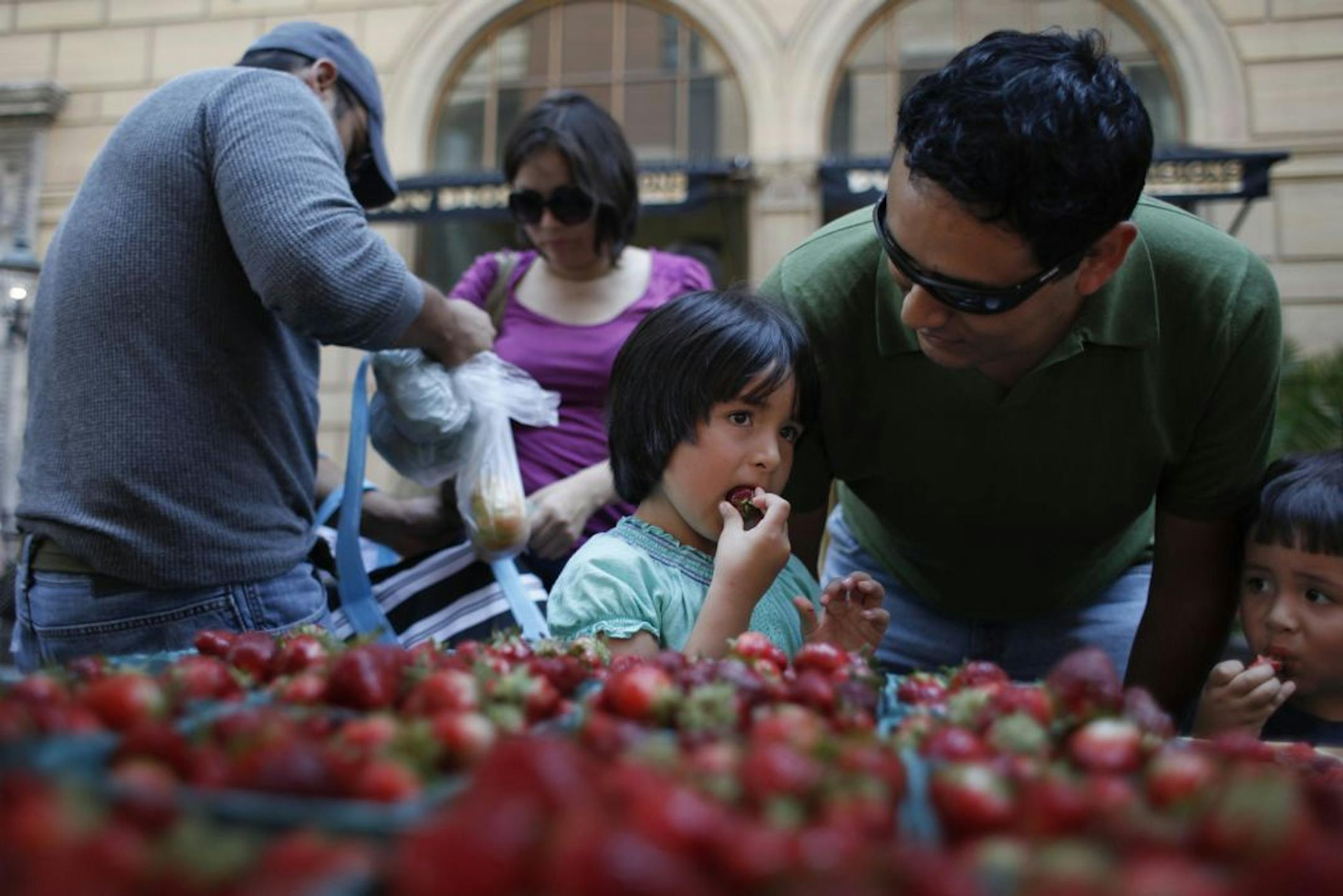
Michelle Beaulieu was browsing through herbs and fresh vegetables one recent morning at the Midtown Farmers Market -- one of six Minneapolis markets where shoppers can use electronic benefit cards and get a $5 Market Bucks subsidy to buy local produce.
"It's a good relief on my budget," said Beaulieu, who earns about $12,000 a year in her job with AmeriCorps. "My options are pretty limited. Most of the time I do my grocery shopping at Target."
Market Bucks is one of dozens of efforts across the country -- from New York City's proposed ban on 20-ounce pop bottles to more healthful snacks in Minneapolis parks -- that have sprung up in the latest attack on the nation's obesity epidemic. More than one-third of Americans are obese, and in Minnesota, every county has an adult obesity rate above 21 percent, according to the U.S. Centers for Disease Control and Prevention (CDC). Yet changing ingrained eating habits is difficult, and so far, there is limited evidence to link specific programs with lower rates of obesity or related ailments such as diabetes and heart disease.
One reason is that people think of food as a matter of personal choice -- not, like cigarettes, as something hazardous, said Simone French, director of the University of Minnesota's Obesity Prevention Center.
Changing food habits, French said, might require changing the entire "food environment" surrounding consumers.
"We've gotten desensitized about supersized portions. You don't even think a 20- or 32-ounce drink looks weirdly huge," French said. "There is no moderation in our food environment."
As a result, single strategies in isolation might not suffice to lower obesity or change eaters' relationships with food, according to Rebecca Payne, a coordinator in the CDC's Division of Nutrition, Physical Activity and Obesity.
Fighting market forces