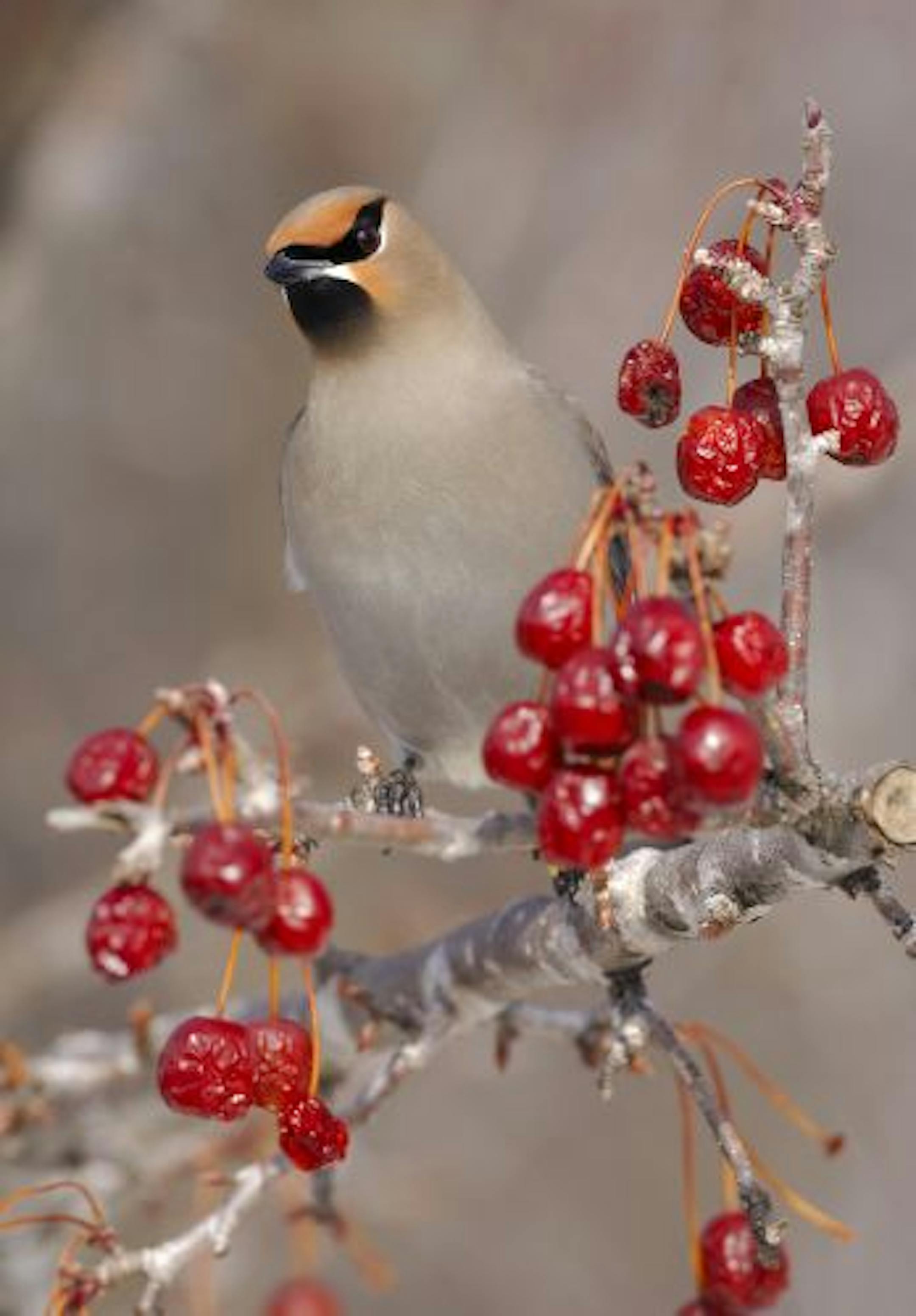
BRAINERD — Last week, while I was photographing a flock of colorful Bohemian waxwings as they fed on crab apples, a northern shrike -- a robin-sized bird of prey -- dive-bombed the waxwings, intent on a meal.
The shrike flew low and fast directly over my head as it rocketed into the flock. With a thunder of wing beats the waxwings headed for the heavens in a close-knit flock, a trait commonly used by songbirds to escape raptors. The shrike followed from below but eventually gave up as the tight wad of fifty or so waxwings circled several hundred feet into the air.
On a number of occasions I have witnessed shrikes capture songbirds as large as house sparrows, but never have I seen one successfully nab a waxwing-sized bird, which are roughly two-thirds the size of the shrike.
Winter viewing
Bohemian waxwings and northern shrikes are just two feathered winter visitors to Minnesota that are commonly "chased" by cold-weather birders. This winter Bohemian waxwings are being reported in huge numbers in a variety of locations in northern and central Minnesota. The classy-looking birds with black masks and a pointed crown of feathers atop their heads are most easily found by monitoring fruit trees, especially crab apple and mountain ash.
Northern shrikes are normally solitary birds. They, like the waxwings, feature a black mask. But the similarities end there. Shrikes are basically gray in color and, well, they kill for a living. Mice, voles and other birds comprise most of their prey. Unlike hawks and falcons, shrikes lack powerful feet and sharp talons. They kill using their hooked beaks. Shrikes are also known for impaling their prey on a thorn, stick or barbed wire fence, much like a butcher hangs a slab of meat. Thus shrikes are frequently called the "butcher bird." Often a shrike kills more than it can eat and will cache its prey by hanging it. On lean days it feeds from its larder.
Shrikes are not common, but a perceptive birder traveling rural roads during winter can spot several in a day because of the bird's habit of hunting in open country. Typically northern shrikes search for lunch from obvious perches such as power lines or other prominent locations. They sometimes hover in the air, watching for a meal on the ground. Look for shrikes around marshy lowlands such as willow and alder swamps.
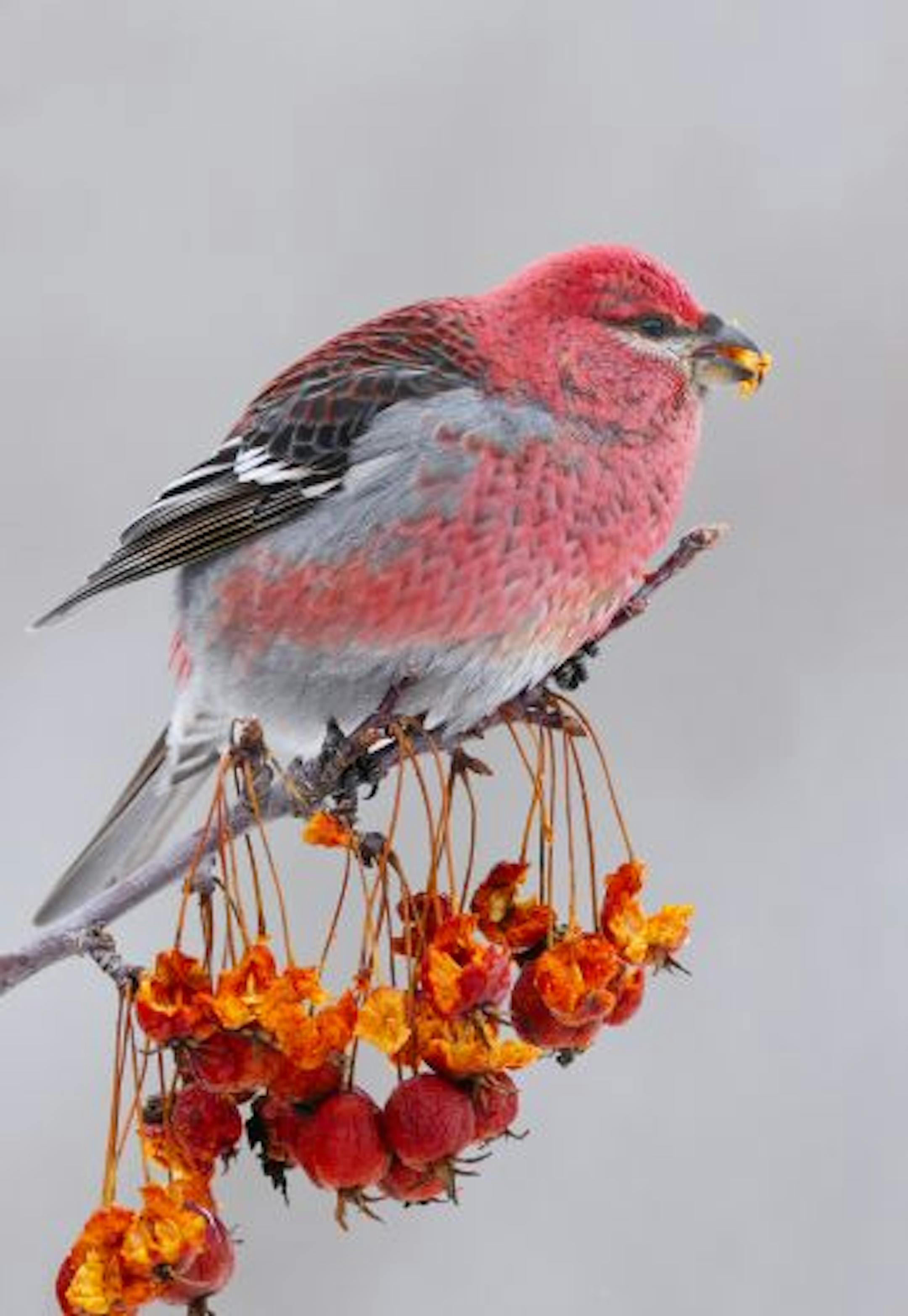
So far this snowy season, winter finches such as pine grosbeaks, common redpolls and white-winged crossbills have been notable by their absence, although sporadic sightings have been reported. Winter finches migrate to Minnesota in numbers that vary year to year, likely according to the availability of food in Canada. These birds are seed eaters and thrive primarily on the seeds of spruce and ash trees. During "good" winters, finches are attracted to backyard bird feeders, much to the delight of homeowners with an eye toward the outdoors.