

"I miss seeing birds," sighed a friend one January day. Hers was a common-enough lament, but it's based on a misconception. Winter isn't bereft of birds; in fact, it's a surprisingly good season for bird watching.
Yes, it's true that there are fewer birds to watch, because millions of songbirds, ducks, geese and herons departed for warmer places months ago. We're left with just the hardy few. But watching birds in winter offers an advantage we don't have in other seasons: With no foliage blocking the view, the birds are much easier to see.
Now, when a chickadee snatches a seed from your feeder, you can watch it land on a nearby shrub to hammer the shell open with its small beak, then pick out the nutmeat piece by piece.
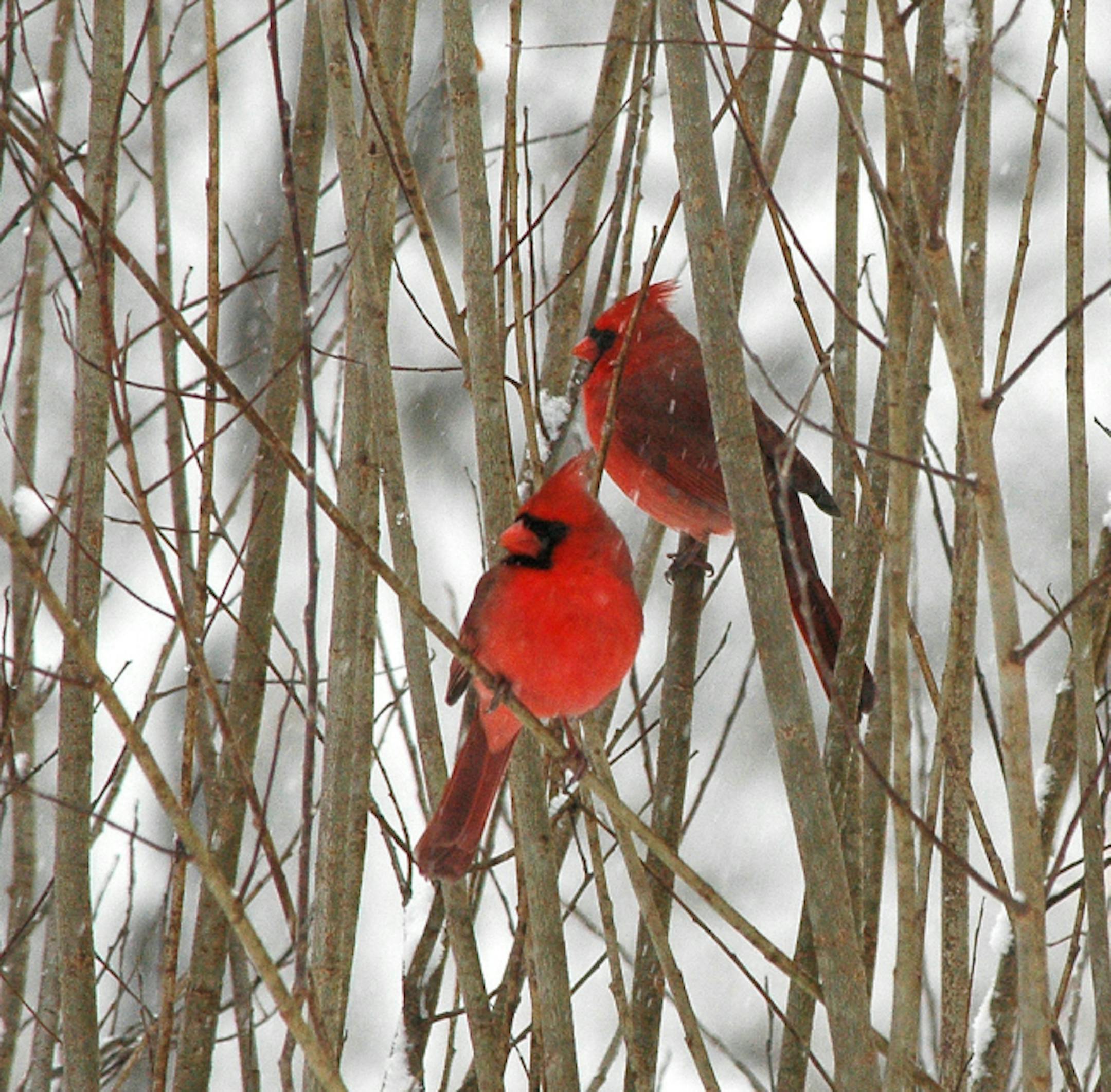
Cardinals are easier to spot and more fun to watch in the winter. Since they're not harried by building nests and tending young, they'll perch for minutes at a time on tree branches or gather by the dozen at dusk, to feed or enjoy a heated birdbath.
And noisy little goldfinches often roam in flocks, chatting continuously as they search for seeds. (Remember, goldfinches look quite different in winter. Their namesake gold coat turns to a deep taupe color.)
Beyond your back yard, look along any open rivers or streams and you may see a crowd of birds eager for a drink, including robins, waxwings, even bluebirds. These birds survive just fine during cold spells provided they can find enough water to drink and dried fruit to eat.
Some good winter birding spots in the Twin Cities include Minnehaha Creek in Minneapolis, Swede Hollow in St. Paul and Black Dog Lake in Bloomington. You can also scout out areas with lots of fruit-bearing trees (think crab- apple and hackberry) and shrubs (such as viburnum and, unfortunately, the non-native, invasive buckthorn) and watch for birds to fly in to feed.
If you're looking for bigger birds, look up. Red-tailed hawks over-winter in the city and often can be found sitting patiently on freeway light poles or in parkland trees, watching for a tasty rodent to wander by. And, if you find open water, you may find bald eagles. They stay around and fish as long as there's open water. (These opportunistic birds also feast on the occasional impaired duck or goose.)


