

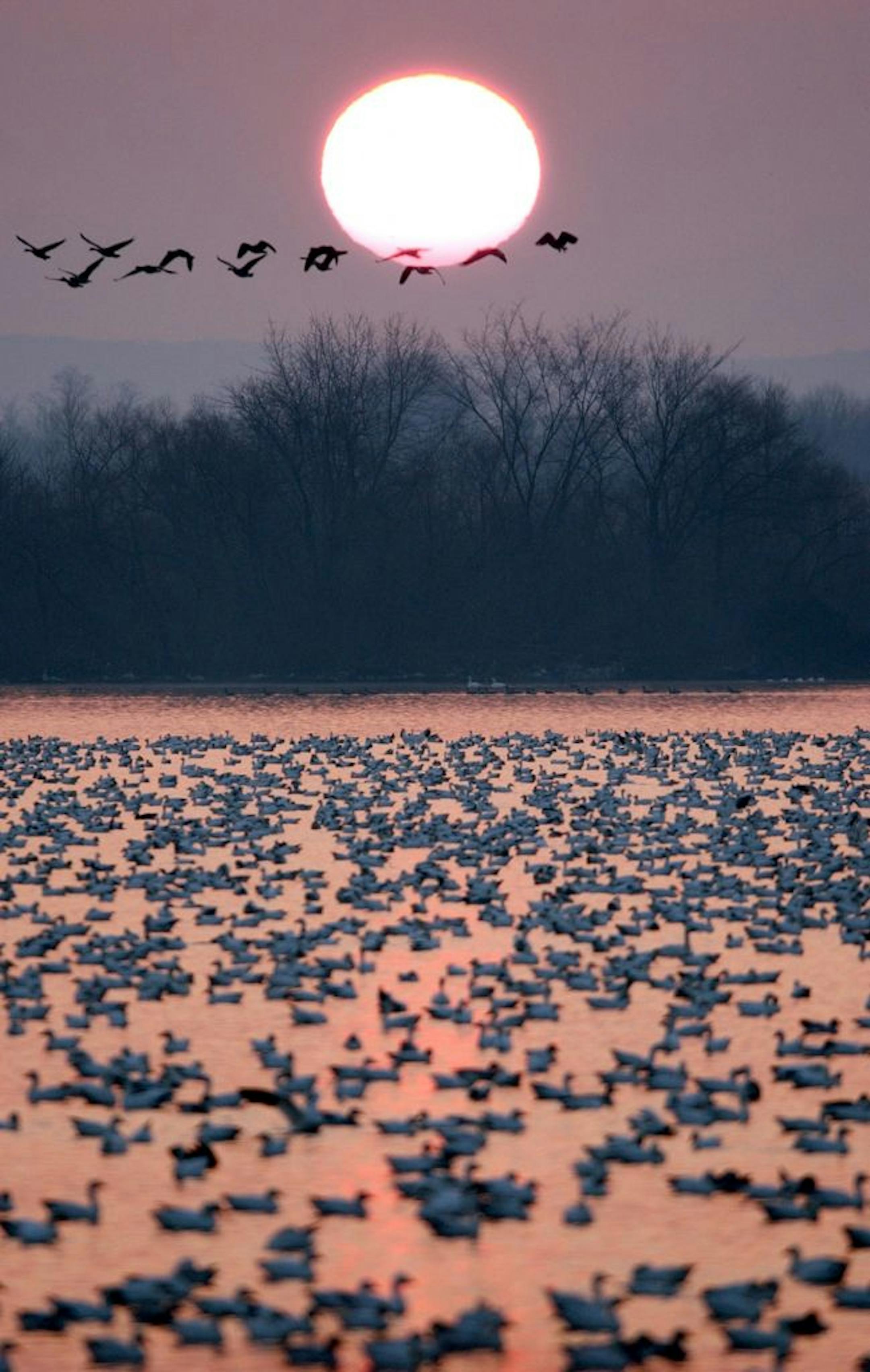
Birds are starting the countdown for the big annual shift from northern regions to their winter homes. Some, like purple martins, will head deep into South America, while bald eagles will stack up at open water as close as Wabasha, Minn.
Baltimore orioles are gearing up to go, as are warblers and white-throated and other sparrows. Marshes are emptying of red-winged blackbirds and grasslands of sedge wrens and dickcissels. Indigo buntings, rose-breasted grosbeaks and brown thrashers won't be seen again until spring.
The bulk of fall migration occurs between the end of August and the middle of October. Many assume birds leave to escape the coming cold, but the truth is that migrants depart because their sources of food disappear as summer winds down.
Very few insects are available for kingbirds in winter, there's little fruit for catbirds, and fish and frogs are locked beneath the ice, safe from herons and osprey. In order to keep eating, many bird species must move southward. (Some seed-eating species -- like cardinals and finches -- and those capable of searching out hidden insects -- like woodpeckers and chickadees -- stay behind.)
As the sun sets earlier each day, birds' systems release hormones that lead them to gorge on foods that pack on fat. Other hormonal messages start the molt of a fresh new set of flight feathers for long journeys.
Solo flights
Birds become restless as their takeoff time approaches. However, the timing is not entirely hard-wired: Adult birds rely on experience to choose a departure night that has beneficial conditions. Each bird departs and flies on its own schedule, although it will share the skies with large aggregations of other birds.
Few birds, other than cranes and geese, fly as family groups. Amazing as it sounds, "teenaged" birds, those that hopped out of nests just weeks ago, fly alone to their species' wintering grounds.


