

I'm a strong advocate of Black reverse migration — Black people returning to Southern states from cities in the North and West in order to concentrate political power.
This reverse migration was already happening before my advocacy, and it continues. As demographer William H. Frey wrote for the Brookings Institution in September, the reversal "began as a trickle in the 1970s, increased in the 1990s, and turned into a virtual evacuation from many Northern areas in subsequent decades."
There are many reasons for this reversal, primarily economic, but I specifically propose adding the accrual of political power — statewide political power — to the mix.
One of the ways that people often push back on what I'm proposing is to worry aloud about the opposition and backlash to a rising Black population and power base in Southern states.
Well, Georgia is providing a proving ground for this debate in real life.
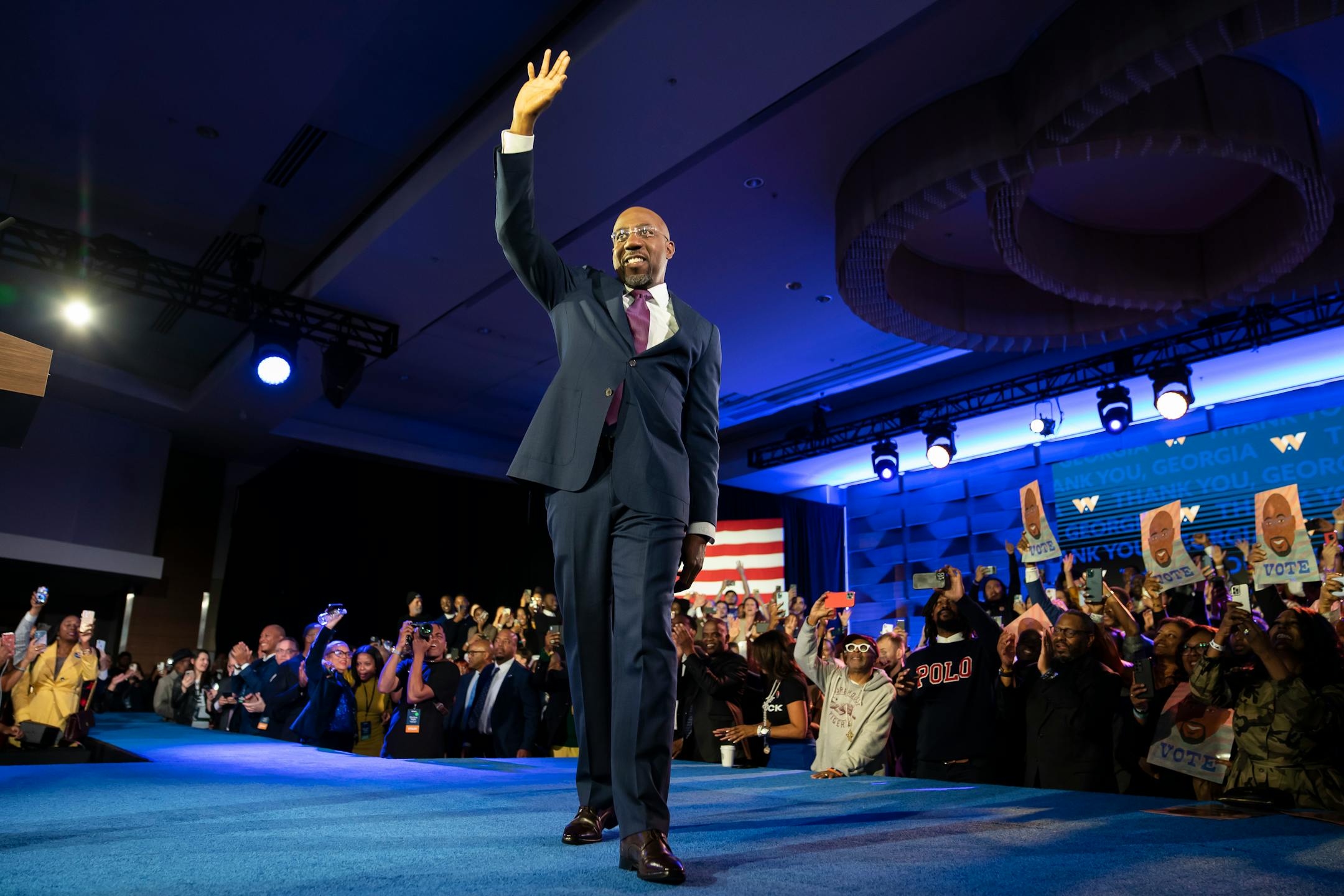
I heard so many people after the Georgia runoff in which Raphael Warnock defeated Herschel Walker who said some version of "Yes, but it was still too close."
It seemed to me that those comments — and many others — missed the bigger point: Something absolutely historic is happening in Georgia that portends a massive political realignment for several Southern states.
Georgia voters proved this year that the historic election of a Black senator from a Southern state by a coalition led in many ways by Black people was not a fluke.


