

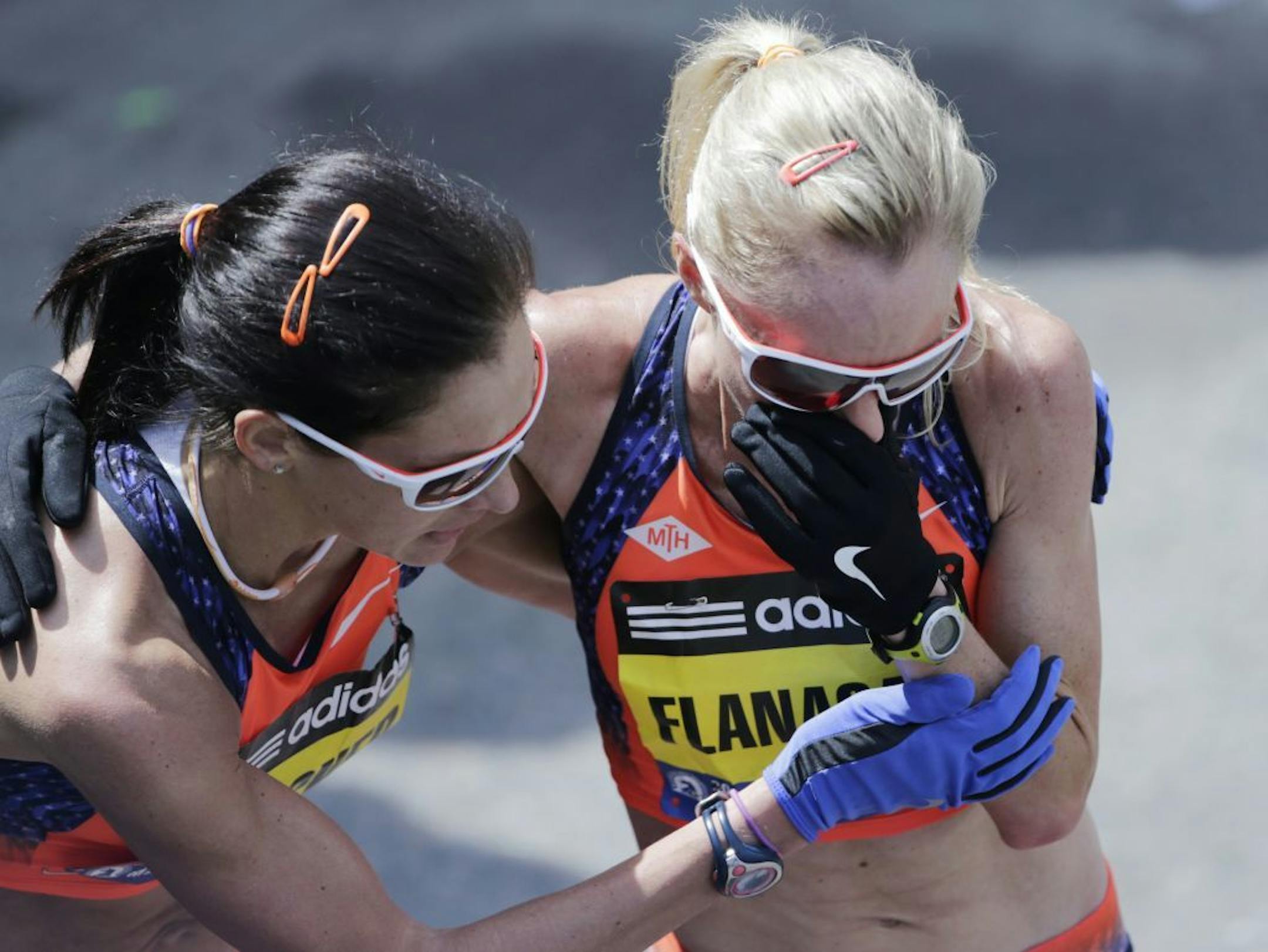
As of this writing, there were far more questions than answers in the wake of multiple explosions at Monday's Boston Marathon.
Authorities confirmed that two devices exploded near the finish line, and at least three other unexploded devices reportedly were discovered. At least three people were killed — one reportedly an 8-year-old boy — and dozens were injured.
The target was quintessentially American. Boston, the cradle of American democracy, was celebrating Patriots' Day and an annual event that is largely made up of volunteers and amateur athletes.
And yet as evidenced by the Ethiopian and Kenyan winners, as well as the global flags flying at the scene of the blasts, the marathon is also an international event. Acts of terror, as we've learned so painfully, know no boundaries.
The immediate response to the blasts was quintessentially American. Highly professional first responders, as well as runners and spectators, tended to the wounded. And the people of this nation, as they have had to do on 9/11 and other days of national sorrow, tended to one another, either directly or virtually through an outpouring of grief and rage on social media.
President Obama said a few hours after the blasts that a thorough, methodical investigation was underway to determine who carried out the bombings and why.
If we learn that there is an international connection to the individual or organization that so cowardly targeted innocents, the response should be global, too.
The perpetrator or perpetrators chose a uniquely vulnerable target. The marathon is an open-air event with 26.2 miles to guard and more than 23,000 runners clad not in protective athletic gear, but in shorts, shirts and running shoes.


