

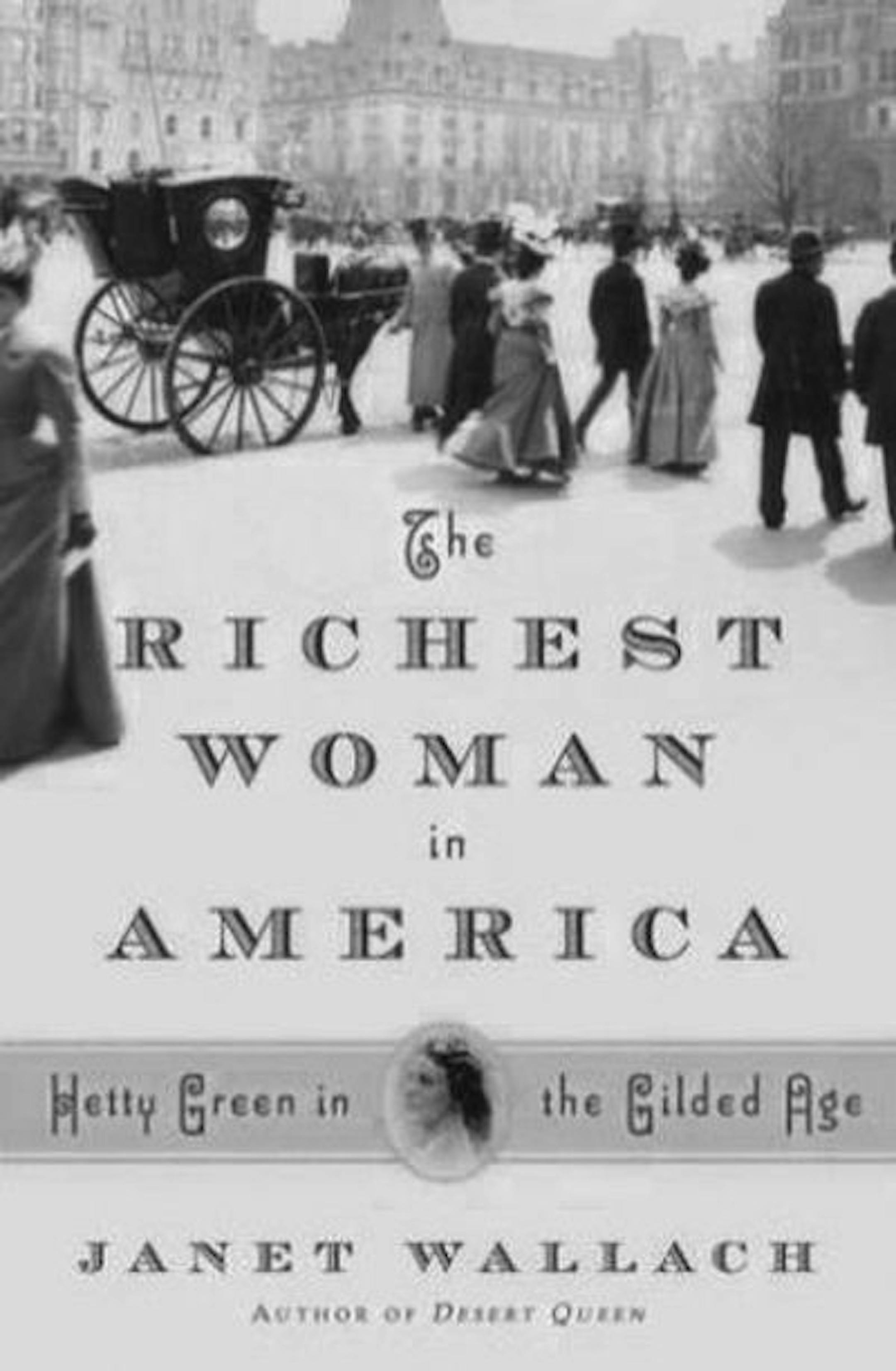
Janet Wallach, Nan A. Talese/Doubleday, 281 pages, $27.95
Hetty Green had one major investment rule: Buy when everyone else is selling, and sell when everyone else is buying.
It was a mantra that served her well. By the time of her death in 1916, she had ridden the economic roller coaster of post-Civil War America to great riches, never panicking when the market hit bottom, never gloating when her stocks hit their high marks.
For more than 50 years, Green was a moneymaking dynamo who could move markets simply by buying in. She bet heavily on railroads and real estate in the late 19th century and went on to become one of the world's richest people, a feat that was all the more amazing given her background -- and her gender. The investment world back then was dominated by highbrow men in formal attire, many of whom would learn the hard way never to underestimate this modest Quaker woman from New England who wore frumpy clothes and shunned the spotlight.
In "The Richest Woman in America," Janet Wallach compares Green favorably with Warren Buffett, the Berkshire Hathaway chairman whose every breath is analyzed for significance to investors. Like Buffett, Green paid attention to financial details and routinely invested against the grain.
Green didn't keep a diary, so how she handled the daily insults of men who couldn't stomach the idea of a woman making millions is left unexplored by Wallach. Instead we get a portrait of an investment pioneer who matched her male counterparts in ambition and guile, and one who never backed down from a fight, legal or otherwise.
Wallach's book is filled with colorful historical details of an economic time that eerily parallels our own -- an unpredictable real estate market, lax banking policies and over-exuberant investors always chasing the next big thing.
Hetty Green invested for the sport of it, and at her death she was worth at least $100 million -- equivalent to $2 billion in today's dollars. Even if she was contented by her riches, it's not clear in Wallach's tale whether she ever found true happiness. It's to Wallach's credit, though, that she has managed to pen an enthusiastic portrait.
SAN FRANCISCO CHRONICLE


