

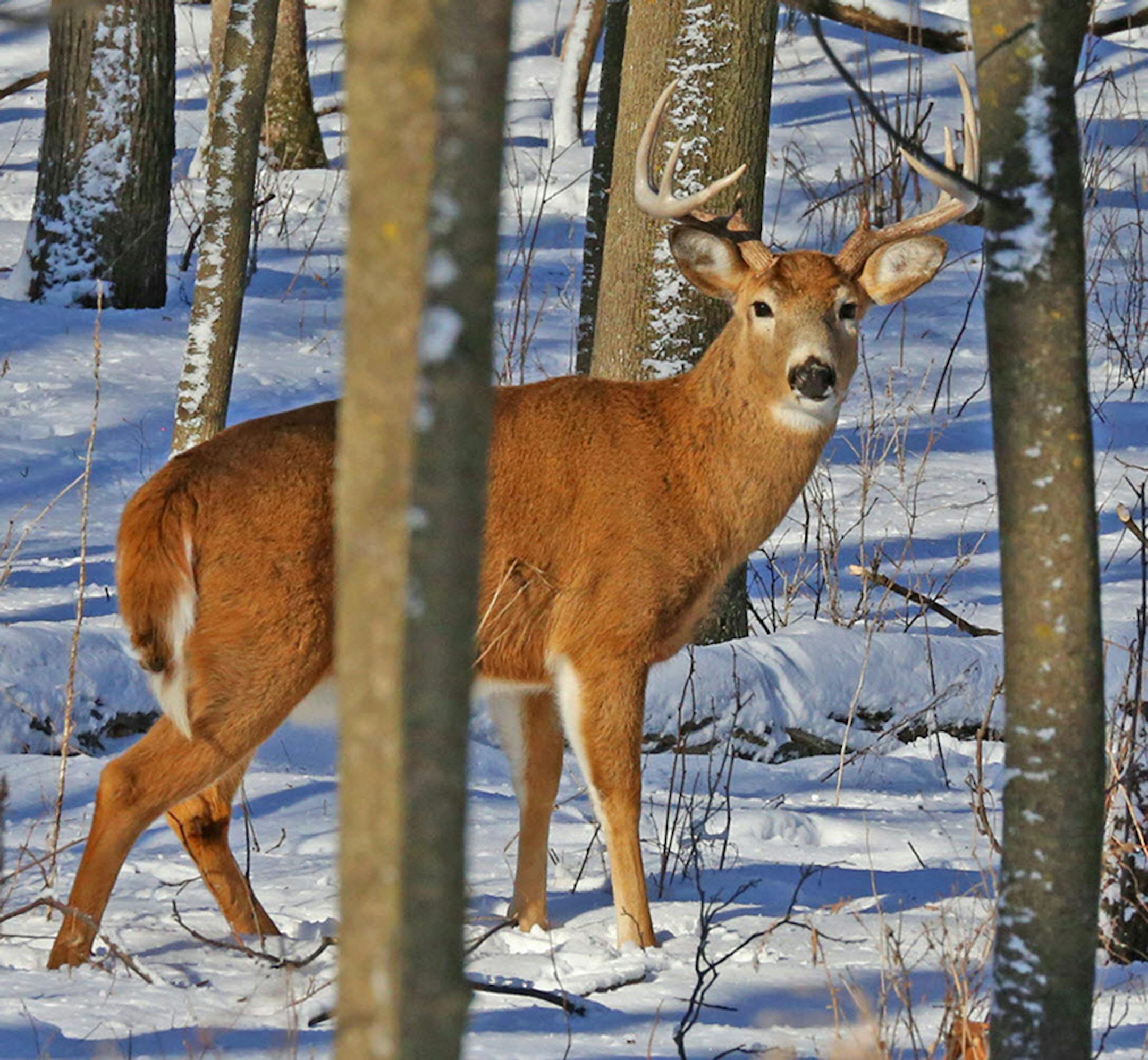
Working in Minnesota natural areas daily for a couple of decades gave me the opportunity to observe, study and appreciate whitetail deer on the eve of another firearm hunting opener.
Three words come to mind when I think about them: resourceful, strong and graceful. This largest wild animal of southern Minnesota runs at speeds of 30 miles per hour up to a maximum of about 50. Yet a deer depends on camouflage and its keen senses to survive. Deer can jump exceedingly well, clearing objects 7 to 8 feet from a standing position. Whitetails also can swim, but they enter deep water only when pressed.
Deer are color-blind, seeing the world in monochromatic tones and shades of gray. They do not appear to see an object that doesn't move. However, the slightest movement is immediately noticed. Even a hand changing position can be enough to send the alerted deer running off to safety. Their sense of smell is keen. Studies show deer can pick up a scent up to a third of a mile away.
One scene I will never forget is watching several deer playing a game like tag. It was midwinter and several were running and sliding, zigzagging and circling, sliding and touching each other on a snow-covered frozen pond.
Jim Gilbert has taught and worked as a naturalist for 50 years.


