

 2:42
2:42During the Minnesota winter, when Canterbury Park's empty barns are blanketed with snow, Mark Stancato works his sales pitch. The stall superintendent for the Shakopee track visits with horse trainers around the country, trying to persuade them to spend the summer racing at Canterbury.
Declining purses had made it harder and harder for Stancato to close the deal in recent years. But last winter, he needed to say only one thing: Canterbury had signed a deal with the Shakopee Mdewakanton Sioux Community that would infuse $75 million into its purse fund over 10 years. "We have 25 new stables coming, and some of them we didn't even recruit,'' said Stancato, who has managed Canterbury's barns for most of the track's 27-year history. "The money did the recruiting for us.''
As Canterbury prepared to open a 69-day racing season Friday, Stancato wrestled with an entirely different problem — how to find room for everyone who wants to be part of it. He received 2,500 applications for 1,500 stalls and expects all to be filled for the first time. Many returning trainers have expanded their stables, and several owners have bought higher-quality horses. There are some powerful new stables, including 30 horses owned by Midwest Thoroughbreds, the nation's leading owner for the past two years.
The deal with the tribe that runs Mystic Lake Casino will add $5.3 million to this season's purses, inflating them to about $190,000 per day — twice the level paid in 2011 and close to the amount offered at top Midwest tracks such as Chicago's Arlington Park and Iowa's Prairie Meadows. The tribe also is paying Canterbury $600,000 this year for marketing. That money has helped fund a new $1.5 million digital tote board and a giant video screen near the paddock.
The additional purse money will allow Canterbury to run its longest meet since 2006. According to president Randy Sampson, it also is allowing the track — and Minnesota's horsemen — to plan for the future for the first time in years.
"It's a game-changer,'' Sampson said. "After so many years of uncertainty, people are really excited.''
That includes people such as Dean and Teresa Benson. As Canterbury's low purses caused people to get out of the racing business, Teresa Benson said her family was thinking of converting some of its 40-acre horse operation to farmland or development. This spring, 23 foals were born at their Wood-Mere farm near Webster — three times as many as in 2012 — and trainers who can't get enough stalls at Canterbury have inquired about keeping horses there.
"We haven't seen that for years,'' Benson said. "People go where the money is. There hasn't been this much excitement in a long time.''
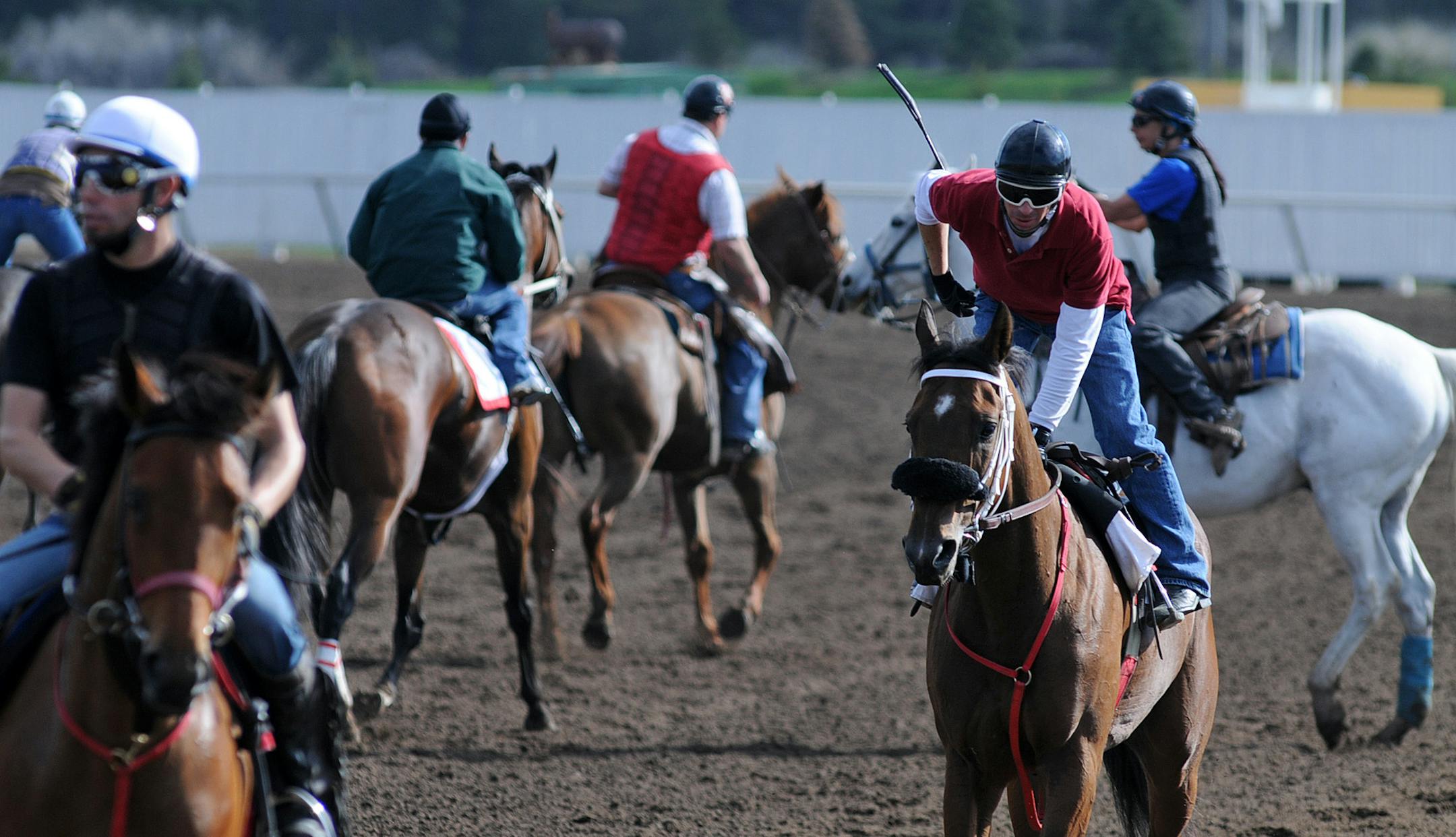
![Canterbury Park opens its season Friday with great optimism after several years of struggle. A deal it made with the Shakopee Midewakanton tribe has boosted purses significantly, attracting new trainers with more horses of better quality. The track's barns are full for the first time in years, and there is a waiting list. The track was crowded with riders during the morning workout ] Richard.Sennott@startribune.com Richard Sennott/Star Tribune. , Shakopee Minn. Tuesday 5/14/13) ** (cq) ORG XMIT:](https://arc.stimg.co/startribunemedia/XMG7MNPVA7DCT2JX72JJAUGO3Y.jpg?&w=1080)


