

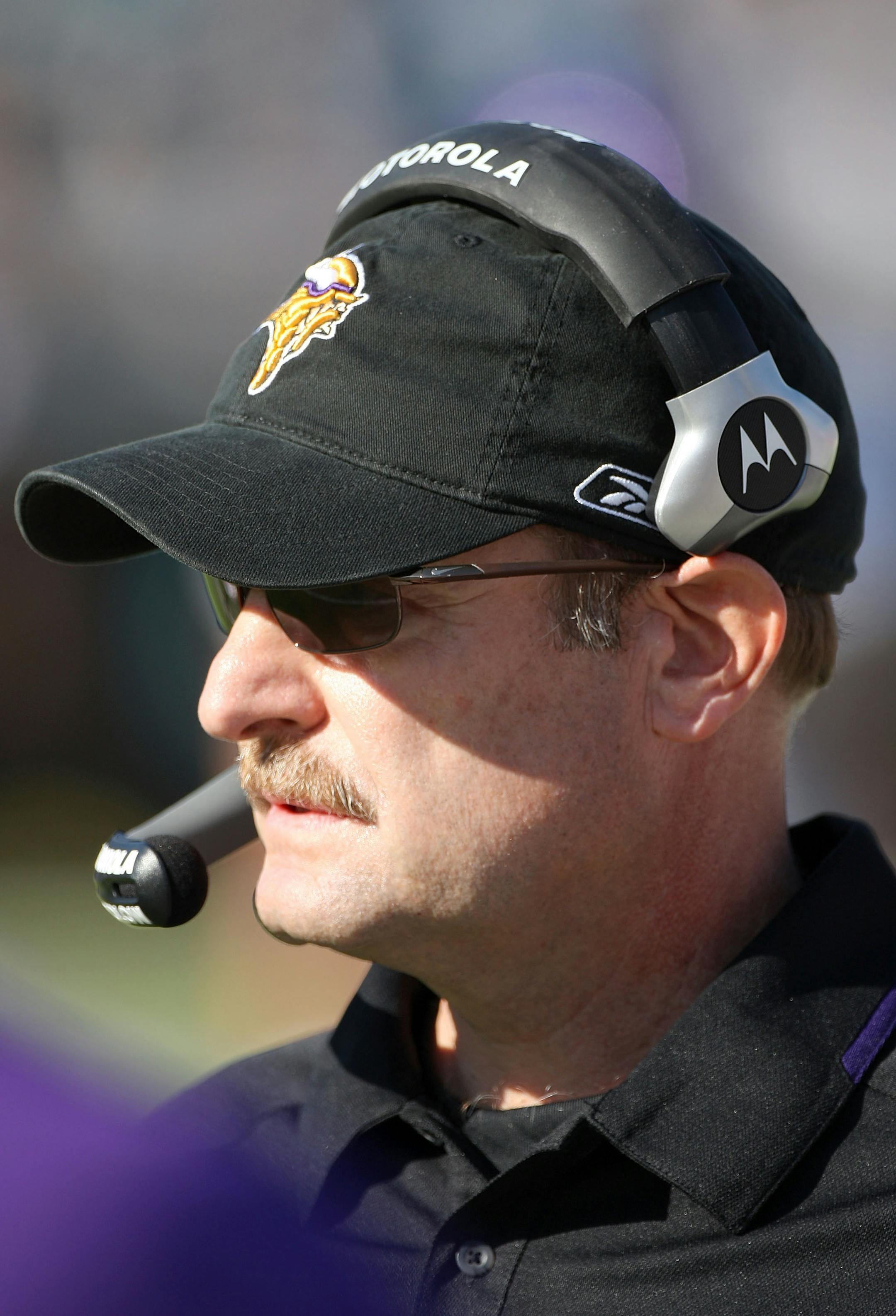
JACKSONVILLE, FLA. - By the time Jacksonville's fumbling and bumbling had handed the Vikings a 30-12 victory, Brad Childress' decision to bench Adrian Peterson for two offensive series on Sunday seemed inconsequential, even irrelevant.
Peterson's backup, Chester Taylor, performed well, and Peterson still took most of the handoffs and led the team in rushing, and the Vikings remained in a tie for first place, so what's the big deal?
Despite the victory and the manner in which it was achieved, these kinds of decisions carry risk. When an embattled coach benches his star player, the coach opens the door to a number of consequences.
We've seen star NBA players engineer the firing of their coaches. We've seen coaches in all sports lose their jobs after losing the support of their key players. We've seen star players demand trades after chafing under a disciplinarian. We've seen angry athletes become the stars of 24-hour news cycles.
In this case, Peterson showed up late for a team meeting on Saturday. Childress decided to punish him by holding Peterson out of the Vikings' first two offensive series.
By the time Peterson touched the ball, the Vikings led 14-0. What if the reverse had occurred? What if the Vikings had fallen behind 14-0 while Peterson stewed on the sideline, and Childress' decision cost his team a game, maybe even a shot at the playoffs, maybe even his job?
Childress' decision casts him as either despotic or brave. I favor the latter.
In the NFL, nothing destroys a team faster than a weak-hearted head coach. Stars may rule the NBA, but in the NFL, over the long term, in a complex and brutal game, coaches can't cater to individuals.


