"115 Million Americans Expected to Travel over Christmas, New Year's"
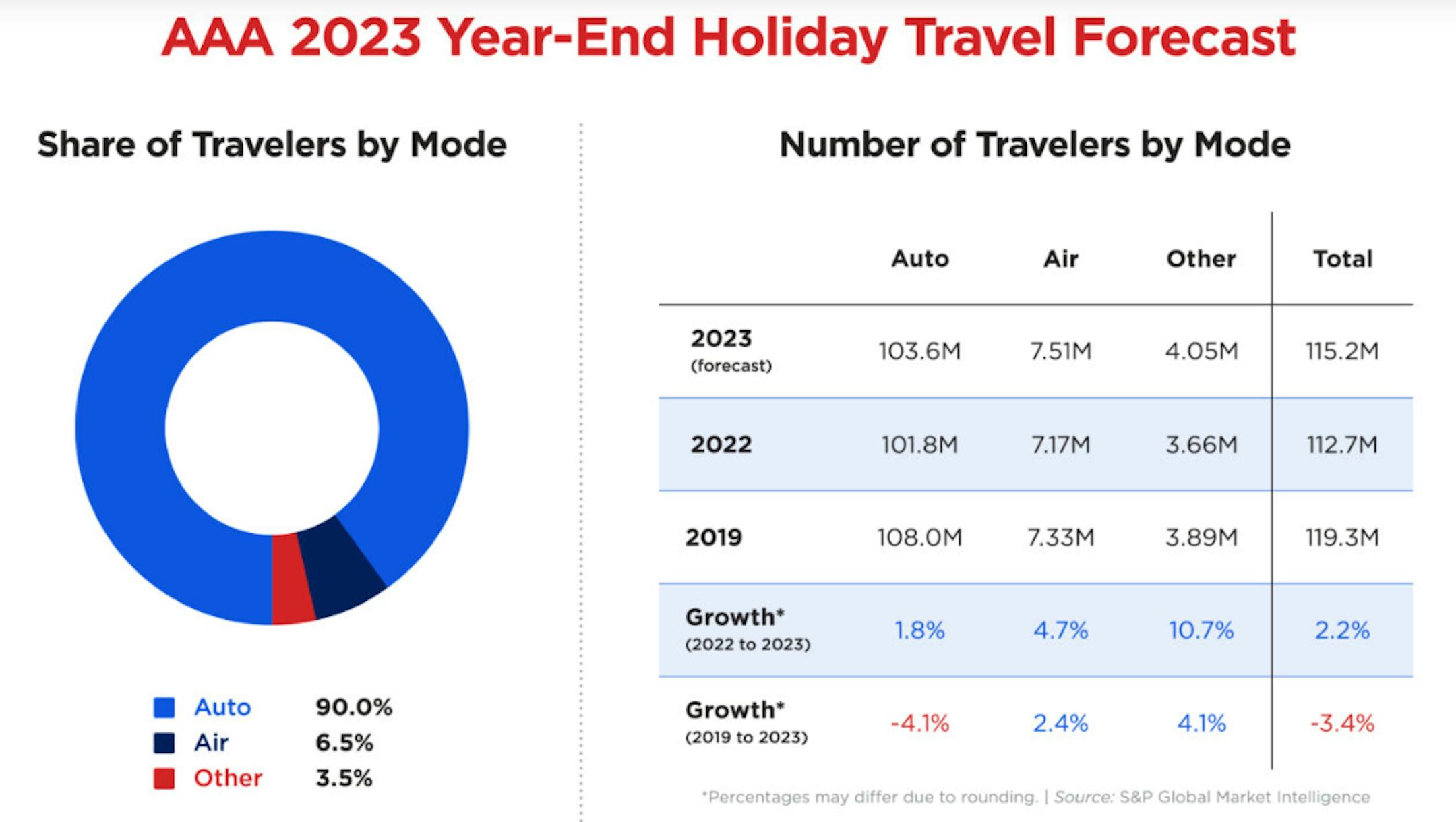
Second highest year-end holiday travel forecast since AAA began tracking in 2000. AAA projects 115.2 million travelers will head 50 miles or more from home over the 10-day year-end holiday travel period*. This year's total number of domestic travelers is a 2.2% increase over last year and the second highest year-end travel forecast since 2000, when AAA began tracking holiday travel. 2019 remains the busiest Christmas and New Year's travel period on record with 119 million travelers. "This year-end holiday forecast, with an additional 2.5 million travelers compared to last year, mirrors what AAA Travel has been observing throughout 2023," said Paula Twidale, Senior Vice President of AAA Travel. "More Americans are investing in travel, despite the cost, to make memories with loved ones and experience new places."
Accumulated Winter Season Severity Index (AWSSI)
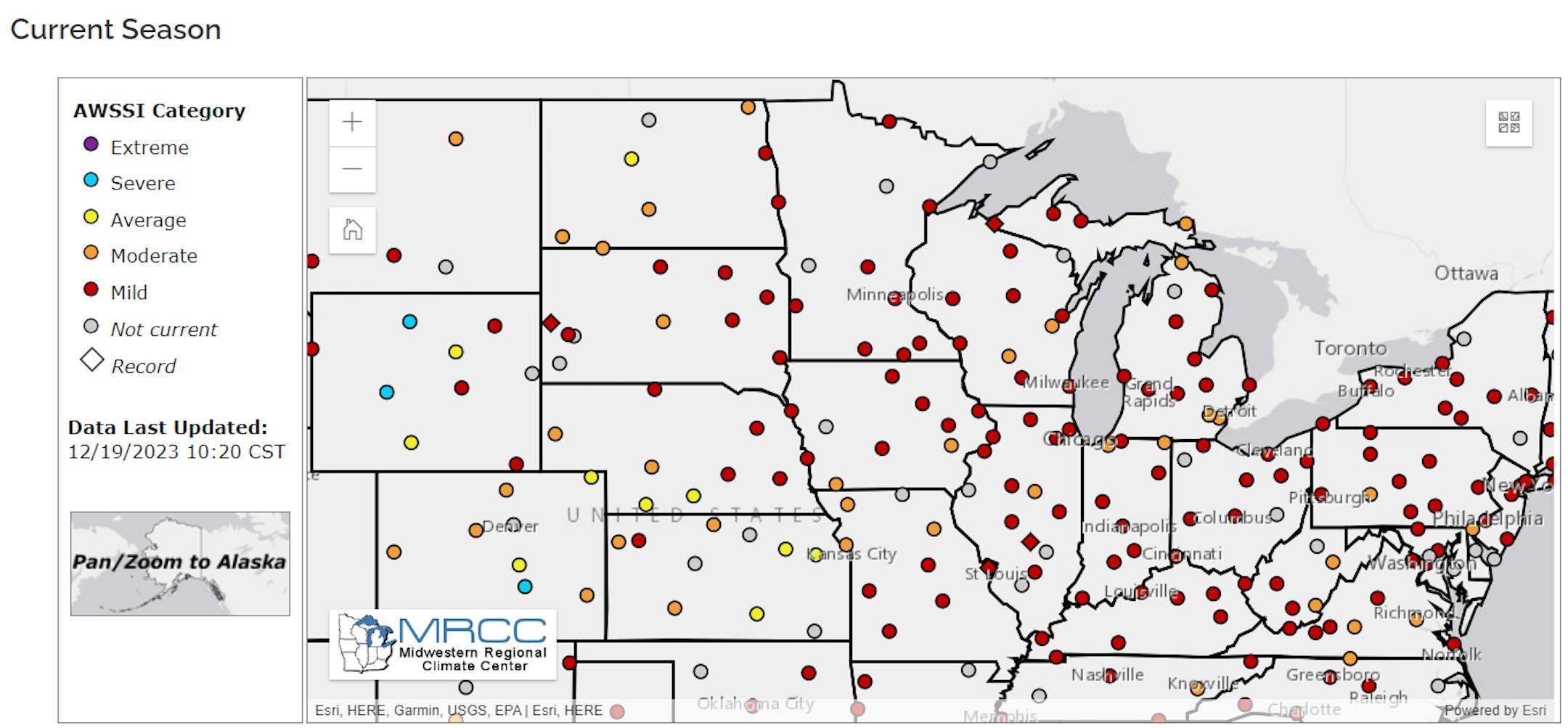
"Winter seasons have significant societal impacts across all sectors ranging from direct human health and mortality to commerce, transportation, and education. The question "How severe was this winter?" does not have a simple answer. At the very least, the severity of a winter is related to the intensity and persistence of cold weather, the amount of snow, and the amount and persistence of snow on the ground. The Accumulated Winter Season Severity Index (AWSSI) was developed to objectively quantify and describe the relative severity of the winter season."
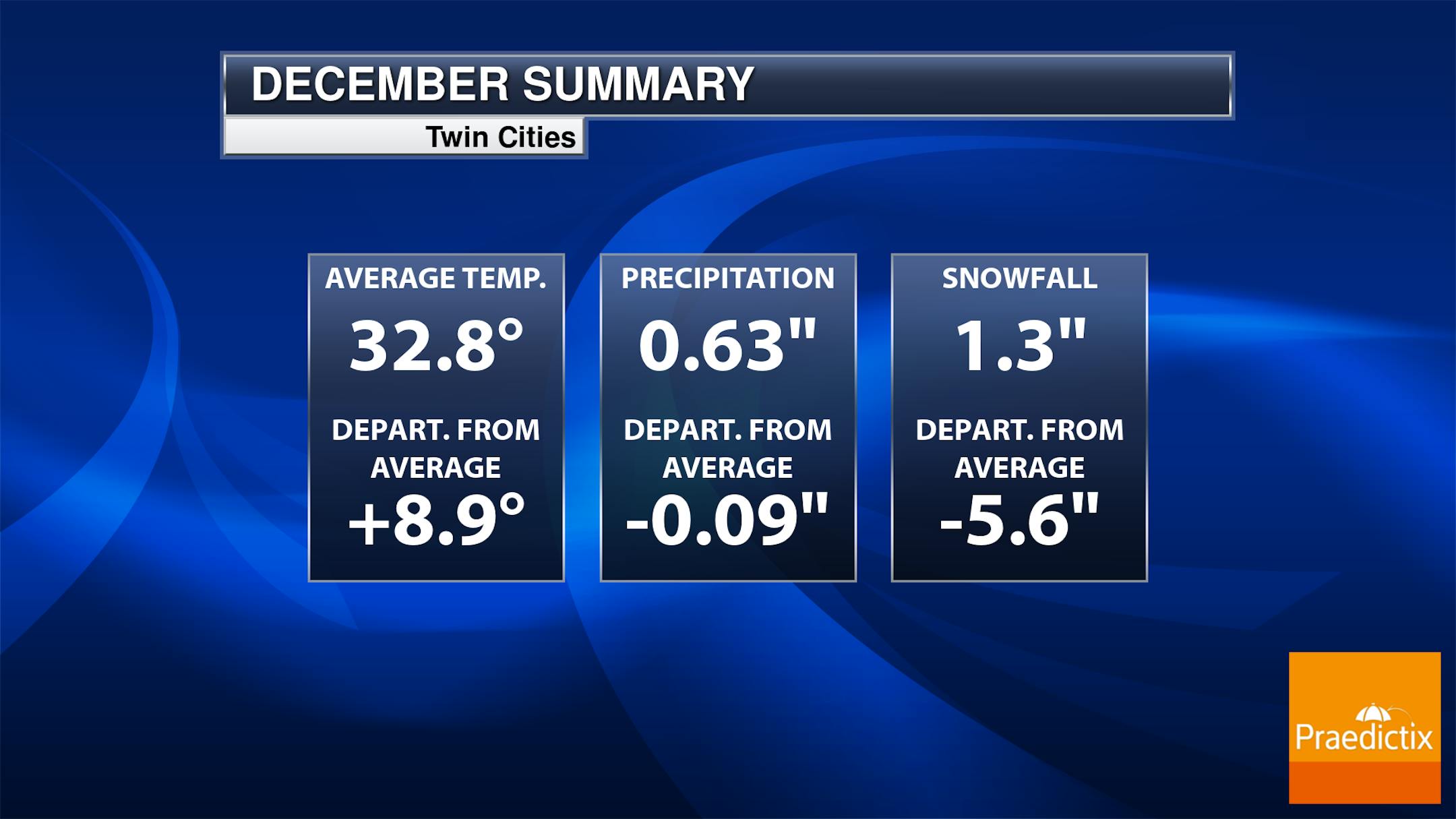
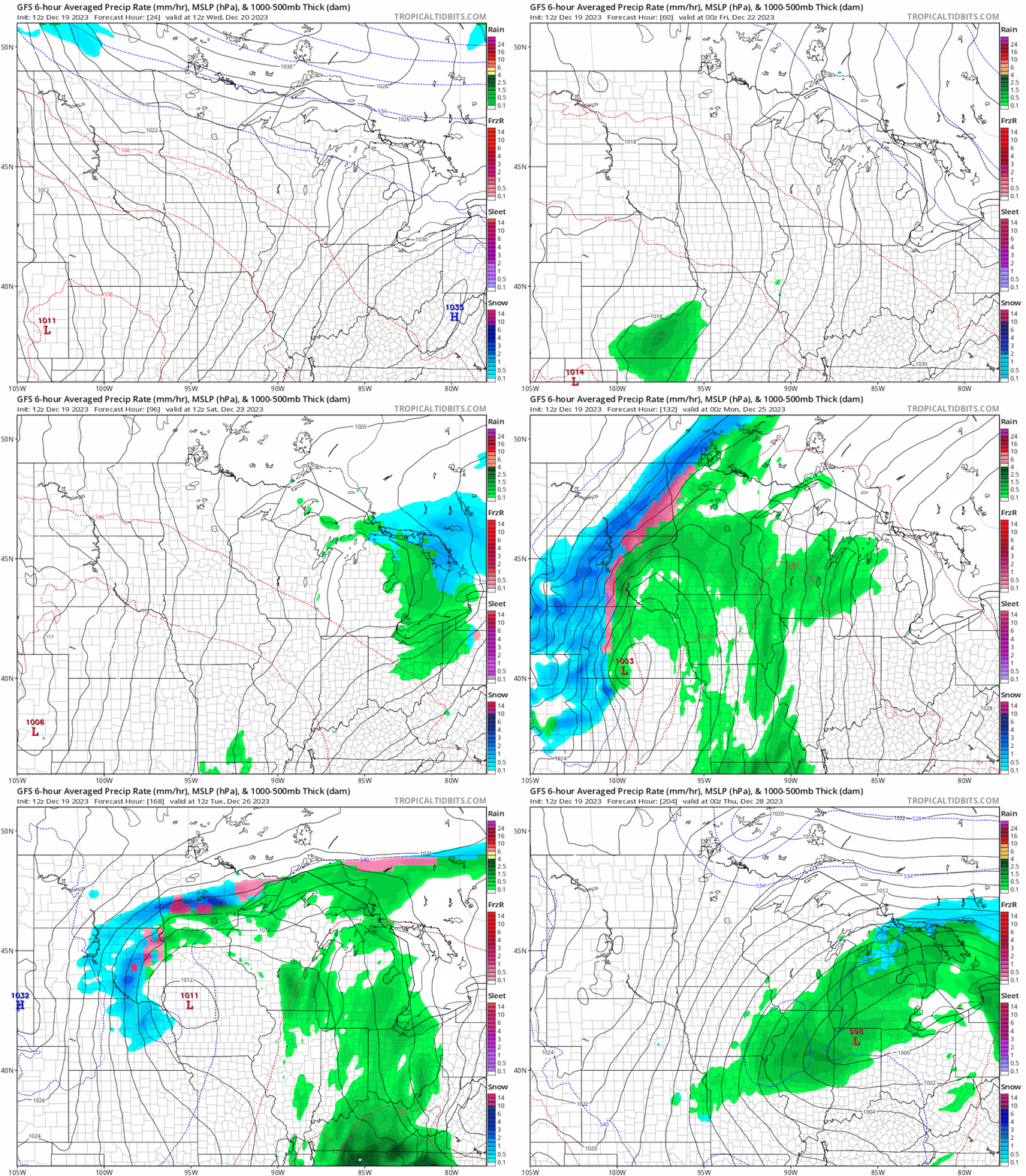
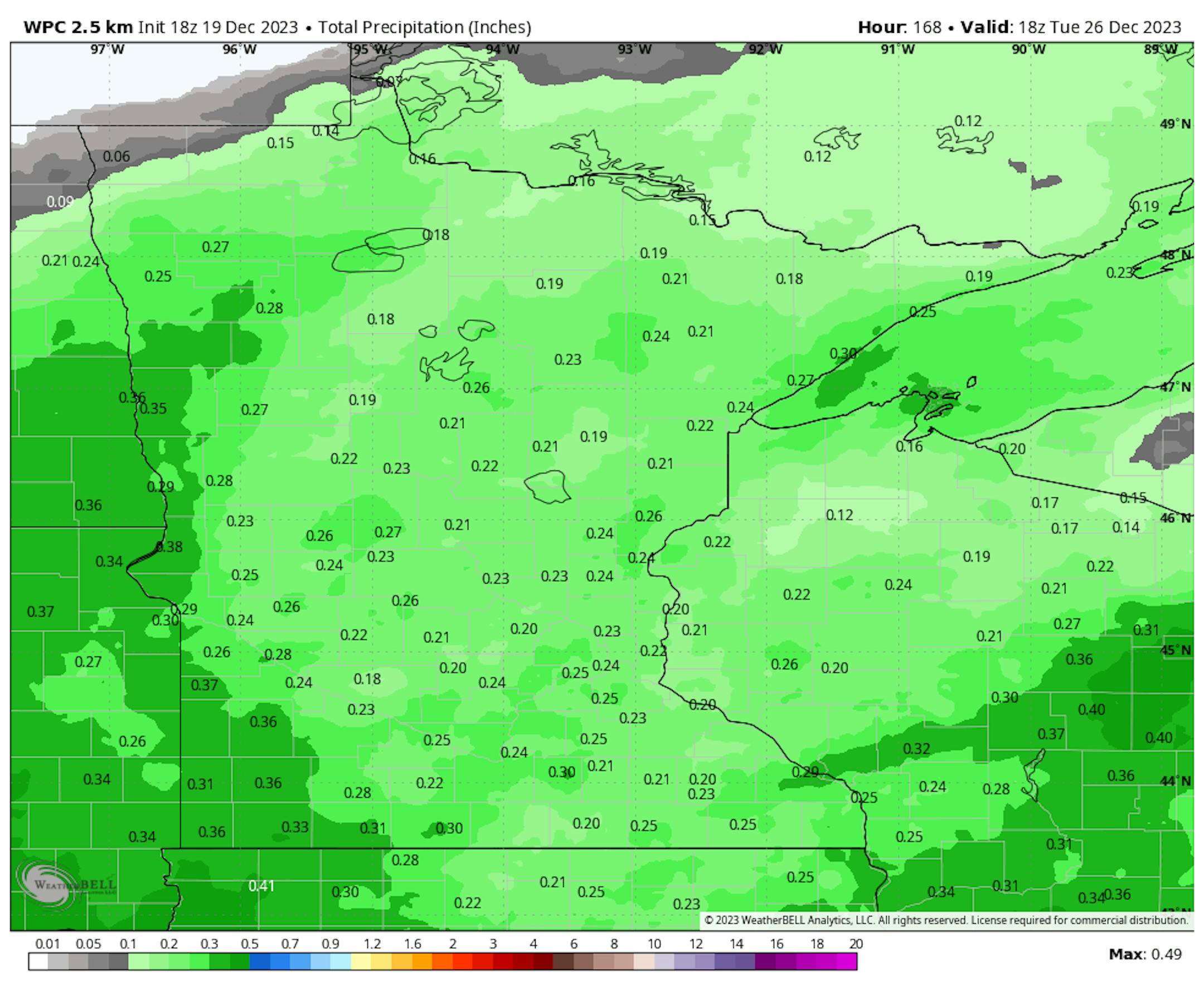
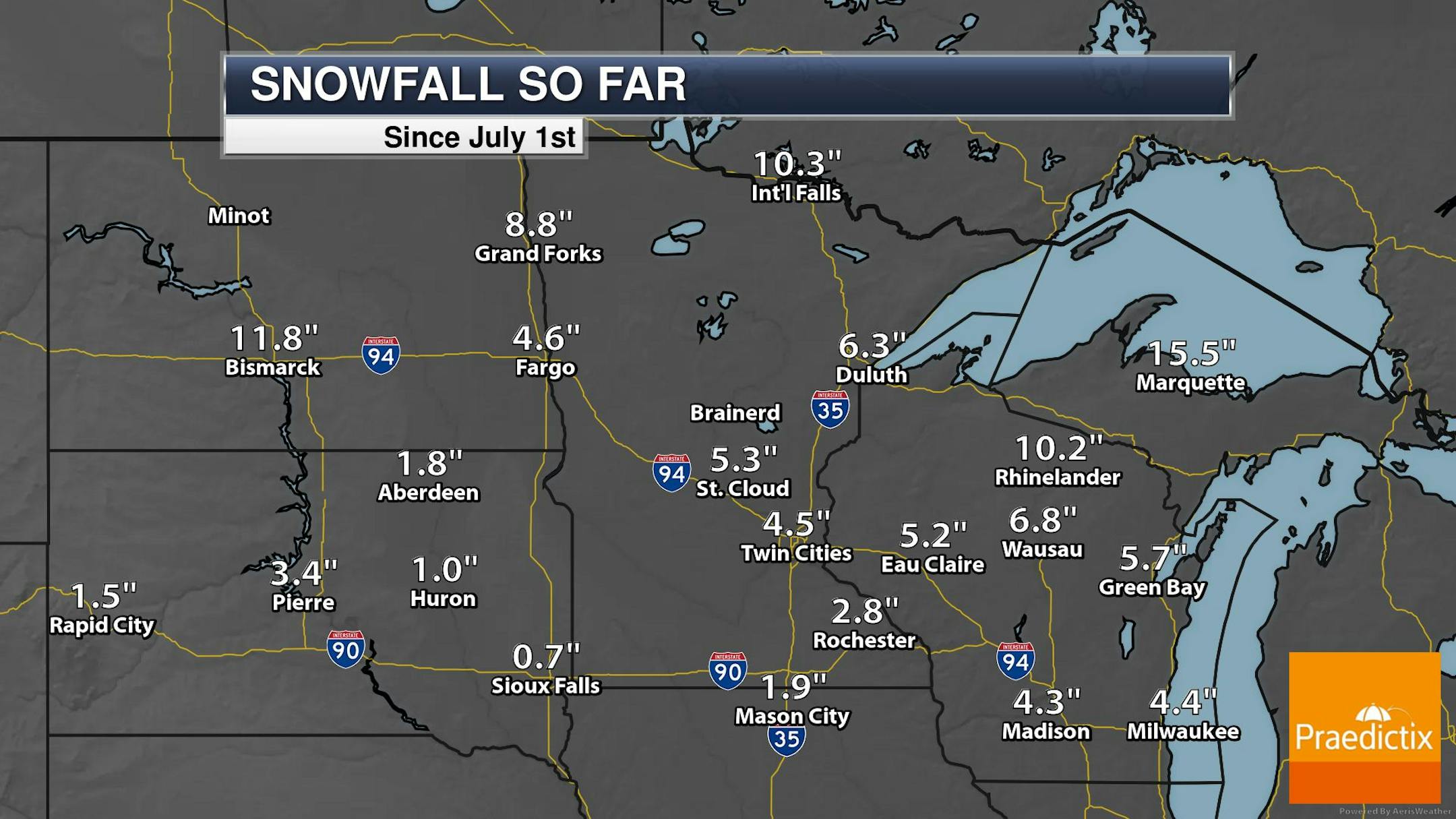
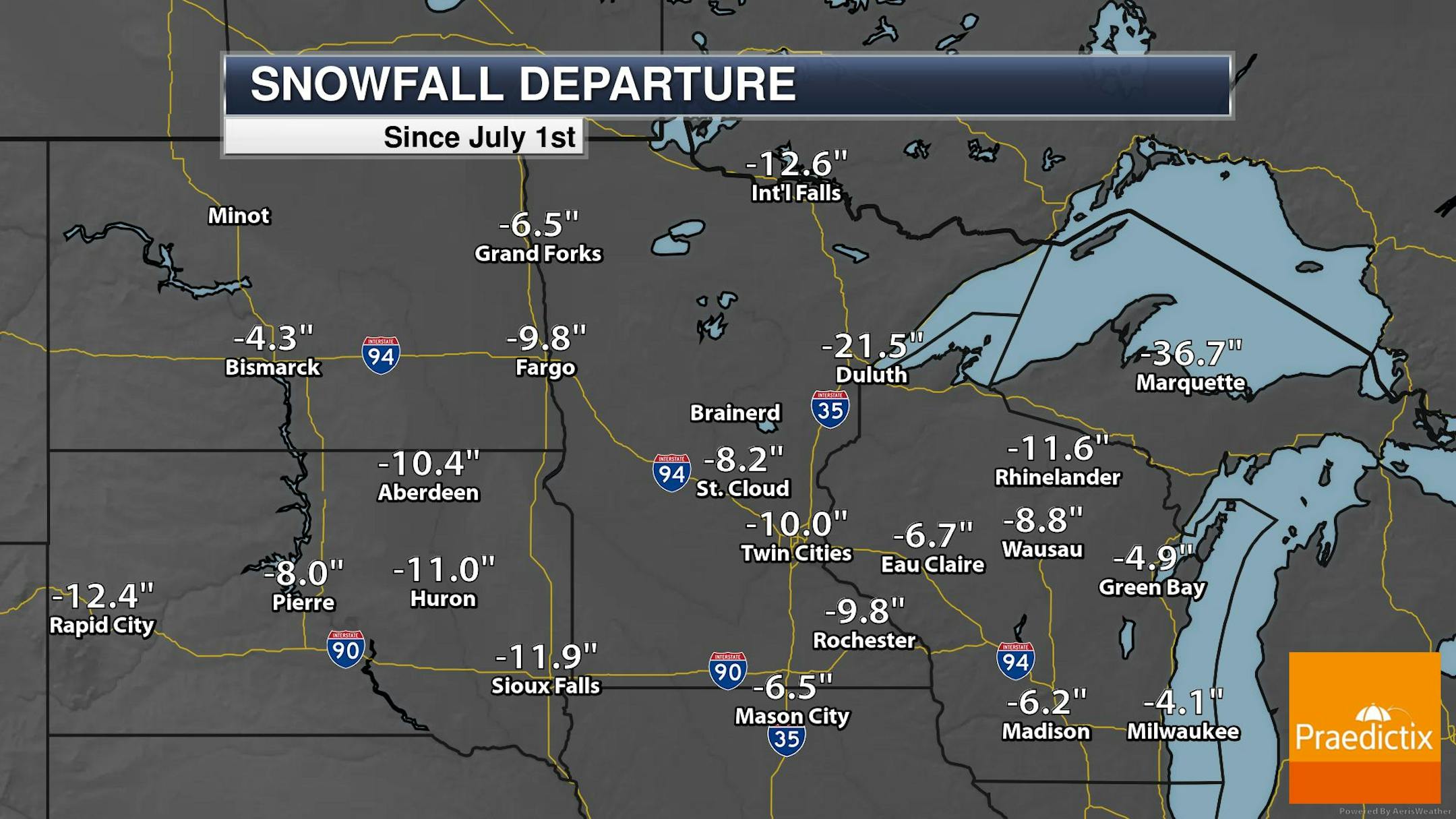
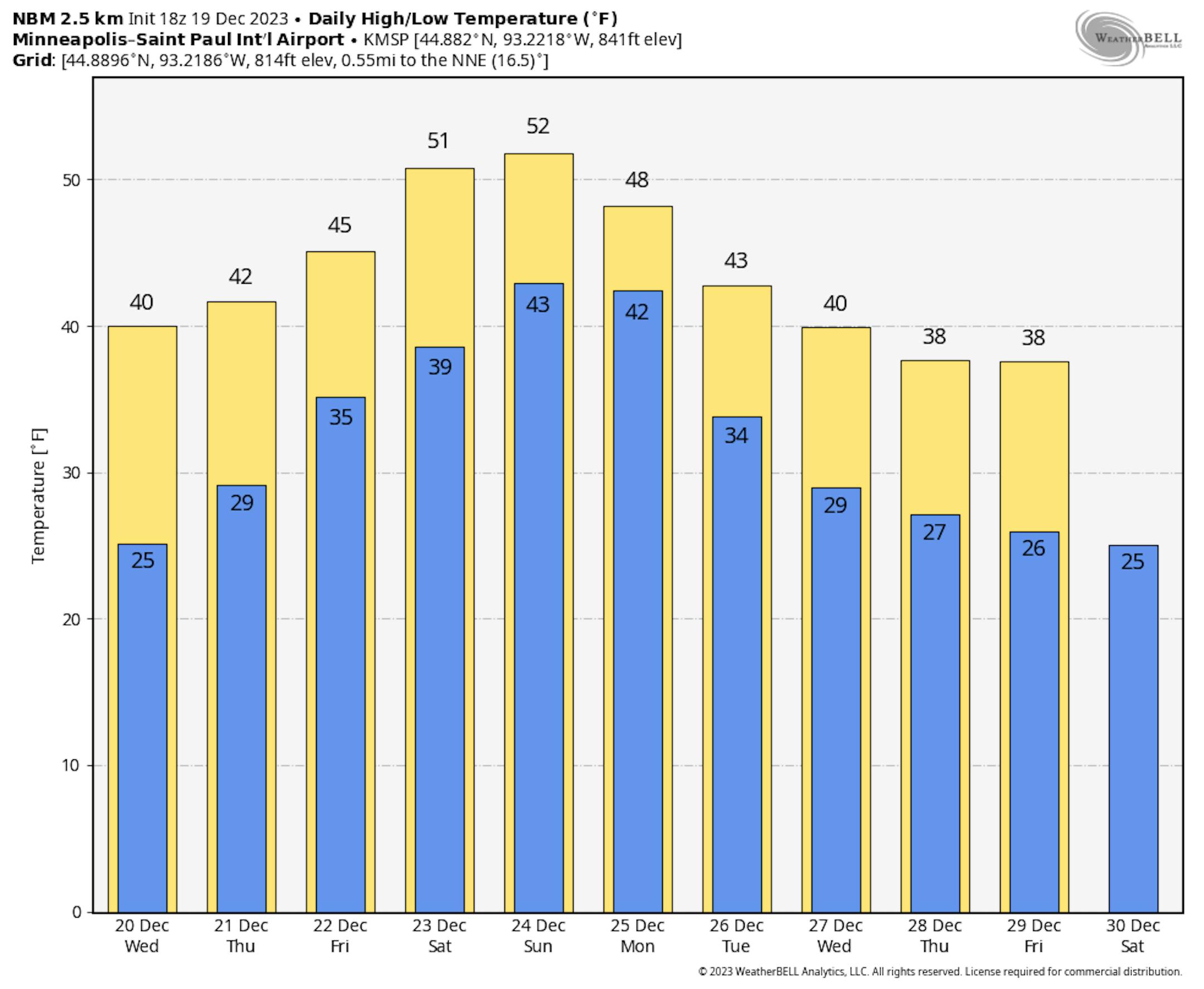
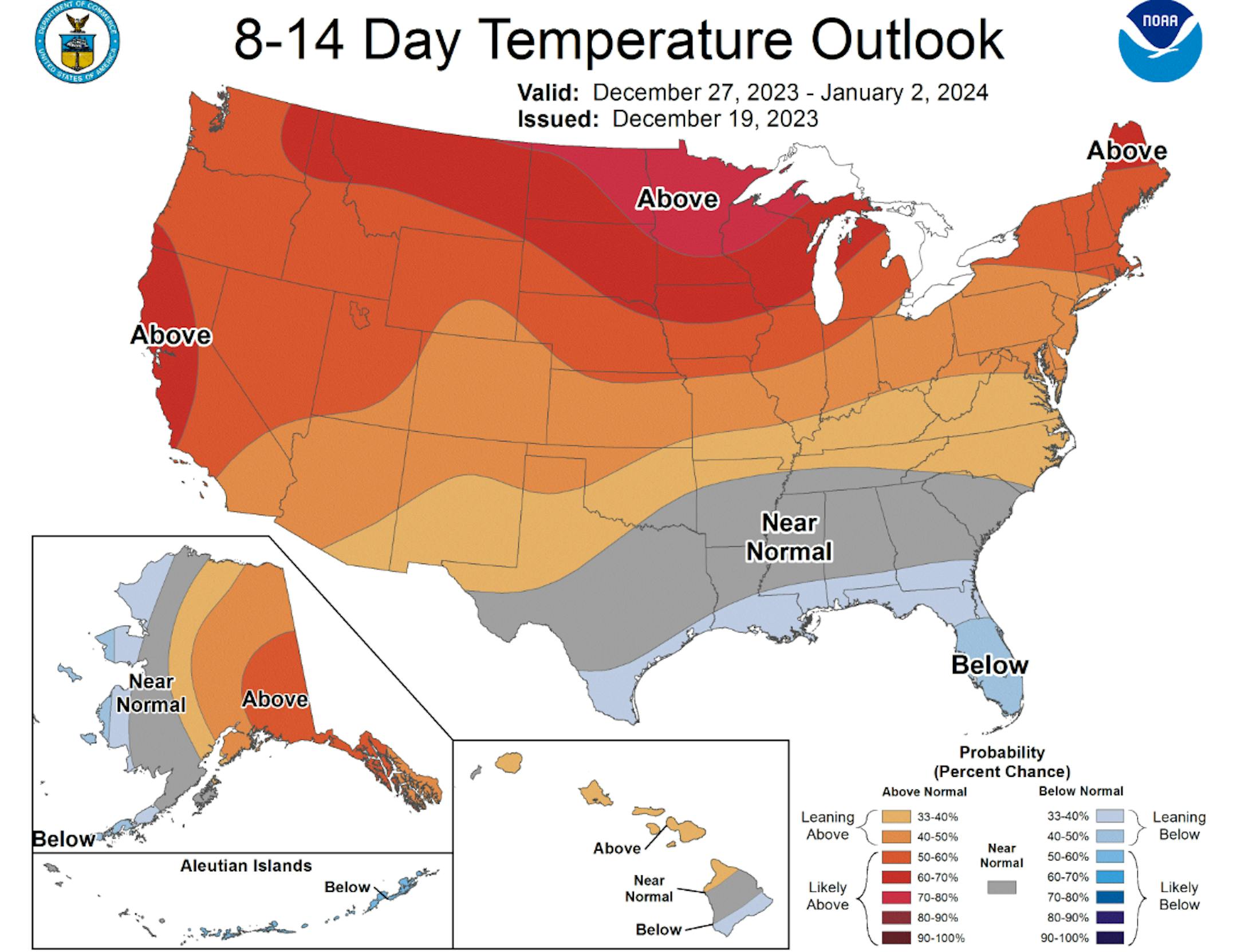
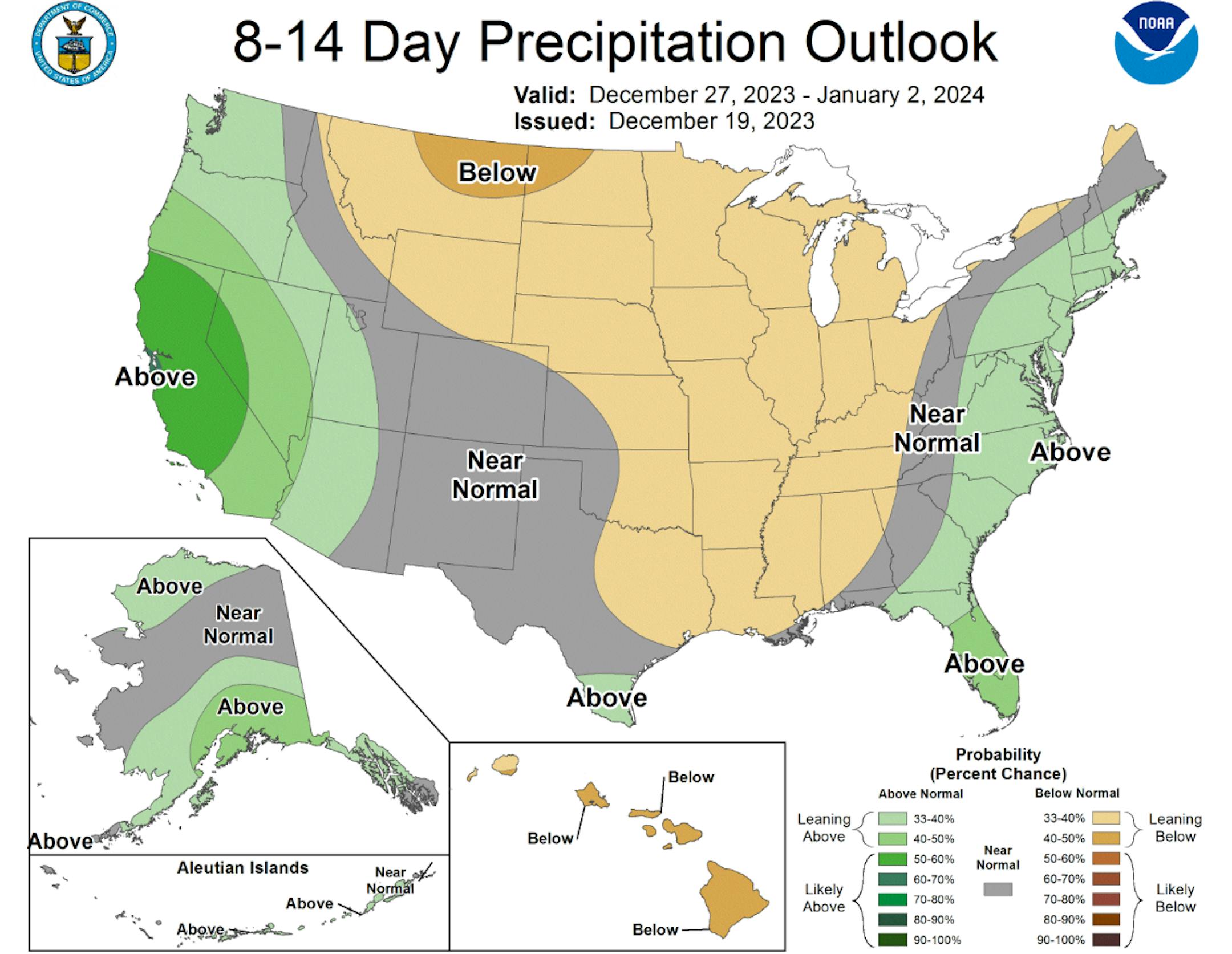
It's probably no surprise, but most locations around the Midwest and Great Lakes have had a "Mild" winter so far. This by the way doesn't look to be changing anytime soon with milder than average temperatures continuing and very little snow in the forecast. Again, we're still waiting for the other boot to drop, but being in an El Nino setup, a winter like last year is not really in the cards. The Midwest will likely see an overall warmer and less snowy winter.
"Mild" Winter So Far in for the Twin Cities
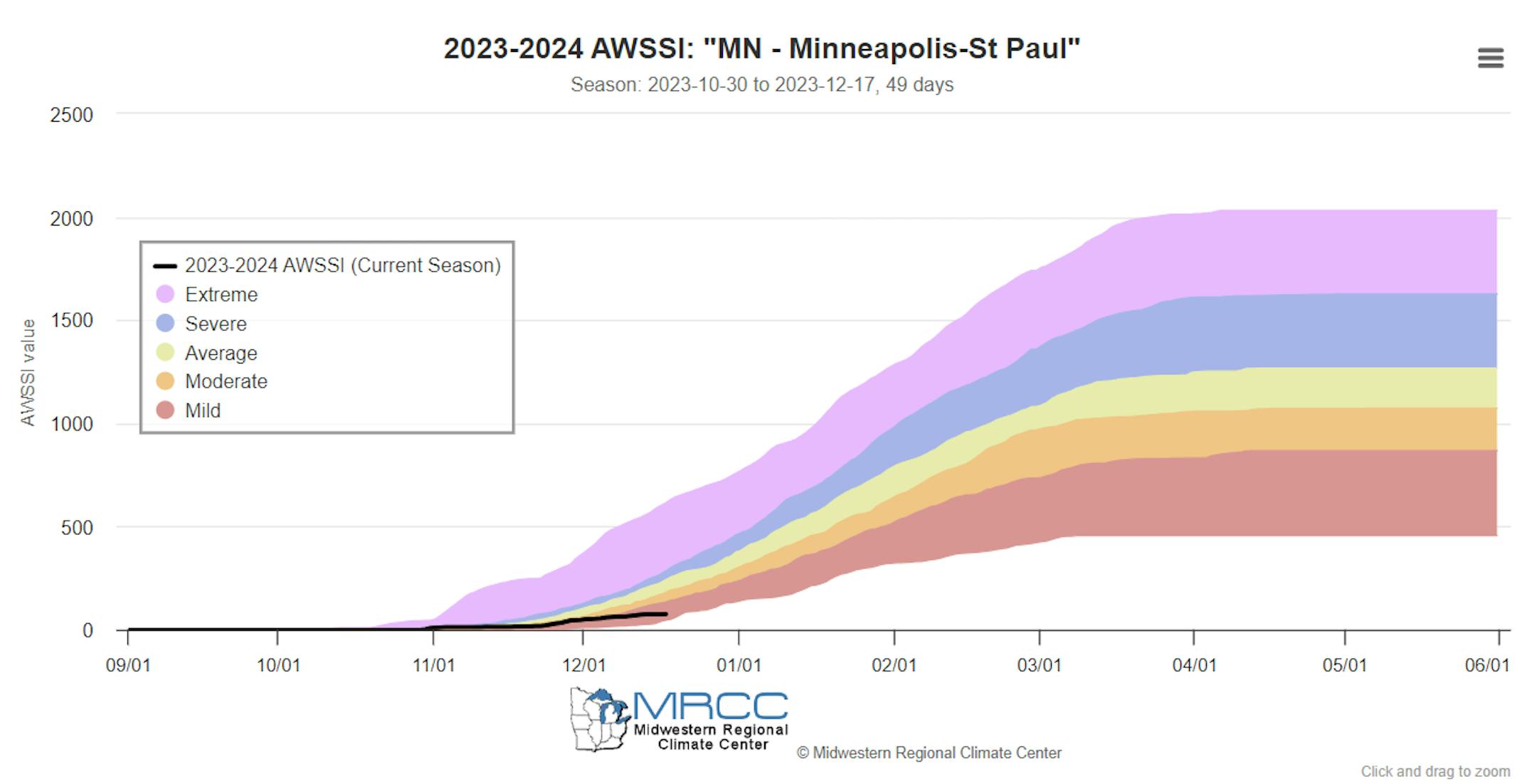
Here's a look at the Accumulated Winter Season Severity Index (AWSSI) for Minneapolis, MN so far this winter season. With a lack of cold temps and snow, it may be no surprise that we are currently sitting under a "Mild" winter rating so far.
Historical Chances of a "White Christmas"
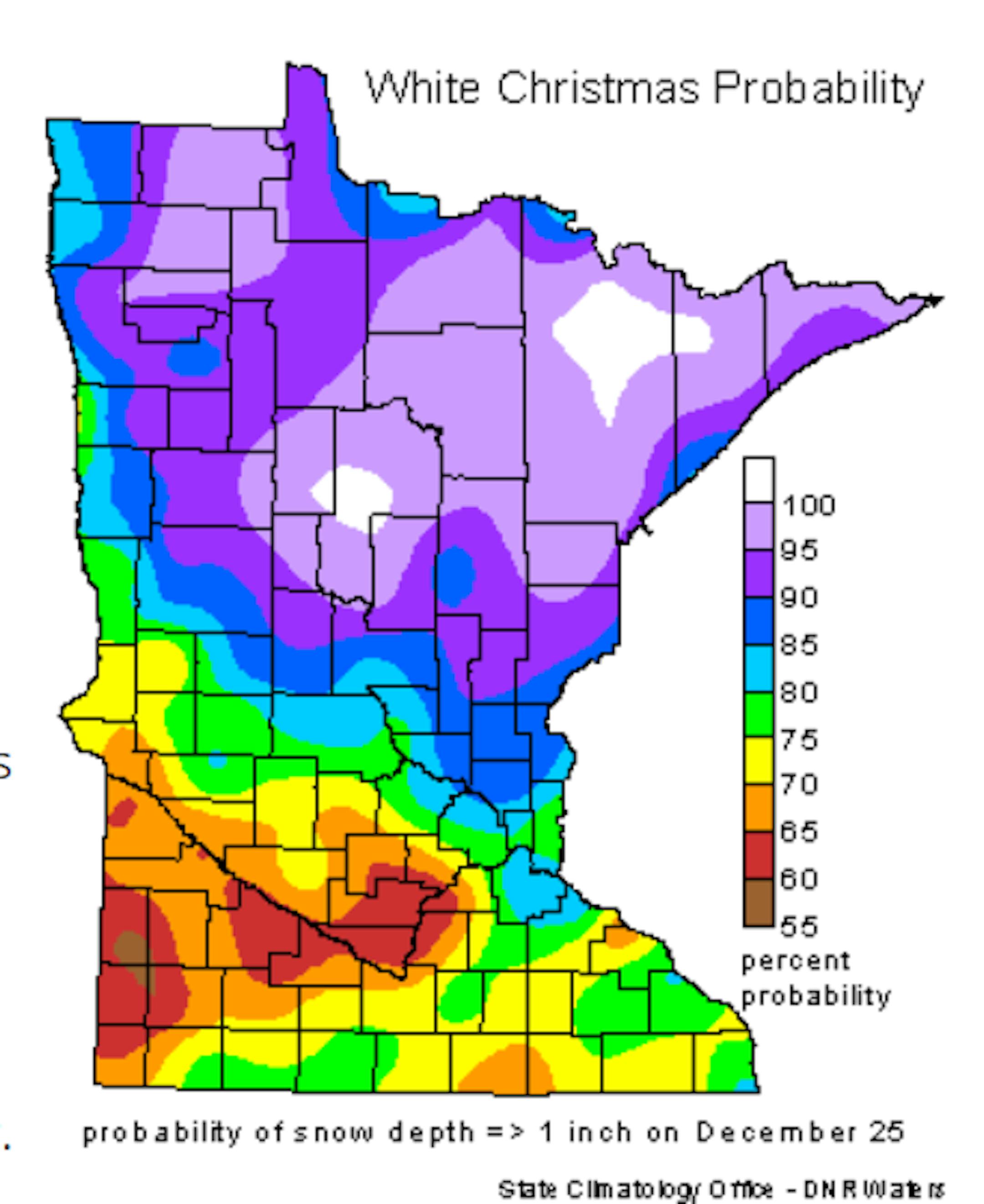
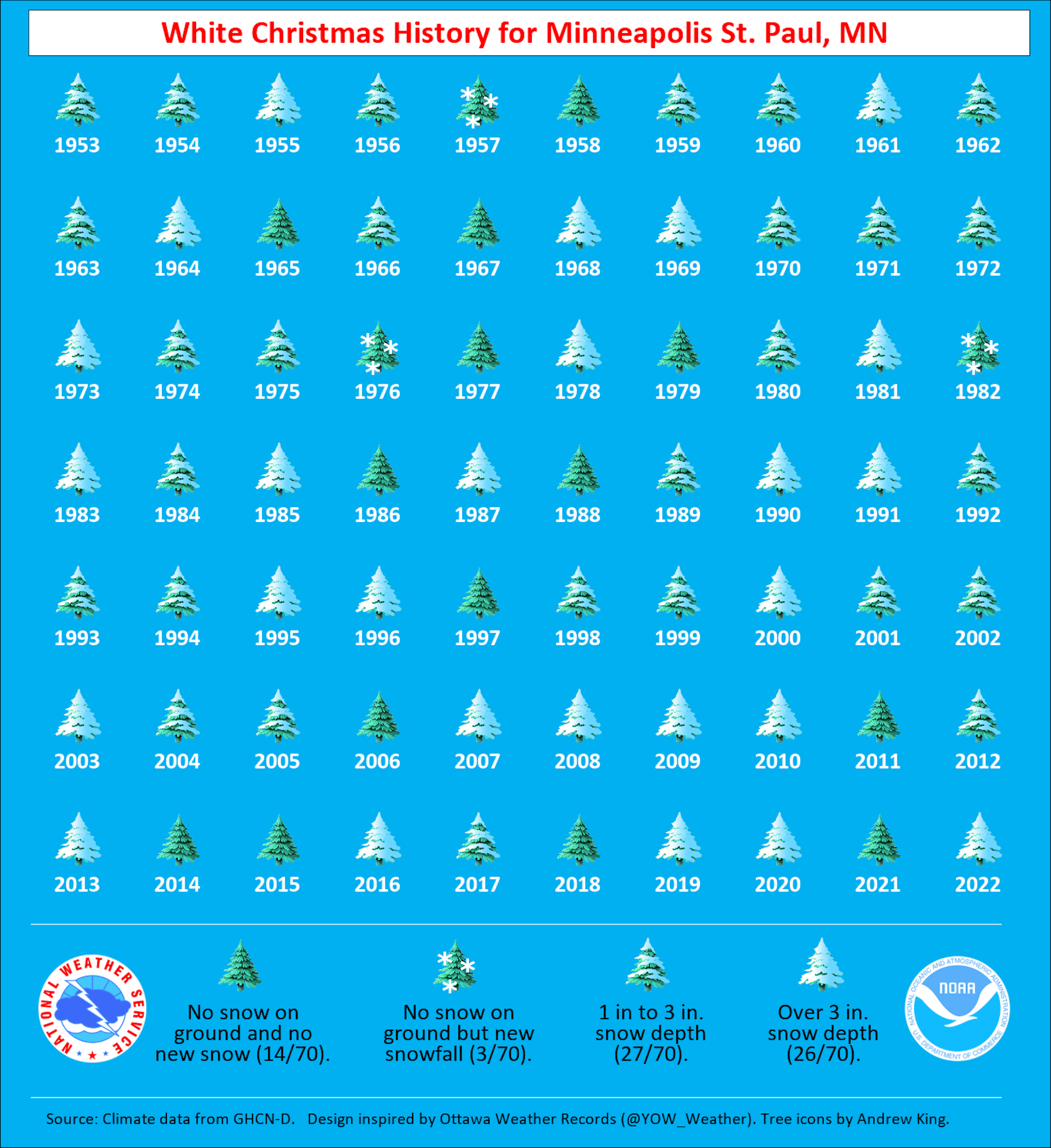
"Will we have snow on the ground at Christmas? It's an age-old question that we hear frequently as the holidays approach. The chances of having a "white Christmas," defined as having one inch of snow on the ground on the morning of December 25th, range from virtually guaranteed in the Boundary Waters Canoe Area and a good part of the Arrowhead, to about 60% in southwestern Minnesota. The snow depth at most sites is measured once a day, usually in the morning. The best chances of having a white Christmas is almost guaranteed. Northern Minnesota is one of the few non-alpine climates in the US where a white Christmas is almost a sure bet. In 124 years of snow depth measurements in Twin Cities, a white Christmas happens about 71% of the time. From 1899 to 2022 there have been 36 "brown Christmases," with either a 0 or a "trace" reported for snow depth on December 25th in the Twin Cities; the last such instance was in 2021, when warm conditions melted all remaining snow on the 24th and in the overnight hours before the morning observation. The years 2018 and 2015 also no measurable snow on the ground in the Twin Cities on December 25th."