

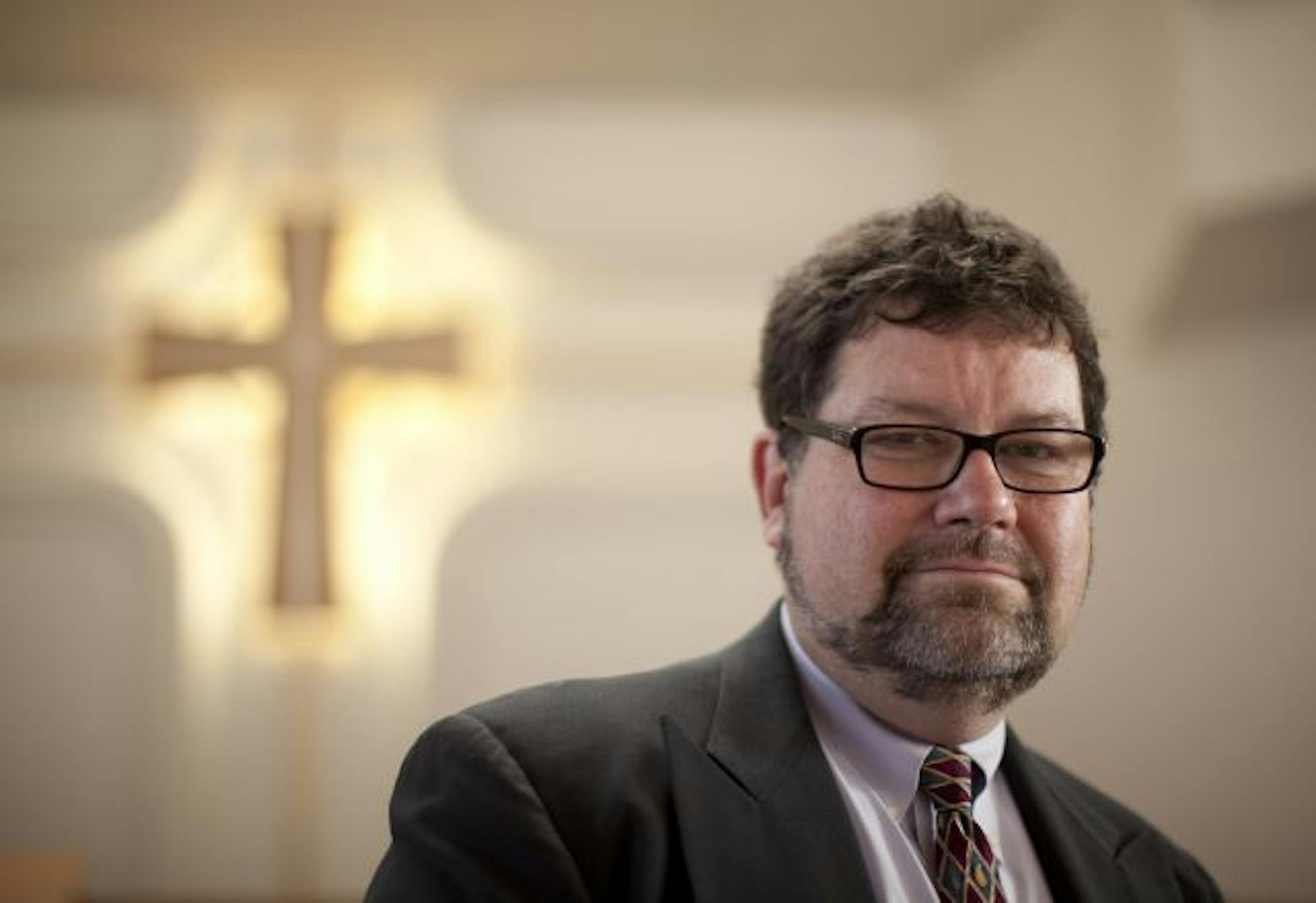
An ordained minister of the Presbyterian Church USA who once worked in Minneapolis was acquitted Monday by a church panel of charges that he violated the church constitution when he legally married his gay partner in California in 2008.
The case of the Rev. Erwin Barron, who was associate pastor at Westminster Presbyterian Church in the 1990s, is likely to be appealed. It is the first time the divided church, which sidestepped the issue of gay marriage at its national convention last summer in Minneapolis, has dealt with the possible discipline of a gay pastor who legally married a same-sex partner.
Barron, a college professor in San Francisco whose church credentials remain with the Presbytery of the Twin Cities Area, faced a 2 1/2-hour trial before a presbytery panel of six at Oak Grove Presbyterian Church in Bloomington. After almost three hours of closed deliberations, the panel split 3-3. A two-thirds vote was required for conviction, which lawyers said could have led to defrockment.
"I'm relieved," Barron said. "I wish it was more definitive. ... The decision is not clear for the church."
The Rev. Neil Craigan, a White Bear Lake pastor who was on the prosecuting committee, said his group will consider an appeal. The case could rise to the synod level and possibly to the national church for final disposition.
"I think there is a high probability that we will appeal to get more clarity on the issues that we face as a denomination," Craigan said. "We've never had a trial of this kind before."
The unusual hearing, held in a church community room, featured defense and prosecution lawyers who were Presbyterians who volunteered their services. About 25 people attended, most of them Barron supporters from Westminster. The six-person judicial commission -- three pastors and three church elders -- sat with files and copies of the church constitution at a table facing a witness table and a lectern, where the lawyers argued their case.
At issue was whether Barron violated the church constitution, which says that church officers must "live either in fidelity with the covenant of marriage between a man and a woman, or chastity in singleness. Persons refusing to repent of any self-acknowledged practice which the confessions call sin shall not be ordained and/or installed as deacons, elders, or ministers."


