

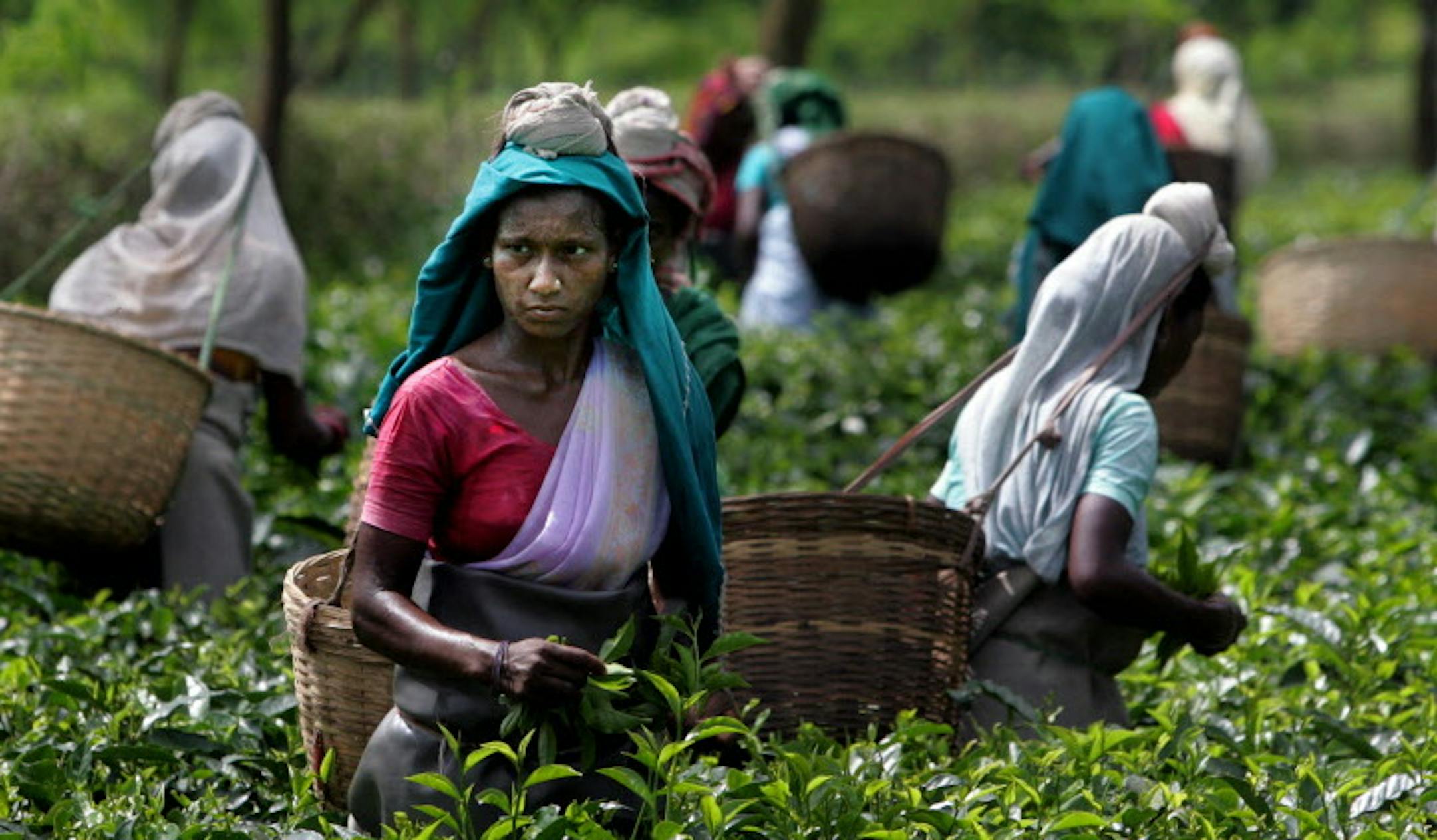
JORHAT, INDIA – Usha Ghatowar smiles wryly when asked about the pay she earns picking leaves at a colonial-era tea garden in India's Assam.
"Do you think 3,000 rupees [$48] are enough when your monthly expenses can be double that?" she mumbles, as she puts on her "jaapi" hat of woven bamboo and palm leaves and takes a sip of tea from a steel mug.
As the women workers around Ghatowar nod in agreement the heavens open — it has started raining heavily in recent days after three largely dry months.
Unrest is brewing among Assam's so-called Tea Tribes, whose forefathers were brought here by British planters from neighboring Bihar and Odisha more than a century ago, as changing weather patterns upset the economics of the industry.
Scientists say climate change is to blame for uneven rainfall that is cutting yields and lifting costs for tea firms such as McLeod Russel, Tata Global Beverages and Jay Shree Tea.
While rainfall has declined and become concentrated, temperatures have risen — ideal conditions for pests like looper caterpillar and tea mosquito to infest the light green tea shoots just before they are ready to be plucked.
Use of pesticides and fertilizers has nearly doubled as a result in Assam's 800 big tea plantations, known as gardens, and the rising costs are making Indian tea less competitive.
As a result, firms in Assam are resisting calls from activists and student leaders to lift the daily wage of tea workers from about $2 agreed to recently, blaming weak prices and the doubling of crop expenses over the past 10 years.


