

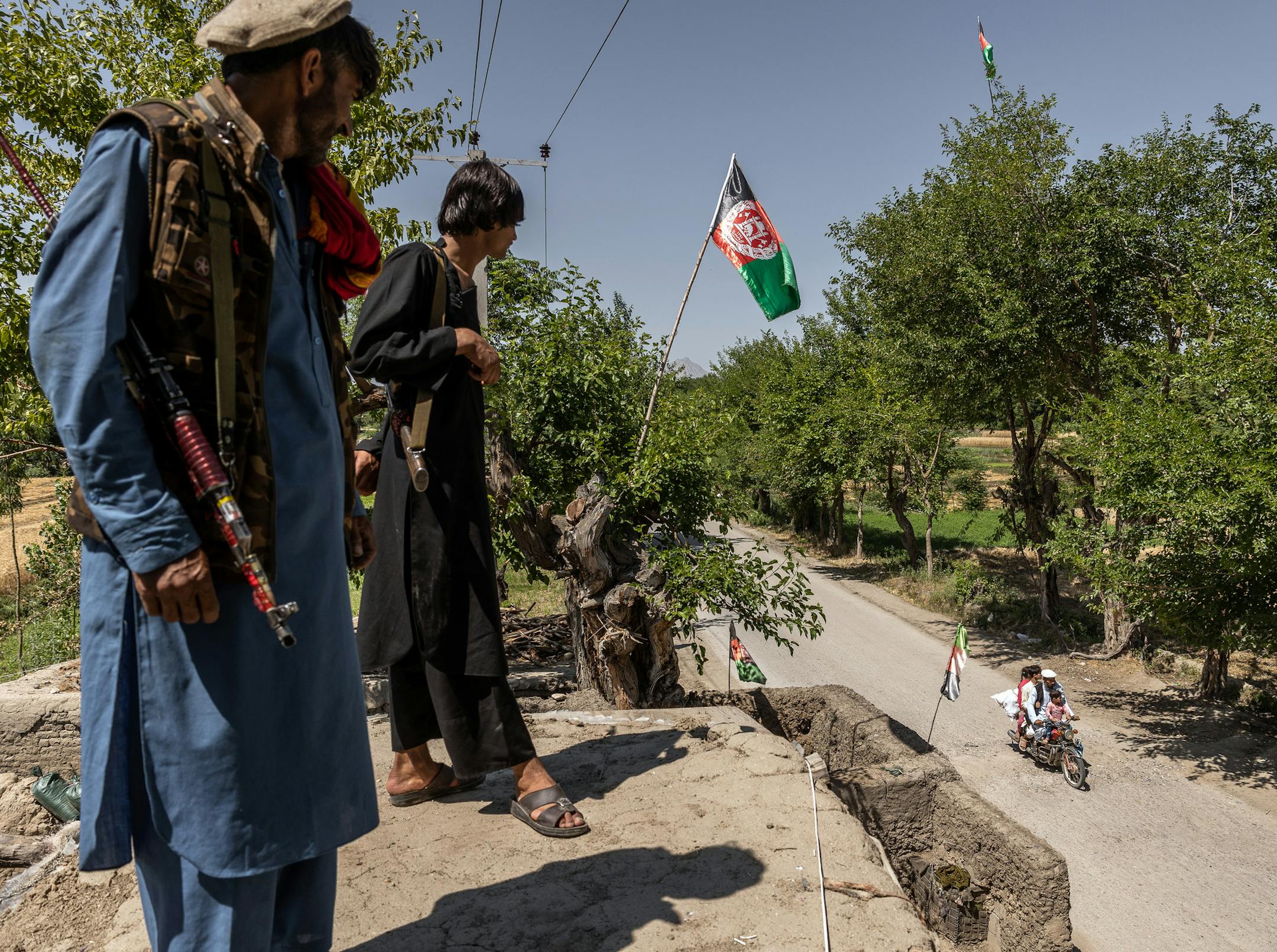
MEHTAR LAM, AFGHANISTAN – Ammunition was depleted inside the bedraggled outposts in Laghman Province. Food was scarce. Some police officers hadn't been paid in five months.
Then, just as U.S. troops began leaving the country in early May, Taliban fighters besieged seven rural Afghan military outposts across the wheat fields and onion patches of the province in eastern Afghanistan.
The insurgents enlisted village elders to visit the outposts bearing a message: Surrender or die.
By mid-month, security forces had surrendered all seven outposts after extended negotiations, according to village elders. At least 120 soldiers and police were given safe passage to the government-held provincial center in return for handing over weapons and equipment.
"We told them, 'Look, your situation is bad — reinforcements aren't coming,' " said Nabi Sarwar Khadim, 53, one of several elders who negotiated the surrenders.
Since May 1, at least 26 outposts and bases in just four provinces — Laghman, Baghlan, Wardak and Ghazni — have surrendered after such negotiations, according to village elders and government officials. With morale diving as U.S. troops leave, and the Taliban seizing on each surrender as a propaganda victory, each collapse feeds the next in the Afghan countryside.
Among the negotiated surrenders were four district centers, which house local governors, police and intelligence chiefs — effectively handing the government facilities to Taliban control and scattering the officials there, at least temporarily.
The Taliban have negotiated Afghan troop surrenders in the past, but never at the scale and pace of the base collapses this month in the four provinces extending east, north and west of Kabul. The tactic has removed hundreds of government forces from the battlefield, secured strategic territory and reaped weapons, ammunition and vehicles for the Taliban — often without firing a shot.


