

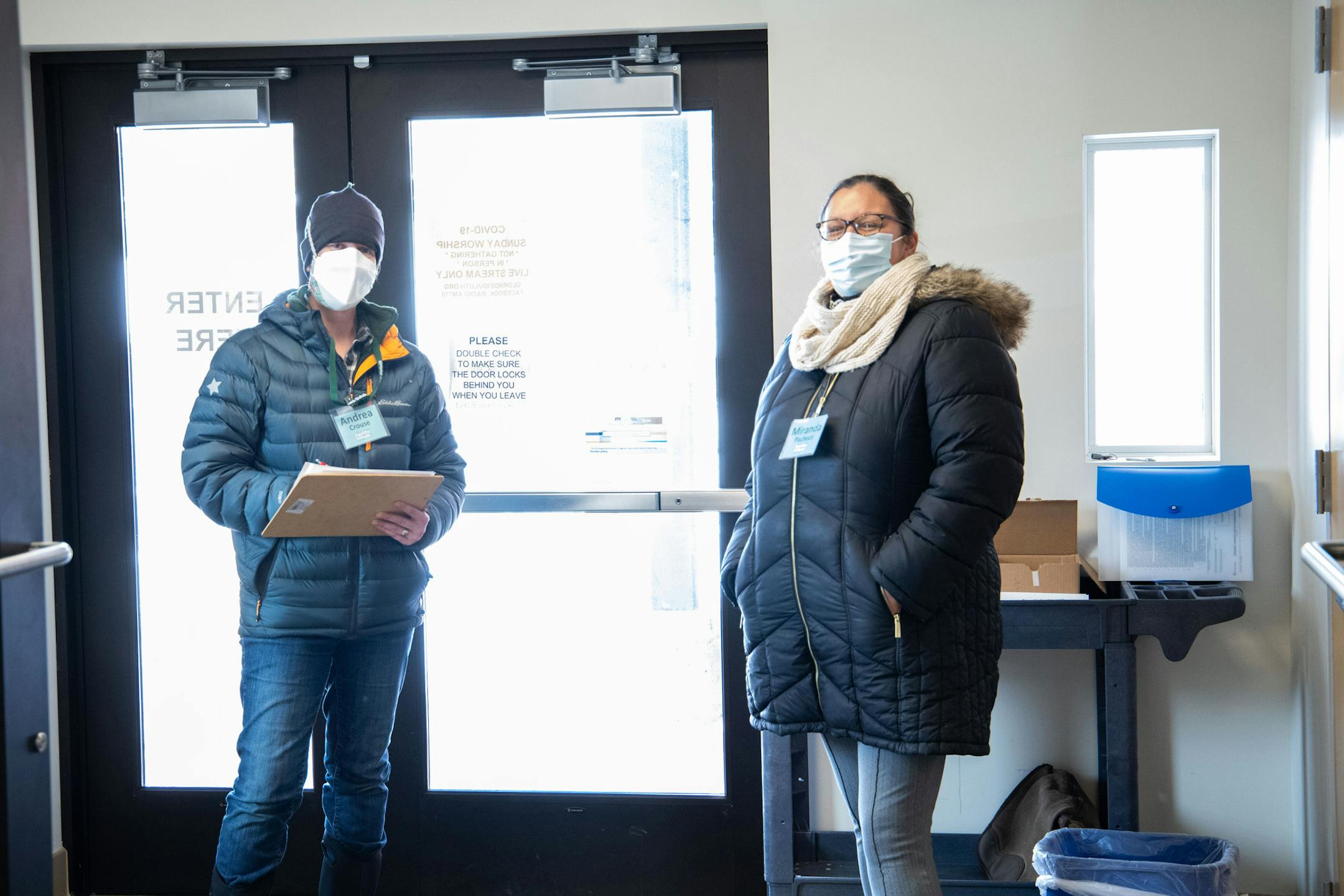
DULUTH – The snow was just starting to melt outside while folks trickled into Gloria Dei Lutheran Church for a nontraditional service — a COVID-19 vaccine clinic.
The site had been chosen by a group of Central Hillsiders who had been hired by a local nonprofit to help their neighborhood navigate the pandemic. The team knew their neighbors would appreciate the vaccine clinic location and the personal outreach that brought more than 60 elderly residents in for their first vaccine dose.
"I'm a part of the Hillside, so I get to see firsthand what my neighbors need," said Tiffany Fenner, a Healthy Hillside steering team member.
Fenner and others on the six-person team answered an ad in November for the part-time jobs "dedicated to helping Hillside residents and stakeholders get through the COVID-19 pandemic as successfully as possible."
They have spent months going door to door, handing out masks and information and simply having conversations about what needs are going unmet.
"The folks who live in the Hillside are historically underserved," said Andrea Crouse, community development manager with Zeitgeist, the Duluth nonprofit focused on arts and community development that put together the Healthy Hillside initiative. "We're going to be on that road to recovery for a long time. There's just so much job loss and housing insecurity, so we're helping people through that and connecting them to resources."
The effort comes as a recent local survey showed deep distrust with medical institutions among the city's Black population — many of whom live in Central Hillside in the shadow of the Essentia Health and St. Luke's campuses.
One of that report's recommendations was to have local residents lead the charge in improving their neighborhood's health outcomes.


