

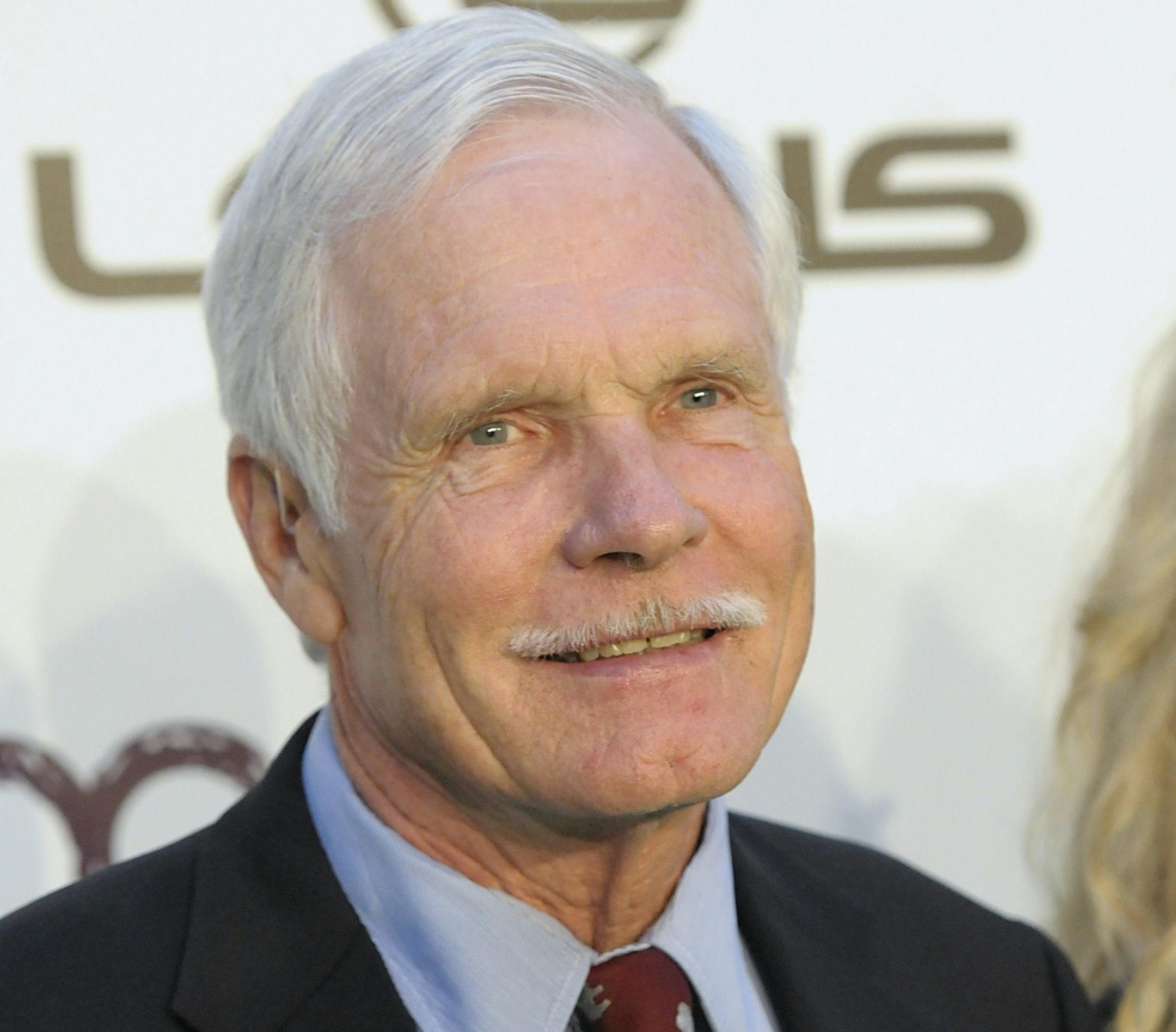
There are few media figures of the late 20th century who spent more time in front of cameras than Ted Turner. Journalists fell over themselves coming up with nicknames for the man known to have no filter and endless chutzpah: “Maverick Man,” “Mouth of the South,” “Captain Outrageous.”
Now in his twilight years, suffering from Lewy Body dementia, 85-year-old Turner is no longer in the spotlight, living mostly in Montana among wide expanses of fields and bison. But he has left a definitive mark on history in ways that resonate to this day, which led a married documentarian couple to compile a thorough six-part docuseries about Turner, “Call Me Ted,” that is airing on Max (which also owns CNN).
Joni Levin and Arthur Clarke cover Turner’s entire life, frequently using Turner’s own Southern drawl to narrate much of it courtesy of the audiobook of Turner’s 2008 memoir “Call Me Ted.” They also plumbed archives of hundreds of interviews, talks, press conferences and speeches Turner made over the decades, going back to the 1970s when he won the America’s Cup and turned TBS into the first ad-supported basic cable network. There is also never-before-seen video of Turner interacting with journalists at CNN Center during the 1991 Gulf War and 9/11.
Levin worked on documentaries for CNN in the 1990s and became friends with Turner. In 2019, she approached him at the 25th anniversary celebration of Turner Classic Movies and told him what she wanted to do.
Clarke noted that Turner had no editorial control over the content but has seen it. They in fact have kept in regular contact with Turner.
“Ted’s doing reasonably well,” Clarke said. “He was just down in Patagonia, Chile, fishing in spite of his Lewy Body dementia. He has good days, bad days.”
In a statement provided by Turner Enterprises, Turner said he was “deeply impressed and grateful for the colossal amount of work that went into this biopic... I’m ecstatic about the results!”
Levin said they wanted to do this documentary because “nobody has done that definitive deep dive into his life and legacy. We look at his accomplishments but also the shadows and obstacles he had to overcome to be the man he is today.”


