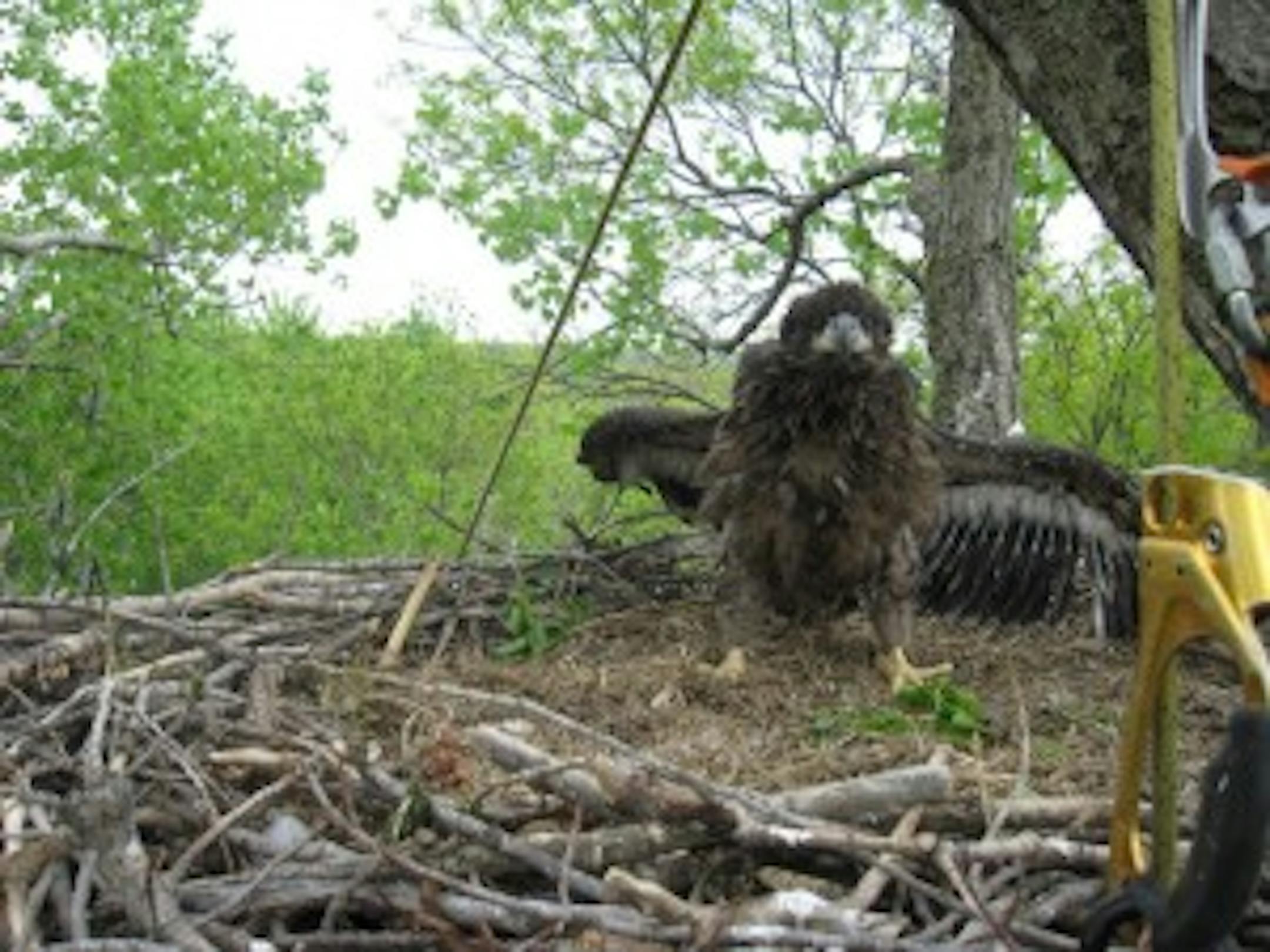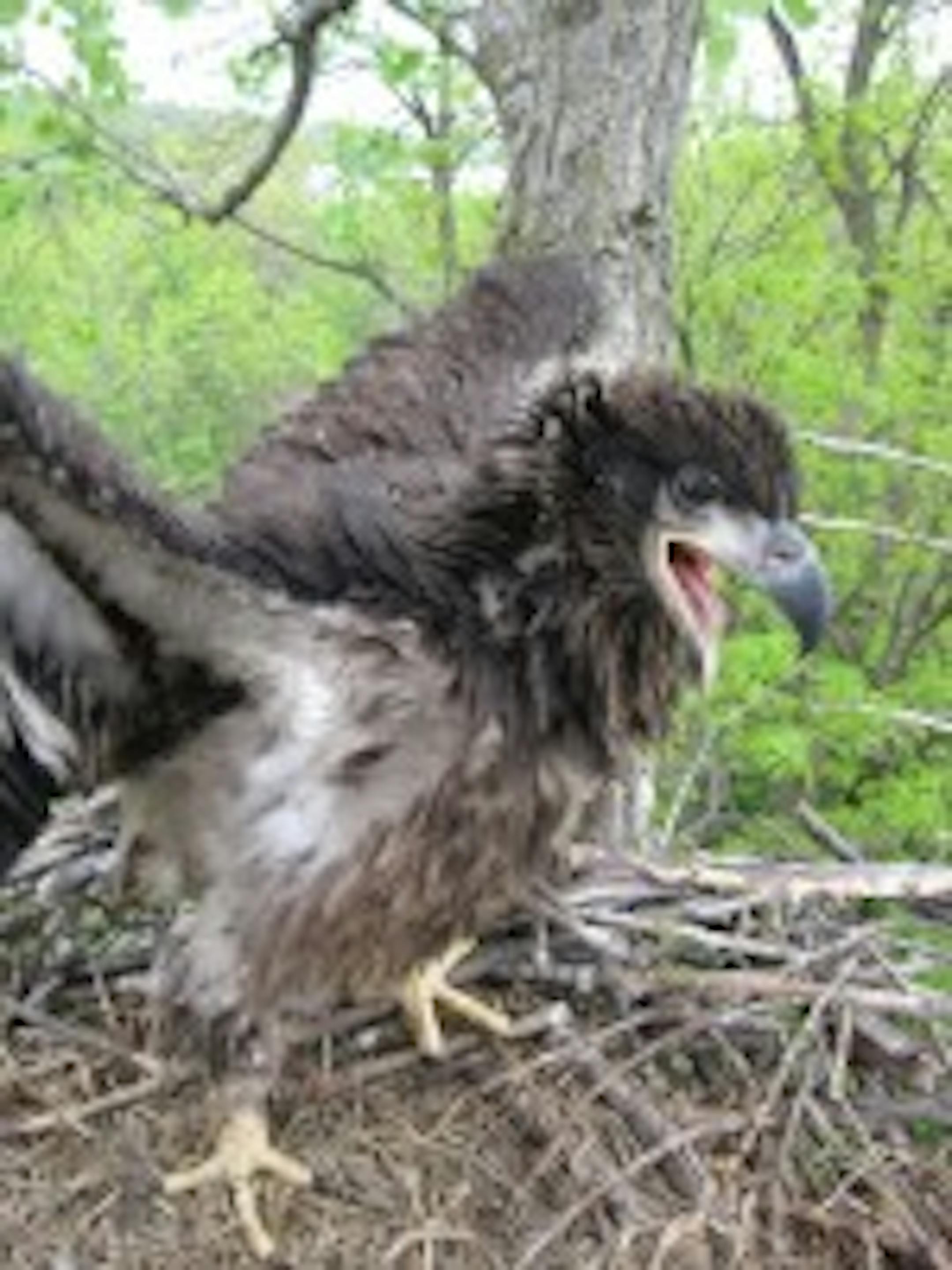
A bald eagle chick was briefly kidnapped from a nest on the Mississippi River recently.
A group of folks from the Great River Road Visitor & Learning Center (better known as Freedom Park) in Prescott, the Mississippi National River and Recreation Area, and the St. Croix National Scenic Riverway are thinking about putting a webcam on an eagle nest at the confluence of the St. Croix and Mississippi Rivers, and went to take a close-up look at the nest and its occupant one day last month.
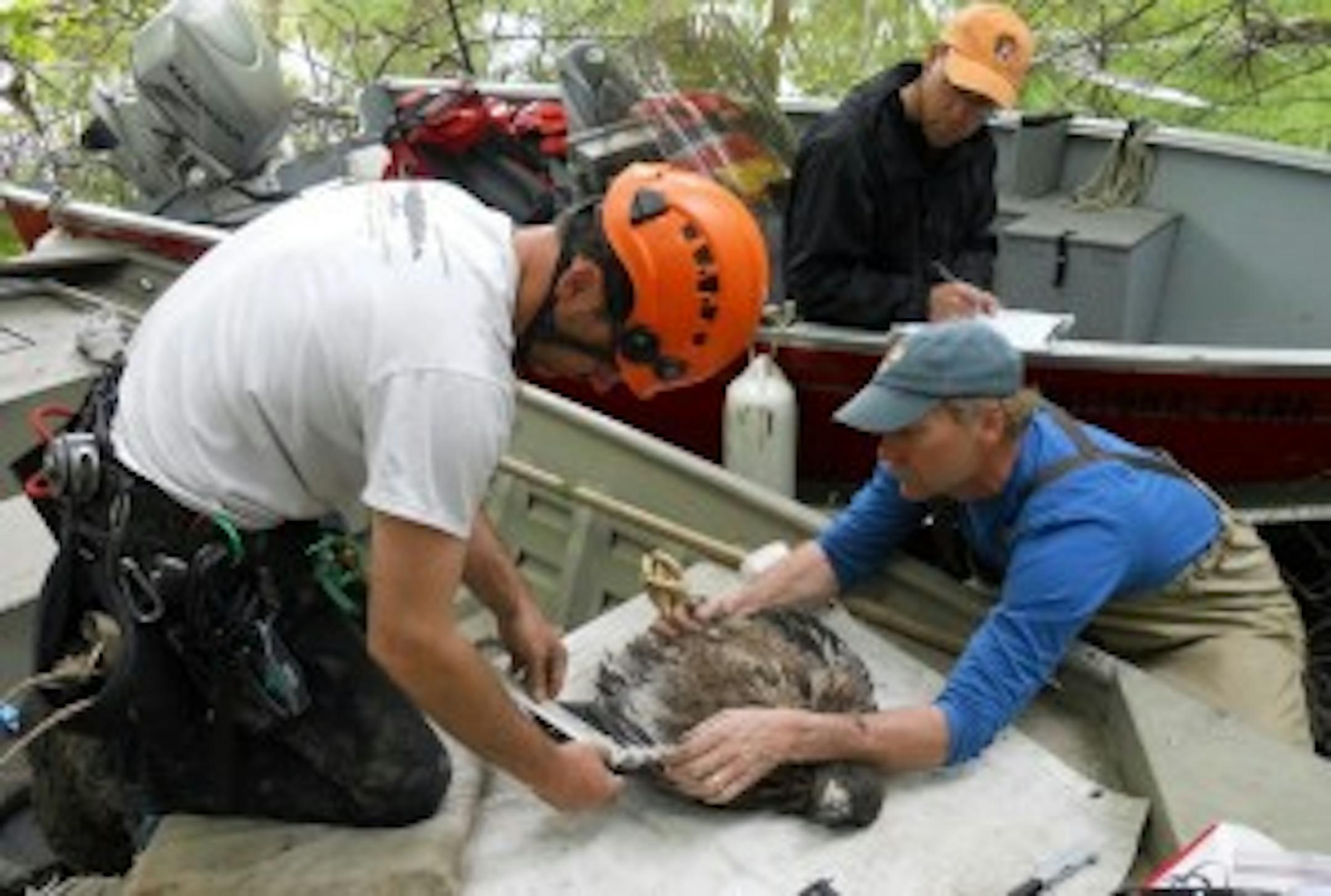
Professional tree-climber Jim Spickler evaluated the nest for a potential camera but also brought the 10 lb., seven-week chick down to the ground for a visit with researcher Bill Route, who took blood samples and banded it before returning the eaglet to the nest.
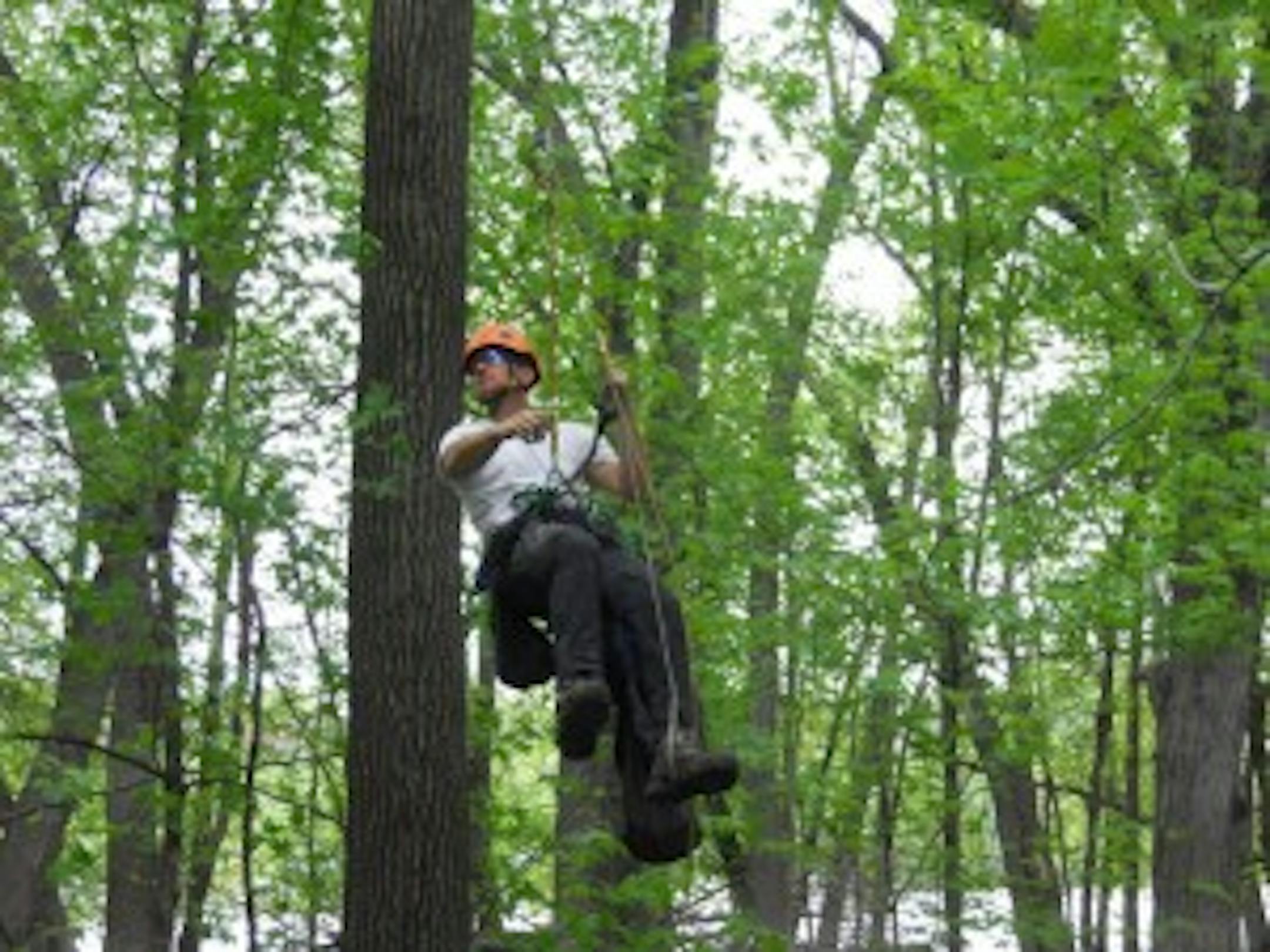
Climber Jim Spickler ascends to the eagle nest
Spickler, who travels all over the globe climbing our planet's tallest trees and who has helped install several such eagle cameras, rated the Prescott nest as at least a nine out of 10. It's solidly built, within sight (and transmission range) of Freedom Park, and there are good branches to mount a camera on where there won't be a risk of the lens being covered in, well, eagle excrement.
Like the very popular camera in Decorah, Iowa this spring, the Prescott camera would let anyone on the Internet watch life in the nest next spring, 24 hours a day. In the video below, Spickler first evaluates potential camera locations, but it's the the close-up footage of the eaglet at the end that is both fascinating and endearing.
Route, of the National Park Service has been conducting research into contaminants in our environment since 2006, and uses blood samples from young eagles on the Mississippi and St. Croix Rivers and the Apostles Islands to measure levels of chemicals.
Eagle populations have recovered to the point the birds were removed from the Endangered Species List in 2007. What almost wiped them out once is still a problem, though: the birds accumulate pollutants because of their diet and the fact that they are at the top of their food chain, which makes them excellent indicators of pollution levels.