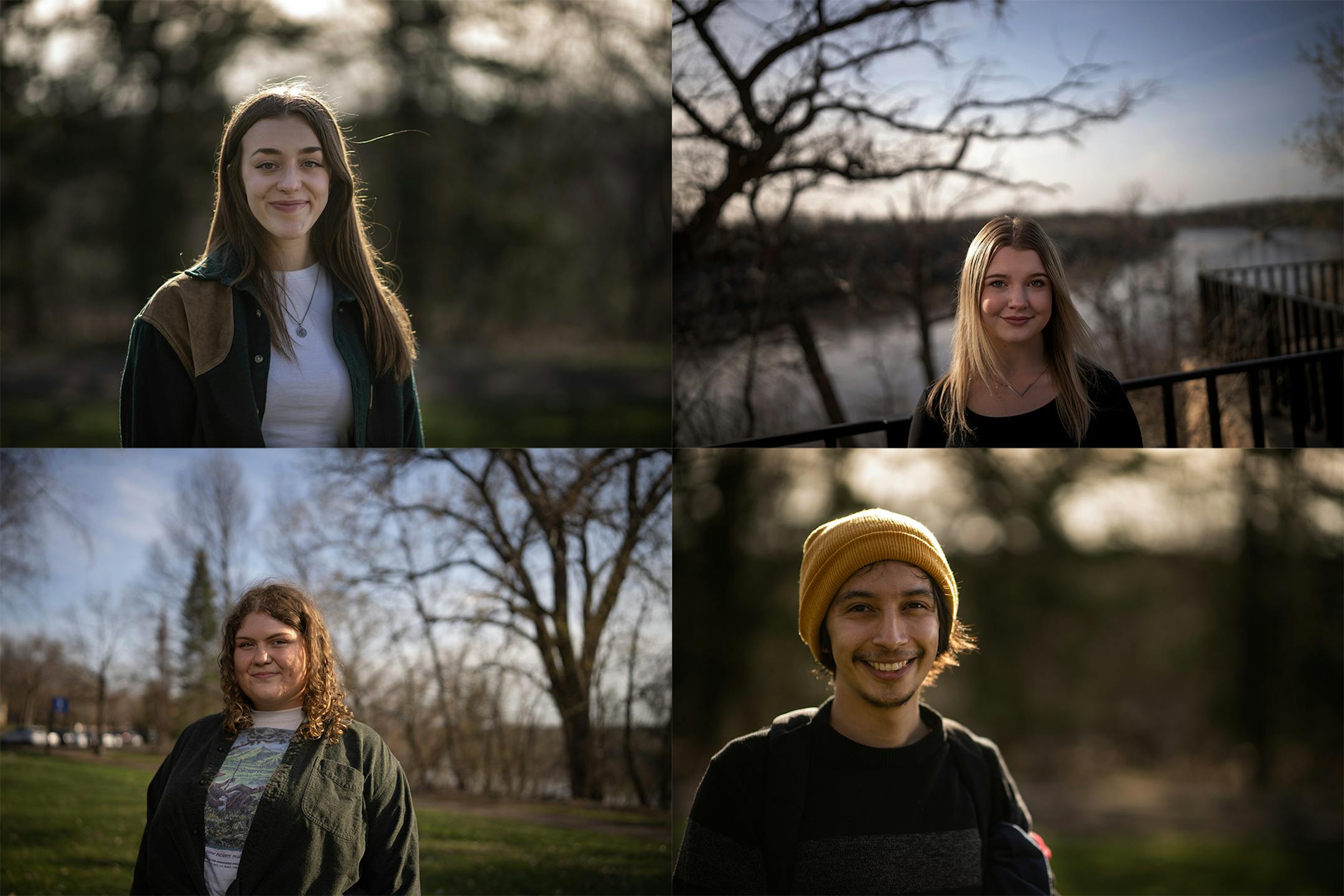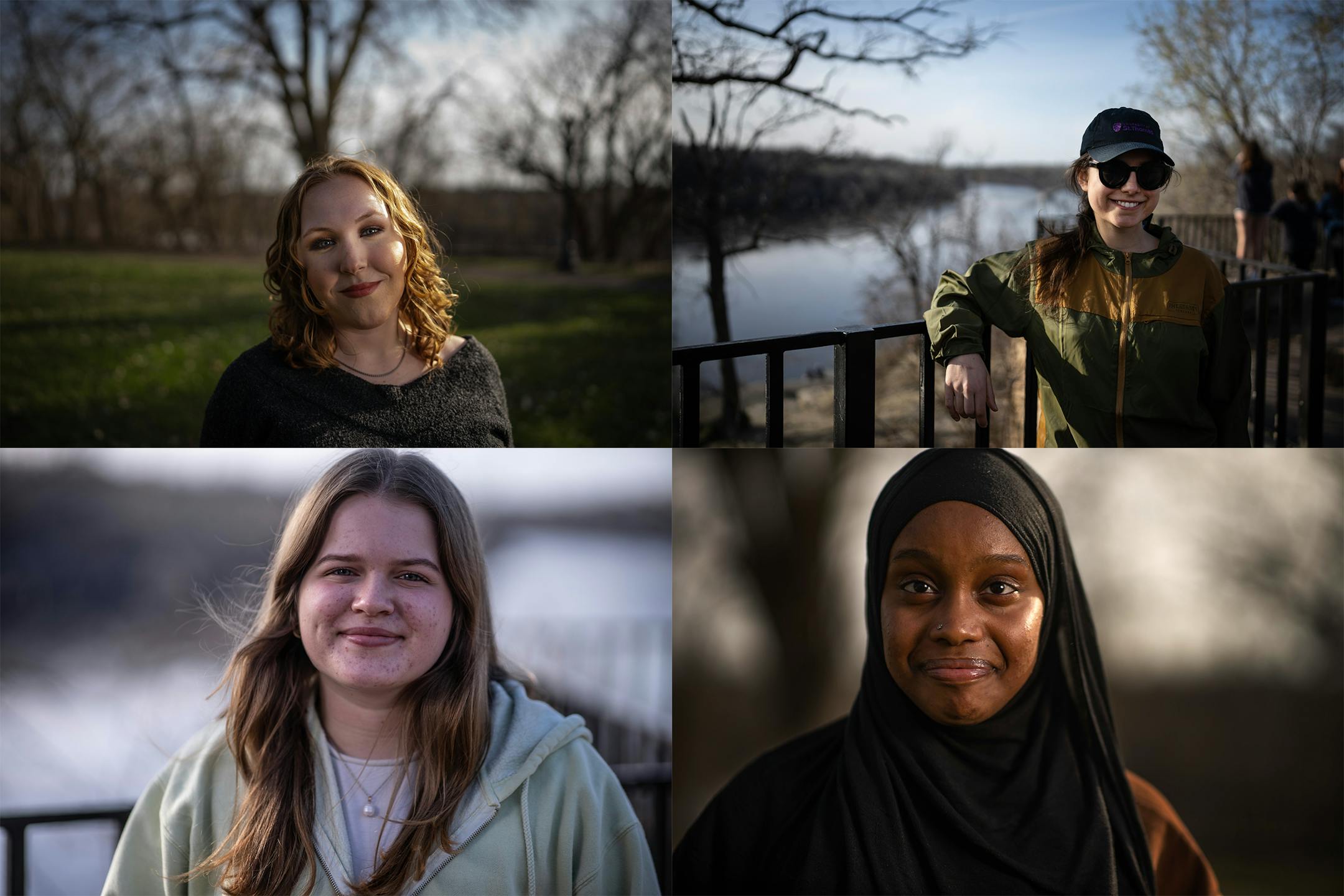
When a class of environmental journalism students was asked to turn its storytelling on itself, at least one theme emerged: Young people feel an authentic connection with the outdoors, while the pace of society and digital technology's influence can build barriers to that connectedness.
In the spirit of Earth Day on Saturday, we wanted these University of St. Thomas students to define valuable time outdoors; to address the role of media and if it accurately reflected their outdoor lives; and to put words to their hopes and fears in wake of climate change.
Mark Neuzil, their professor and the school's chair of the department of emerging media, acknowledged he gets students with a heightened awareness of outdoors topics but said the influence of social media and its use in their lives surprised even him.
"Of course, I knew it would be hard for them to get away from social media, but it still is a little jarring when seeing it written down," he said. "Their experiences are more and more filtered through media."
Another takeaway: Technology is meddling in their experiences while also energizing that heightened consciousness.
Neuzil has taught the class for about 15 years and has sensed an uptick in outdoors IQ.
"I do test these kids every year, their ecosystem at the beginning of every class," he said. "… Like, was last year a wet or dry year? When do deer rut?
"The answers have been improving over the years and I think that reflects on the environmental education some of them get at a younger age," he added, referring to centers such as Wolf Ridge in Finland, Minn.; Deep Portage in Hackensack; and Audubon Center of the North Woods in Sandstone, among others. "The schools take them there and some of it sticks."