

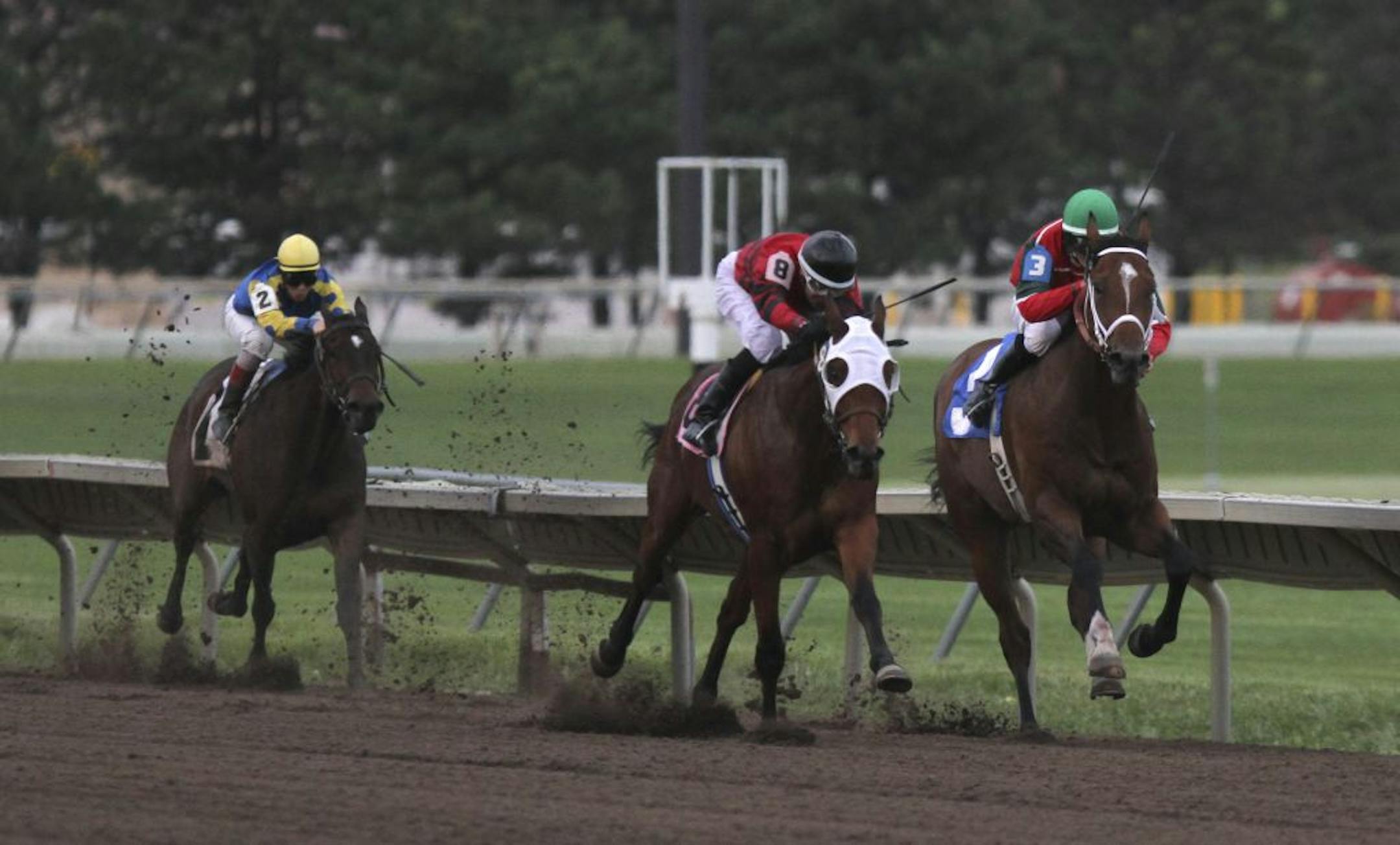
Today -- fittingly in Shakopee, named for a Dakota chief -- the Minnesota Racing Commission will consider whether to approve a chance for a positive turn in this state's relationships with its native tribes.
At the same time, the commission can contribute to the resurgence of the state's thoroughbred horse industry and settle a 15-year-old squabble at the State Capitol.
That's the big-picture significance of the business deal announced last week between Canterbury Park racetrack and operators of Mystic Lake casino, the Shakopee Mdewakanton Sioux Community.
The Racing Commission ought to be thorough in evaluating whether this deal serves the public interest. It should ensure that the arrangement, which involves the Mdewakanton Sioux paying $75 million over 10 years to Canterbury to bolster racing purses, does nothing to damage the integrity of the racing and card games offered at the track.
The commission is obliged to consider the implications for the other racetrack it oversees, Running Aces Harness Park in Columbus. That track's leaders are unhappy with Canterbury's part of its proposed bargain: It would no longer seek the Legislature's approval for the installation of 2,000 slot machines on its campus as part of a "racino," and it would actively oppose other racino proposals, including one by Running Aces.
But Racing Commission members also should look at the larger context of the proposed Canterbury-Mdewakanton connection. When they do, they will see much to admire:
• The accord would end a long-running rivalry between the state's largest Indian and non-Indian purveyors of gambling that, because of its racial and cultural dimensions, has not been good for Minnesota. Too often, that rivalry has been cast in unfortunate us-vs.-them terms and has been fueled by stereotypes and resentment.
A Canterbury/Mystic Lake linkage would reinforce a larger truth: Whether native or nonnative, Minnesotans are all in this together.


