

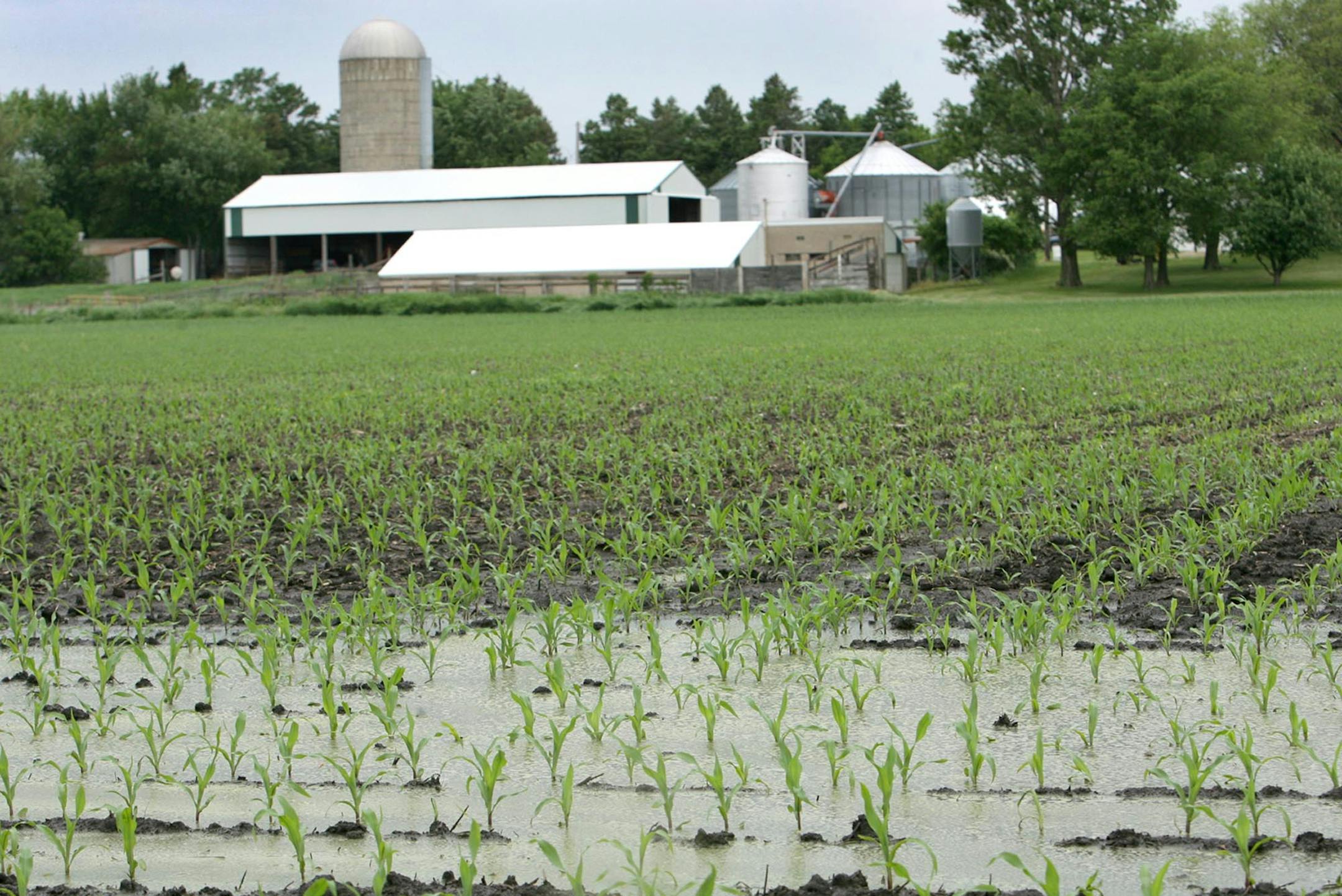
NEW YORK - Floods that have inundated the Midwest could reduce world corn supplies and drive food prices higher at a time when Americans are already stretching their grocery budgets and people in poor countries have rioted over rising food costs.
The U.S. government will report later this month on how many acres of corn were lost to floodwaters. But farmers and agriculture experts already say the toll appears grim, with thousands of acres probably destroyed in the region that grows most of the world's corn.
"It's not a very good picture at all. We're looking at possibly a good reduction in acres if a lot of this crop remains underwater," said Chad Hart, an agriculture economist at Iowa State University. "There's still hope, but it wanes with each rainstorm."
The disaster has drawn comparisons to the 1993 floods that displaced thousands of people and wiped away vast swaths of the heartland's agriculture. Back then, about 18 bushels per acre of corn were destroyed, "and everybody is reporting that this year is worse," said Jason Ward, grains analyst at Northstar Commodity in Minneapolis.
The most recent floods have sent corn prices soaring past $7 a bushel for the first time, up from about $4 a year ago. Prices shot to a record for a seventh straight day Friday, climbing as high as $7.37 a bushel on the Chicago Board of Trade.
Floodwaters also hurt soybean crops, sending prices to near all-time highs. Wheat, oats, rice and other food commodities were damaged, too.
And corn prices could jump further if floodwaters don't recede soon, experts say.
"We've got some major price volatility ahead the weaker this crop gets," Hart said.



