

In the glamour department, no contemporary American leader competes with French President Nicolas Sarkozy, recently dubbed President Bling-Bling by French tabloids thanks to his chic sunglasses and sexy third wife.
But what they lack in flash, U.S. presidents have made up for in gravitas and, occasionally, in cuddly eccentricity. Gruff, tough Teddy Roosevelt, for example, is credited with inspiring the teddy bear. Toy manufacturers began issuing the namesake bears after Roosevelt, a renowned hunter, declined to shoot a baby bear he found trapped in a tree during a 1902 trip to Mississippi.
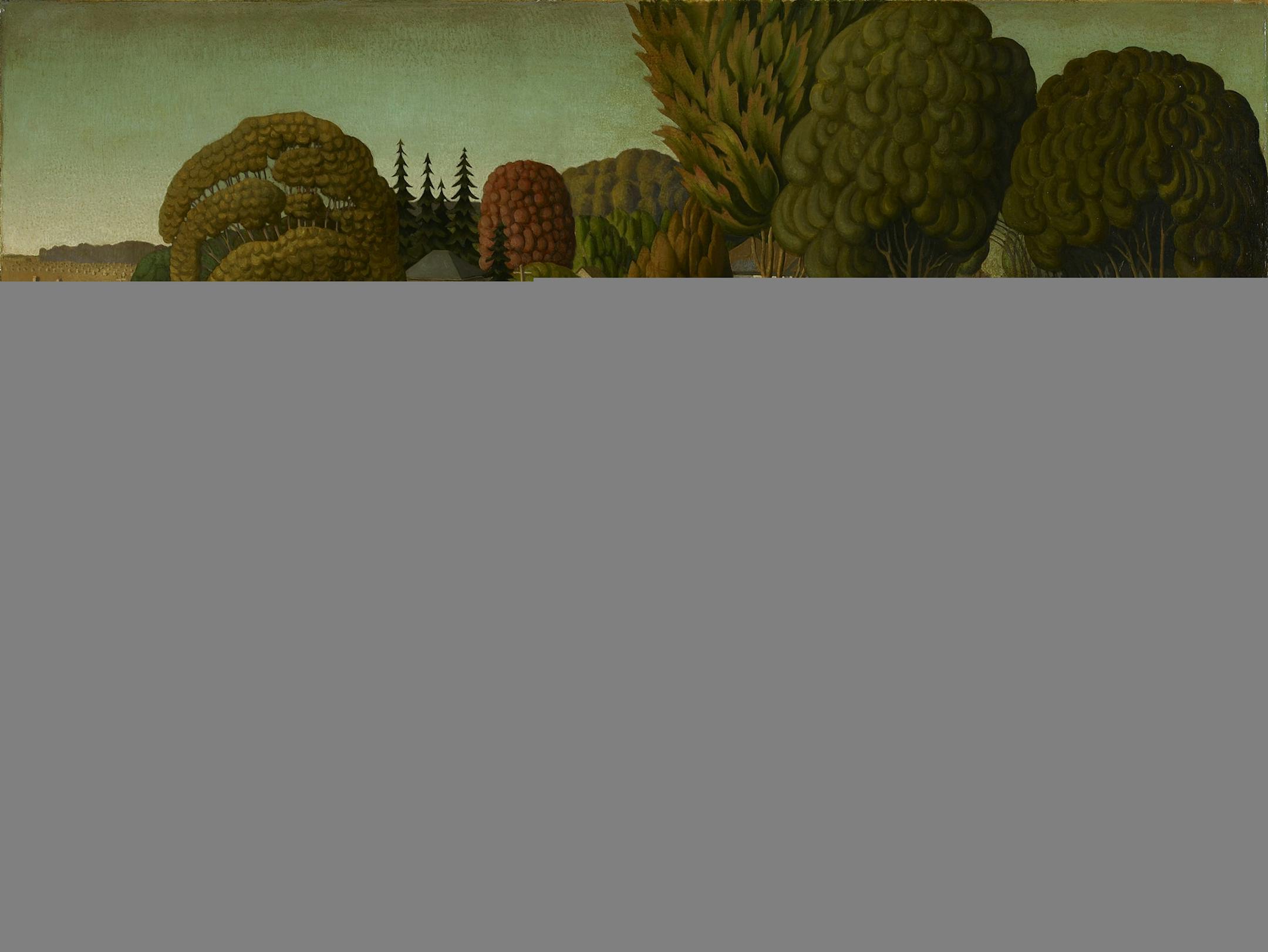
The hunting incident was also commemorated in mechanical banks, one of which is on view in an engaging show, "Hail to the Chief: Images of the American Presidency," at the Minneapolis Institute of Arts through Sept. 21. Staged to coincide with the Republican National Convention, the show ranges from formal portraits of George Washington to inaugural ball tickets, presidential Christmas cards, war-bond posters and campaign shopping bags. Grant Wood's famous 1931 painting of the "Birthplace of Herbert Hoover," in West Branch, Iowa, is here, along with John Frederick Peto's trompe l'oeil still life recalling the death of Abraham Lincoln.
Highpoints include Thomas Sully's very fine copy of Gilbert Stuart's 1796 portrait of Washington, posed in a black silk suit with one hand on his sword and the other on the U.S. Constitution, emblems of his dual role as war hero and statesman. Hiram Powers' white marble bust of Washington (1853) and a portrait etched in blue glass from the same era suggest the reverence the first president commanded long after his death in 1799. There's even a likeness of Washington by Dwight Eisenhower, whose main hobbies were golf and Sunday painting.
There are also documents signed by James Madison, Thomas Jefferson, James Monroe and John Quincy Adams; a lavishly embroidered presidential flag from John Kennedy's oval office, china from Ronald Reagan's White House, and a 1935 tea set decorated with engravings of patriotic buildings (Monticello, Independence Hall) that was issued during the Great Depression to raise money for unemployed architects.
The show remains reasonably nonpartisan, although Lincoln -- the Grand Old Party's most famous name -- gets more attention than most of his colleagues. There are medals, busts, paintings, engravings and documents commemorating various facets of Lincoln's life.
"It really became clear, when we started researching this, that Lincoln is still revered above all the other presidents, particularly in the North," said Dennis Michael Jon, co-curator of the show with Jennifer Komar Olivarez. "There's remarkable respect and almost a cult of personality about him, especially among collectors."
Still, exhibition documents make clear that Lincoln was not universally loved. In July 1863, midway through the Civil War, 120 civilians died in New York riots opposing military conscription and the Republican Party's war policies. A month later, an undeterred Lincoln signed an order (included here) drafting another 2,050 troops from New York City.


