

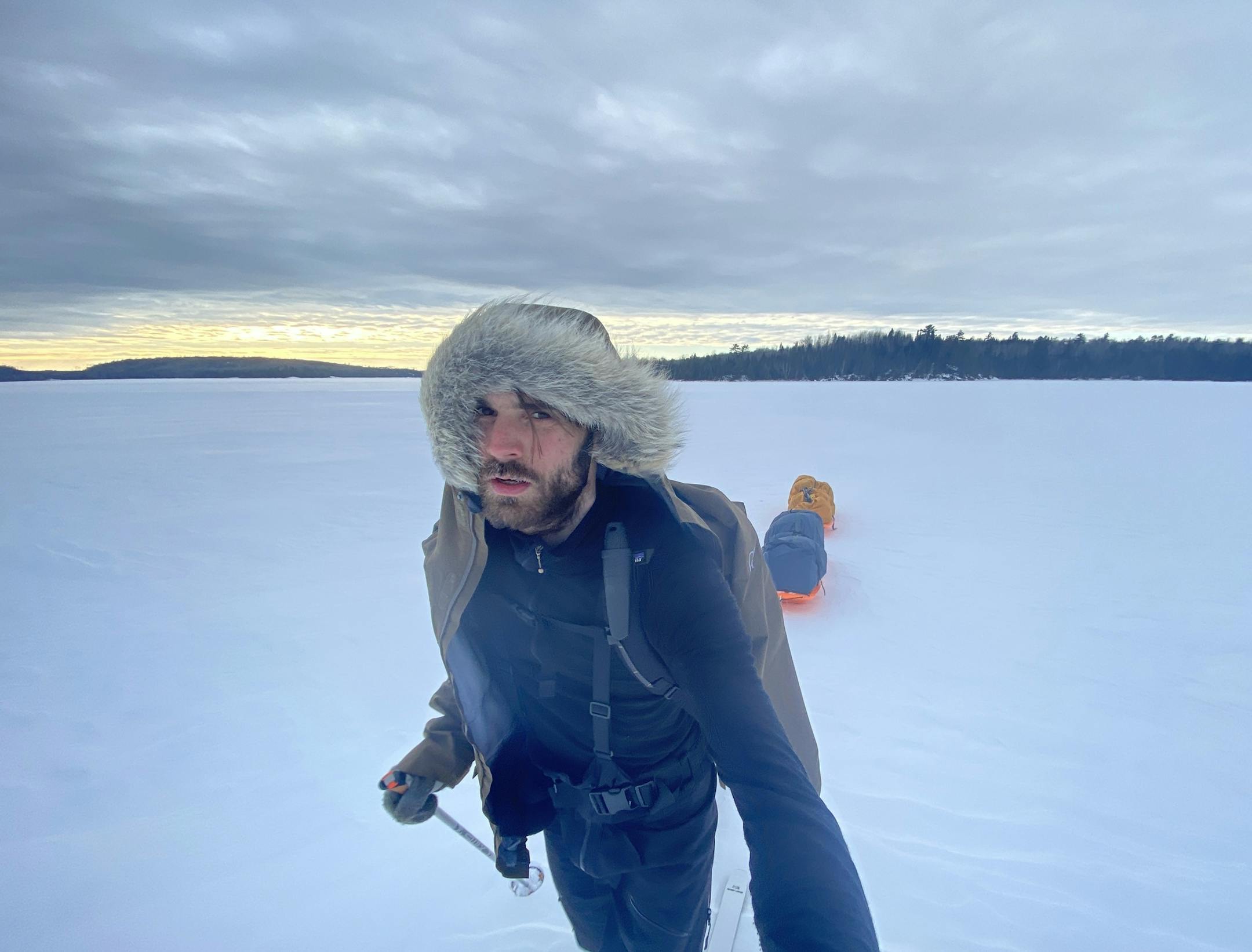
As springlike temperatures loosened winter's grip last week, Ty Olson sensed urgency to reach Lake Superior before more ice disappeared on the frozen waters along the Canadian-U.S. border that he was skiing across.
Weeks earlier, the temperature had plunged to minus 40, wolves howled and the thick ice below him shifted and cracked as he tried to sleep. He rolled over in his sleeping bag, too cold and exhausted to be scared, too driven to quit. Completing the solo trek of more than 250 miles to Lake Superior was a personal quest combined with raising money for those living on one of the poorest reservations in the country.
As a descendant of Norwegians who homesteaded in the Red River Valley after Native Americans were pushed out, Olson is committed to tell the story of stolen lands.
"I'm part of the system," said the 32-year-old filmmaker who grew up on the family farm outside Grafton, N.D., and now lives a chunk of the year in his family's Minnesota cabin not far from Leech Lake Reservation.
"My ancestors inherited the land from treaty negotiators, but does that matter? They knew people were here, and I benefited from this land," he said. "[The Indigenous people] are still suffering consequences from that."
So Olson tied his expedition to a cause — raising money for the organization One Spirit to buy firewood for those on South Dakota's Pine Ridge Reservation, where many rely on wood stoves for heat and cooking.
After preparing for months, he loaded up two pulk sleds with about 180 pounds of food and gear and set off Feb. 11 on frozen Rainy Lake in Voyageurs National Park. The temperature was 20 below zero but Olson was excited for an adventure.
Over the next several weeks, he endured temperatures that fell to at least minus 40 and then eventually topped 40 degrees. The fluctuations transformed the snow from grit-like to heavy and wet. Skiing often was slow and plodding.


