

Opinion editor's note: Star Tribune Opinion publishes a mix of national and local commentaries online and in print each day. To contribute, click here.
•••
In my younger and more vulnerable years, I was asked to fill in for a debate on the shores of Nantucket, after a last-minute cancellation by a more prominent combatant. The subject was God and religion, and I served as defender of faith against the prosecutorial efforts of Christopher Hitchens.
In my memory it was a brutal affair. The audience was there to hear Hitchens at the peak of his powers, and I was the Washington Generals. I threw some carefully rehearsed, extremely reasonable arguments at him; he batted them wittily away. The crowd cheered; the angels wept.
The lesson I took from that experience was simple: Trying to defeat charismatic men with facts and logic is a fool's errand. Hitchens' "religion poisons everything" account of human history was a mixture of balderdash, historical caricature and barely-veiled anti-religious bigotry. Therefore I should not have elevated his arguments by publicly debating them. Instead, I should have worked toward a world where institutions would decline to platform his fundamentalist style of atheism, no matter how many Nantucketers might clamor for tickets.
Wait, no — that's not the lesson I drew at all. The lesson I actually took was, Ross, you blew it, do better next time. Because it didn't matter whether I personally considered Hitchens' atheism to be beyond some intellectual pale; he was an important figure leading an influential movement, and in a free society there is no substitute for trying to win arguments with influential figures, no matter the risks of defeat or embarrassment you run along the way.
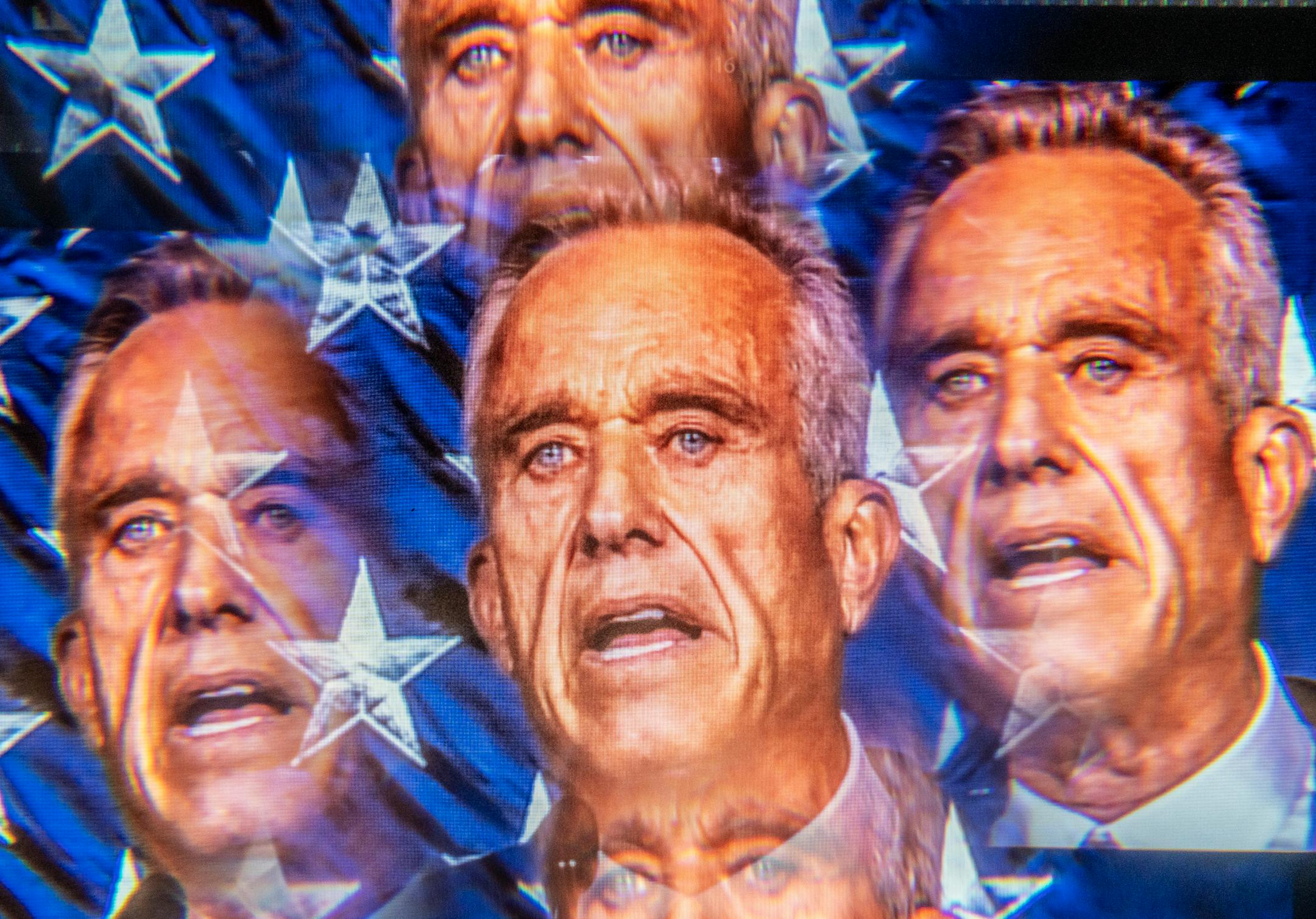
This is basically the perspective I bring to the argument about whether it makes sense for defenders of mass vaccination and other consensus health-and-science policies to publicly debate Robert F. Kennedy Jr., Democratic candidate for president.
Recently one such vaccine defender, Peter Hotez, dean of the National School of Tropical Medicine at Baylor College, was invited to debate Kennedy on Joe Rogan's extremely popular podcast and declined, on the grounds that RFK Jr. is slippery and unpersuadable, too much of a goal post-shifter to productively debate. Various intelligent people wrote essays defending Hotez: For instance, for Bloomberg Tyler Cowen explained why he doesn't engage with crankish economic theories, while my colleague Farhad Manjoo wrote about his experience debating Kennedy's stolen-election theories about the 2004 election, and why he now thinks that was a futile effort.


