

In the old days of the 1970s, back when a donkey still numbered among Nicollet Island's residents, the island's quasi-bohemian aura set it apart in a city where historical quaintness often has been scrubbed off the map.
Those days seem wilder and woollier than the proprietary attitudes about the island that have emerged more recently. Area residents failed in a long fight to halt construction of DeLaSalle High School's small stadium, for example, but did manage to keep its turf real grass.
Now there's another tussle brewing that's turning out some residents who populate the island and some from the riverside housing developments that overlook the island.
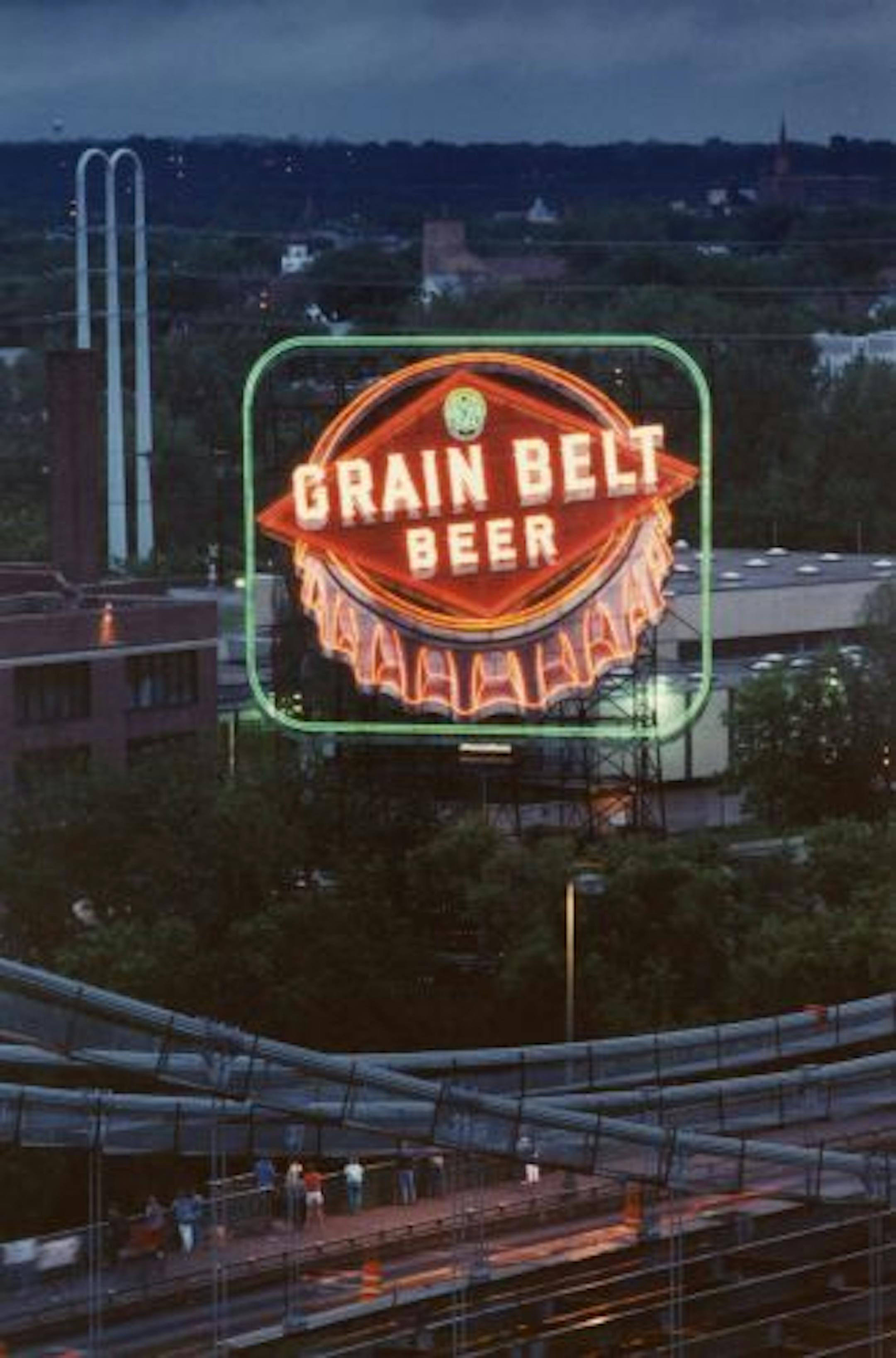
Garfield Clark, who sells commercial real estate, last week came before the Nicollet Island-East Bank Neighborhood Association to explain a proposal he's working on that involves the island's iconic Grain Belt sign, which faces downtown beside the Hennepin Avenue bridge. He's been listing for sale the sign and the property underneath it on behalf of the owners -- heirs of the Eastman family that played a major role in developing the island.
Clark's concept involves both renovating the historic sign, which was relit in 1989 but has been dark for years, and creating a flow of money to keep the sign maintained and pay the electric bill. It's his idea for how to raise the latter money that's creating the fuss.
Clark is discussing installing an electronic billboard on the back of the Grain Belt sign, pointing to a similar sign atop the Stimson building on Hennepin Avenue. This new sign would replace the seldom-used traditional billboard that backs the Grain Belt sign now. People living on the billboard side of the sign are objecting to the possibility of adding advertising in a historic district that's in a national recreation area -- an area recognized by the National Park Service.
"It really, in my opinion, desecrates the riverfront," said Merle Minda, who lives in Village Lofts on NE. 2nd St. She helped to organize residents to turn out at the association's annual meeting to question the proposal.
Clark estimates the cost of converting the neon of the Grain Belt sign to cheaper-to-light and easier-to-maintain LED lights at $500,000 to $750,000. He has the Eastman trust interested in donating the property to a nonprofit he says could be established for the perpetual care of the beer sign. August Schell Brewing Co., which owns the Grain Belt brand, is willing to contribute some amount, and the electricians union is willing to provide some in-kind labor. But he said he's still got a gap, plus annual operating costs he put at $20,000. Rent from the electronic billboard could cover the ongoing cost, making the sign's operation sustainable, he said.


