

Opinion editor’s note: Strib Voices publishes a mix of guest commentaries online and in print each day. To contribute, click here.
•••
Ever since the Consumer Financial Protection Bureau opened in 2011 with a mandate to regulate financial institutions, its detractors have tried to eliminate it. They have questioned its constitutionality, dismantled its board and slammed it for all sorts of shortcomings.
The second Trump administration, however, might have devised a more effective attack: Just walk in and pull the plug. Trump officials often cast this as a fight to rein in bureaucratic overreach, but in reality they are disappearing an agency that plays a crucial role in protecting the economy.
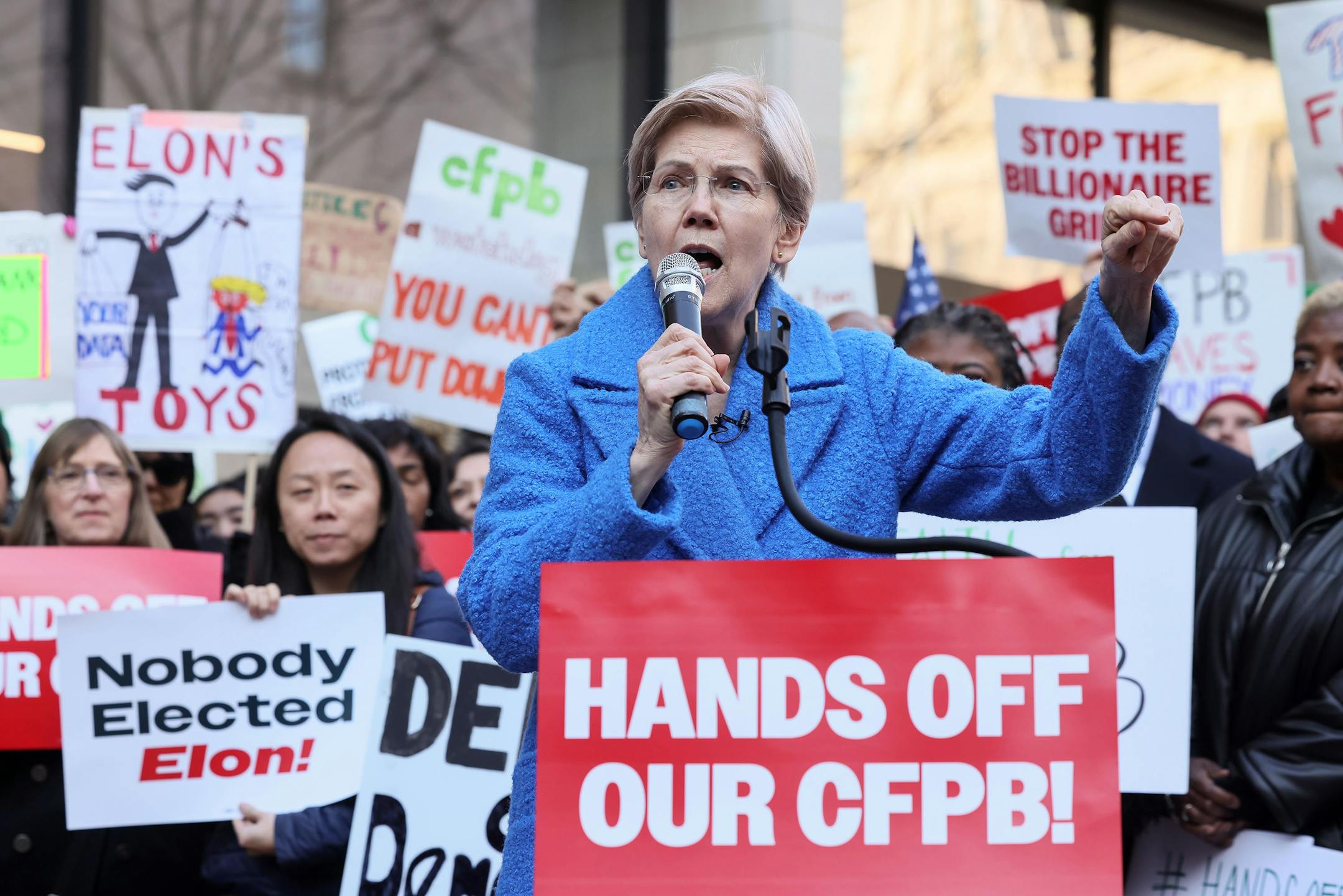
In recent weeks, Elon Musk’s DOGE service has barged into the CFPB and dismissed nearly all its staff. Trump fired its director, Rohit Chopra, and installed Russell Vought, the White House budget director, as its acting director. Vought ordered employees to halt operations for a week in February and canceled dozens of contracts essential to the organization’s operations. Musk curtly summarized the effort on X: “CFPB RIP.”
This blitz has been similar to DOGE upheavals at other agencies. But the CFPB’s dismantling is noteworthy for the way it exposes the hypocrisy in the Trump administration’s haphazard campaign to dislodge Washington elites and save taxpayer dollars. The CFPB — an organization of 1,700 employees that draws its funding from the Federal Reserve and stands between powerless consumers and mighty financial companies — does not fit comfortably into this populist narrative.
To conceptualize the agency’s work, think back to the last time you spotted suspect fees or charges on your credit card or financial statement — and drove yourself crazy trying to get the issue acknowledged. One of the CFPB’s primary functions has been to take complaints from consumers and present them to financial institutions.
It also goes after unfair, deceptive and abusive practices. Last year, for instance, the agency announced a rule that limited banks’ ability to charge overdraft fees, often referred to as “poverty taxes,” to people who have insufficient funds in their accounts. The rule is projected to save customers $5 billion annually.


