

If there's a silver lining to this year's invasion of the polar vortex, it's this: an even bigger Great Lakes ice show.
February sun dances through an otherworldly landscape of Lake Michigan ice shoves. Giant, jagged chunks with glacier-blue depths, the ice along Wisconsin's Door County shore looks lit from within, dusted with snow and occasionally ominous. Depending on the winds, waves and whims of the Great Lakes (or big lakes such as Mille Lacs), ice can pile up more than 20 feet high.
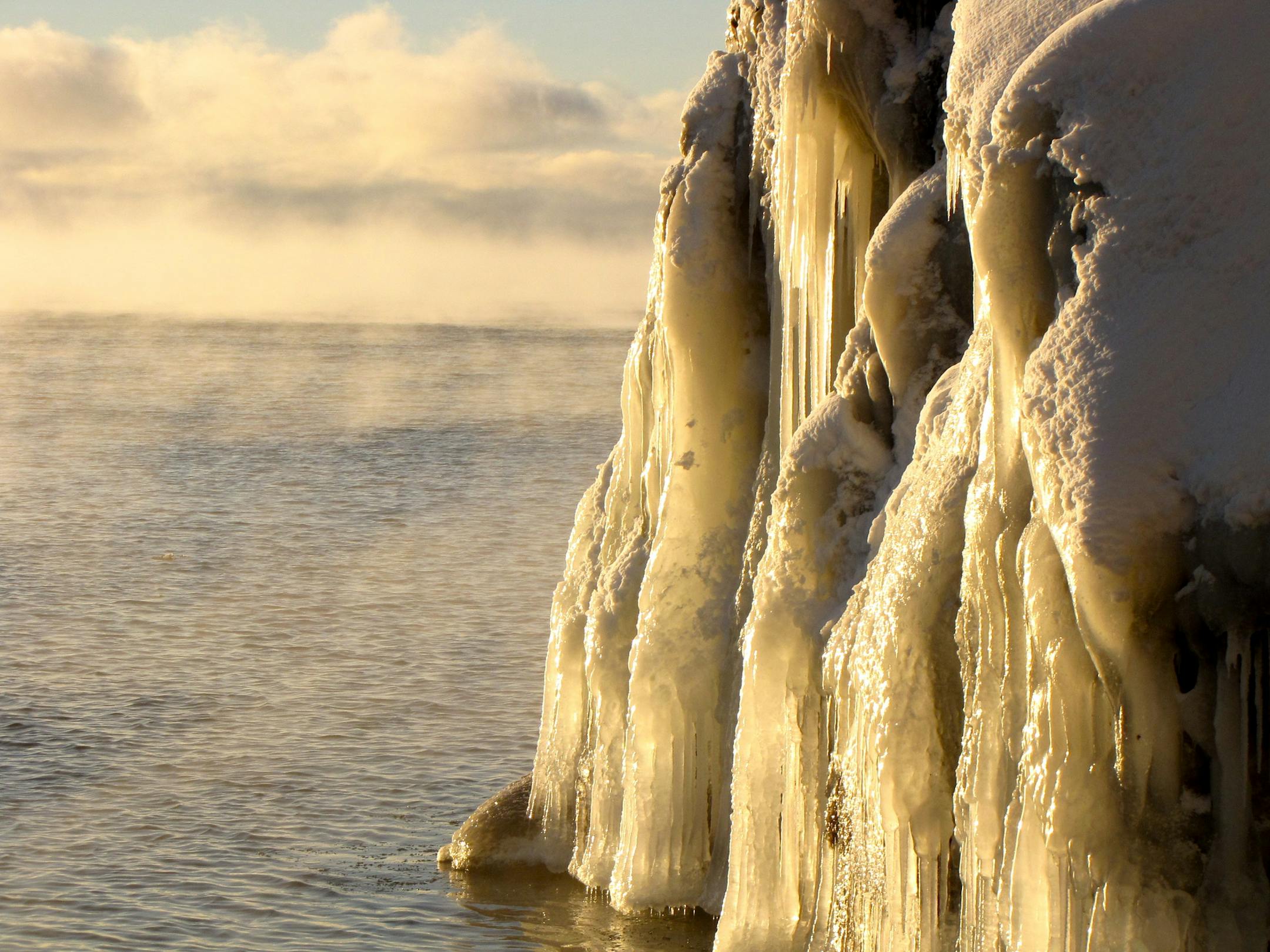
Along the North Shore near Lutsen, wave after wave, night after night, layers of ice freeze across rocky outcrops, sculpting wavy glass curtains and delicate drips resembling crystals on a chandelier. On a frigid morning, with air colder than the water, Lake Superior steams in the pale yellow light.
The Apostle Islands National Lakeshore's ice caves, the star attraction of this year's ice show, have drawn more than 50,000 visitors since January and attracted international attention. An estimated crowd of 11,000 people on Saturday plus scant parking have meant a 12-mile hike for some or the need to take an $8 shuttle from the Legendary Waters Casino.
Anyone who is wary of crowds or the long march to them can find less showy but still strikingly beautiful ice formations up and down the shorelines. Finding these winter treasures relies on timing, luck and knowing where to look. There are no winter tip lines like fall foliage hot lines that direct people to icy attractions along Lake Superior or Lake Michigan.
Part of that's the fast, fickle power of the Great Lakes. As they say along Superior, the lake is the boss and her moods swing with a fury. Even the substantial ice shelf that stretches as far as the eye can see near the Apostle Islands ice caves could be carved up and pulled out by waves and wind in less than a day, according to park Superintendent Bob Krumenaker.
Spiteful whitecaps can smash ice formations as quickly as shovel-wielding second-graders whacking icicles.
An artist's eye for ice


