

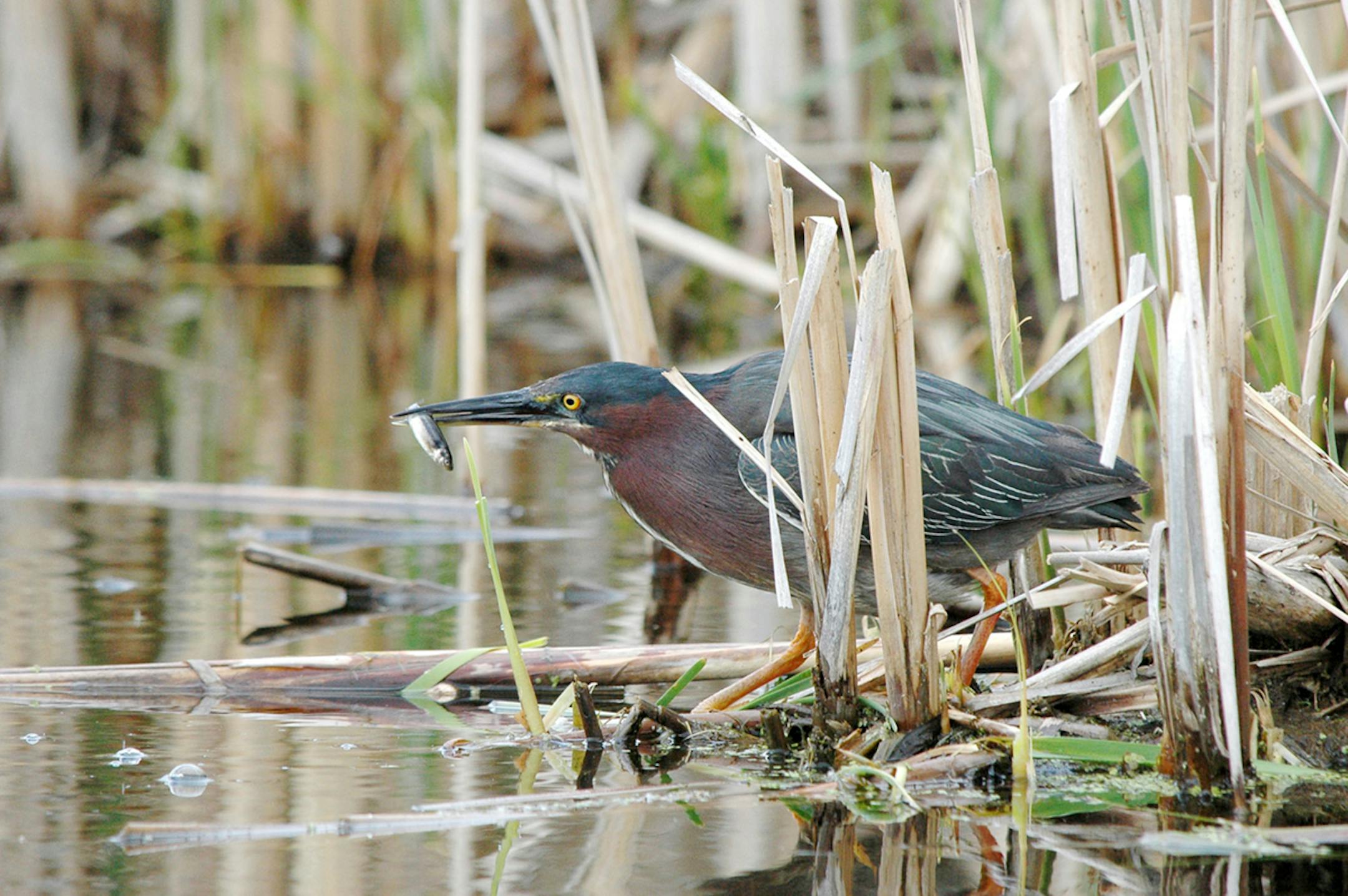
Q I've had four green herons hanging out in my pine trees and making the strangest sounds. Are they common in our area?
A Yes, green herons are commonly found around the edges of lakes and ponds throughout the metro area during the warm seasons. It sounds as if green herons nested in one of your trees and their offspring are getting ready to fly away. They do make an odd, raspy sound, called their "skeow" call. They're smart birds, known to use bait to catch fish, as you can see in this video: www.youtube.com/watch?v=Porp5v5lLKk.
Bark-lined nests Q This spring I noticed crows stripping and carrying off long strips of bark from my linden tree. It was fascinating to watch and I'm wondering if they were using the bark strips for a nest or is this one of their little quirks?
A They probably were lining their nest, since crows are known to put bark strips to this use (along with other materials, such as animal fur and plant fiber). And it's not only crows: Late this summer I watched as an American goldfinch pulled thin strips from the inner layer of an ash tree, after the outer layer had been stripped away, possibly by crows.
Mallards change colors Q When do male mallards start looking like themselves again?
A As you've noticed, mallards lose their colorful feathers after breeding season and wear a drab coat, resembling females for some weeks. Because they replace their wing feathers at this time, they're unable to fly. By late August or early September the males once again exhibit those characteristic bright green heads and are able to fly.
Finches flock to salt Q I have a salt lick for deer outside my cabin and have noticed goldfinches coming in to peck the salt, but no other types of birds. Is this unusual?
A Finches seem especially attracted to salt, whether on the roadside in winter, or at salt licks like yours, possibly due to a dietary deficiency. But salt is also a known toxin to finches and other birds: One researcher has found that a major cause of finch deaths along roadsides seemed to be their ingestion of salt along with the grit they picked up to help them grind up seeds. Another researcher set up mist nets around a salt lick and ended up attracting more than 600 finches. The conclusion seems to be that finches are attracted to salt, whether it's good for them or not.


