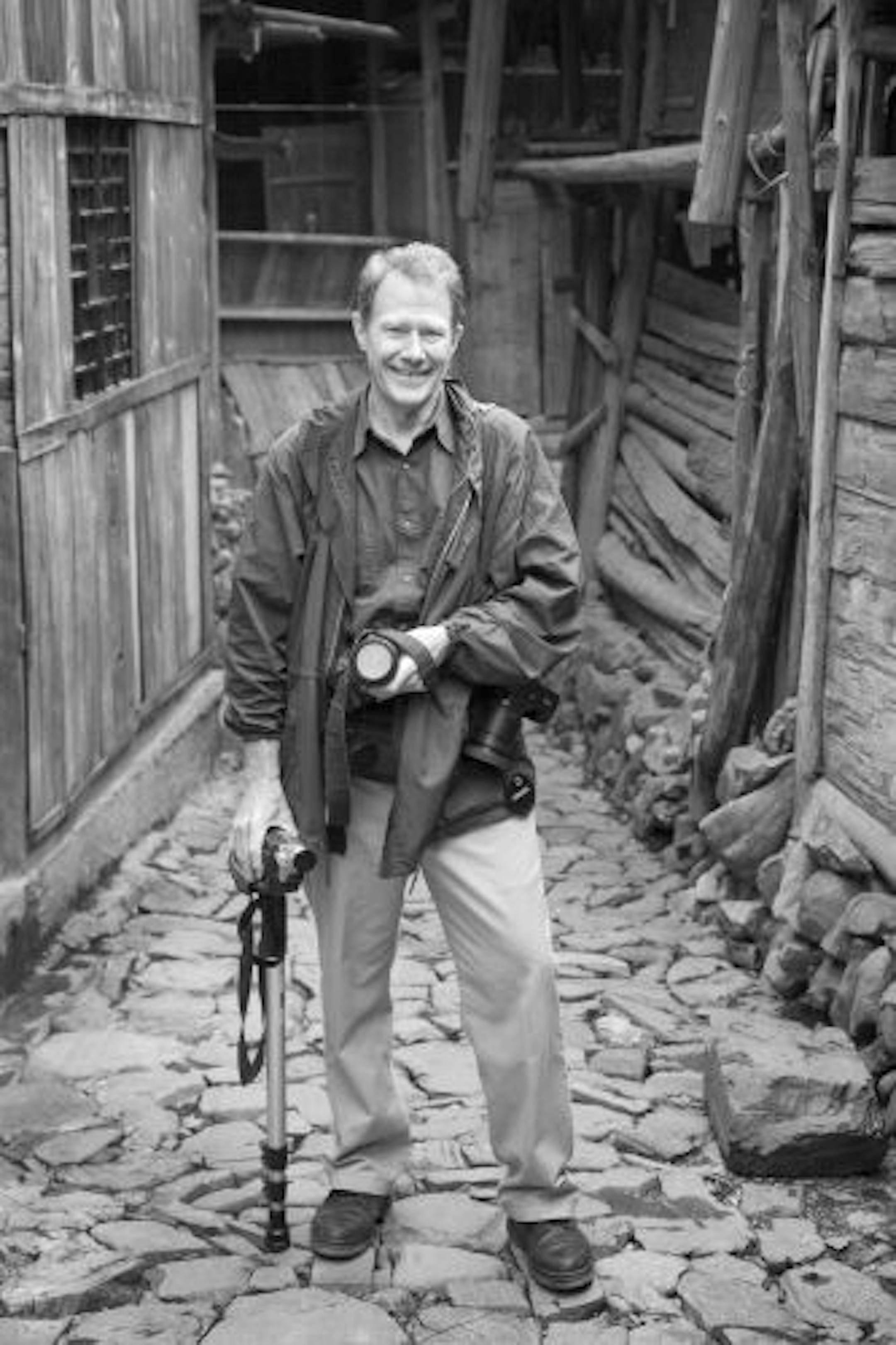
Minnesota seems like the last place anyone would go to for a glimpse of ancient China, but thanks to Robert Jacobsen people come from all over the world to see 5,000 years of Chinese furniture, porcelain, jade and architecture at the Minneapolis Institute of Arts.
Jacobsen, the museum's curator of Asian art, is retiring Friday after 33 years, during which he expanded a 900-piece hoard of ancient bronzes and Japanese prints into a stellar collection of 14,500 objects, including a 400-year-old Ming-dynasty reception hall and a Ch'ing dynasty scholar's study from 1797.
Jacobson's idea of showcasing objects in authentic rooms is what most distinguishes the institute's collection. Museums in San Francisco, Kansas City, New York and elsewhere also have fine Chinese collections, but nowhere else are things shown in the very spaces where they were used, admired and displayed centuries ago.
"Representing the art of China in a museum is an enormous challenge," said James Lally, the premier New York dealer in Chinese art. With the historic rooms, Jacobsen "was able to create a context ... which really transformed everyone's understanding of Chinese life in a way that no other museum in America or Europe has ever achieved."
Curators don't just go out and buy art, of course. They need expertise based on years of study, in Jacobsen's case at the National Palace Museum in Taiwan and the University of Minnesota, where he earned a doctorate in Asian art history.
And they need the support of wealthy patrons. At the institute, more than a dozen collectors, led by Bruce and Ruth Dayton, provided millions to expand the museum's holdings of Asian art, including Tibetan, Cambodian, Islamic and Indian objects. The Asian collection now fills 22 galleries, a veritable museum within the museum.
Old China and new
Relations between China and the United States were so frosty when Jacobsen was a student in the 1970s that scholars warned him he would never be able to visit mainland China. The best he could hope for was to study, in Taiwan, things that Chinese exiles took there after the 1937 Japanese invasion of their homeland.