

Prep and roast Plan: Allow 1 to 11/2 pounds of turkey per person. That amount will leave enough for leftovers. Be sure to allow plenty of time and space to thaw a frozen turkey in the refrigerator (see below).
Prep: Find the giblets -- heart, liver, gizzard -- tucked inside the neck or body cavity and remove. Discard, if you're not using them, or cook and add to stuffing or gravy. If you are stuffing, plan about 3/4 cup of stuffing per pound of poultry. Do not stuff until just before roasting.
Loosely spoon stuffing into the neck and body cavities, allowing room for expansion. If stuffing is packed in, it will not reach a safe eating temperature by the time the turkey is done.
Pull neck skin over the stuffing; use a long skewer to hold it in place. Tuck drumsticks under the band of skin near the tail and reset the leg clamp or tie the legs together with kitchen string. Twist wing tips up and under the bird's back. If you're not stuffing the bird, bake the stuffing in a casserole.
Roast: Use the accompanying roasting chart (at right) to determine cooking times. While the oven is preheating to 325 degrees, place the turkey, breast side up, on a rack in a shallow roasting pan. Pans with sides higher than 2 inches will act as a heat shield and prevent turkey thighs from cooking evenly. Brush the bird with cooking oil. Cover loosely with foil and roast.
After two-thirds of the cooking time has passed, cut the string between the drumsticks. Remove foil during the last 30 to 45 minutes of cooking so the skin gets crisp and golden.
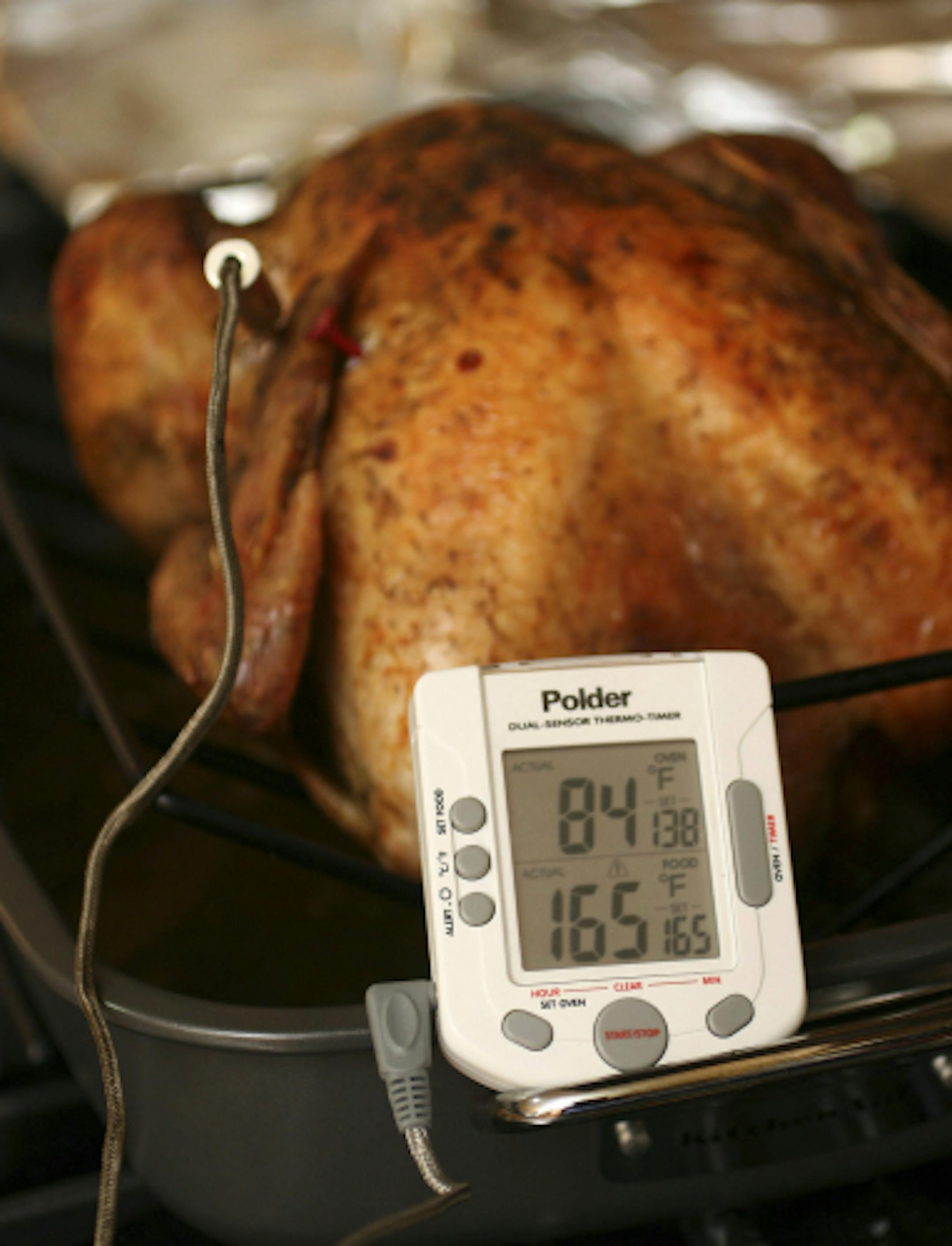
According to the USDA, all turkey meat and stuffing is safe to eat when a meat thermometer reaches 165 degrees. However, for best flavor and ease in carving, thigh meat should be cooked to 180 degrees. For an accurate reading, be sure the thermometer does not touch bone when inserted in the meat.
Answers to common turkey questions • Fresh or frozen?


