

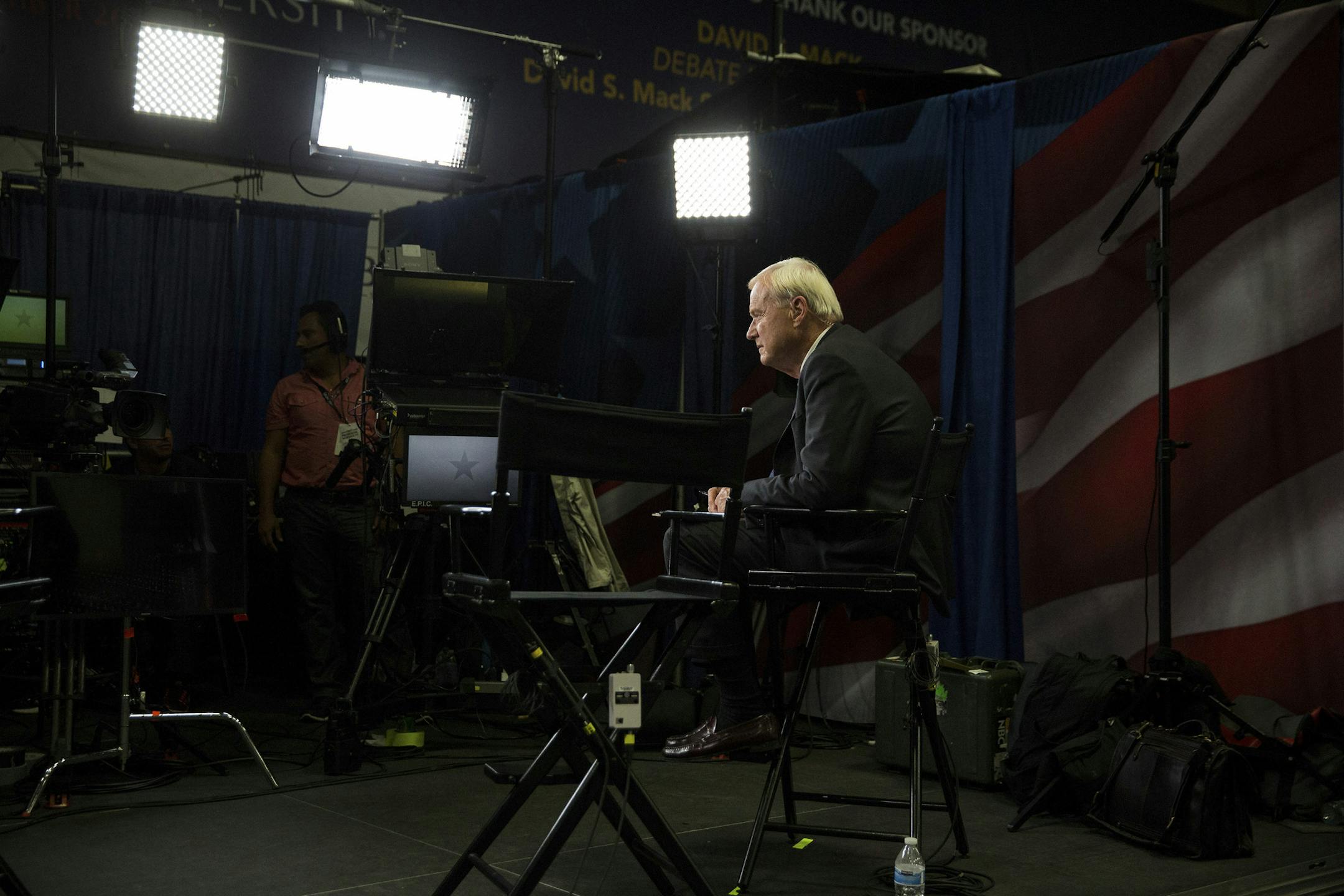
"Ugly horsefaced skank." "Fat bitch." "Die in a fire." "Why would Chris Matthews hit on you? I thought he was straight."
These are among the messages I've received from strangers since I wrote an article for GQ last week cataloging some examples of the MSNBC anchor's demeaning treatment of women over the decades, including his sexist comments to me. The piece seems to have been one of the catalysts for Matthews's early retirement Monday night. I was surprised by this outcome, but I do not lament it.
The genesis for my column was Matthews's grilling of Massachusetts Sen. Elizabeth Warren after the Democratic debate last week. The anchor had pressed Warren about why she believes a woman's (corroborated) accusation against Mike Bloomberg over the word of the former New York City mayor.
When my editor e-mailed to ask if I'd like to write about the exchange, and Matthews's long history of misogynist behavior, she didn't know one important fact: I had my own uncomfortable experiences with him. Indeed, I had written about them, without naming Matthews, in a 2017 essay about an older, famous TV host who made lascivious comments to me in the makeup room before I appeared on his show. I wrote the piece at the time not to have my own "MeToo" moment, but to spark a nuanced conversation about the gray areas of the movement — the behavior that doesn't quite rise to the level of reportable sexual harassment, but still regularly undermines women in the workplace.
I'd been afraid to name Matthews then, because I thought he or the network might retaliate. He was a media titan, seemingly untouchable; I was a relatively unknown reporter. But it still felt like a conversation that needed to be had.
Three years later, I've seen what can happen when women are brave enough to stick their necks out and come forward against powerful men — in the media, Hollywood and elsewhere — who have gotten away with unacceptable behavior toward women in the workplace for far too long. The balance of power is slowly shifting, and these men are finally starting to be held to account.
Since writing my original essay, I have watched Matthews objectify women on air and heard many similar stories from other female journalists. I felt guilty each time for having protected him when I could have mustered the courage to say his name. So when my GQ editor asked if I was ready to name him now, I said yes.
My personal story isn't the thing that brought Matthews down. Even I found it so unremarkable compared with things he's said to and about other women over the years that I buried it at the bottom of my column, using it only as one example of how he has treated female guests when the cameras aren't rolling. My story only added to his pile of woe, which had been building for years and happened to reach its apex this week with his misguided interrogation of Warren and his mixing up of two African-American politicians.


