

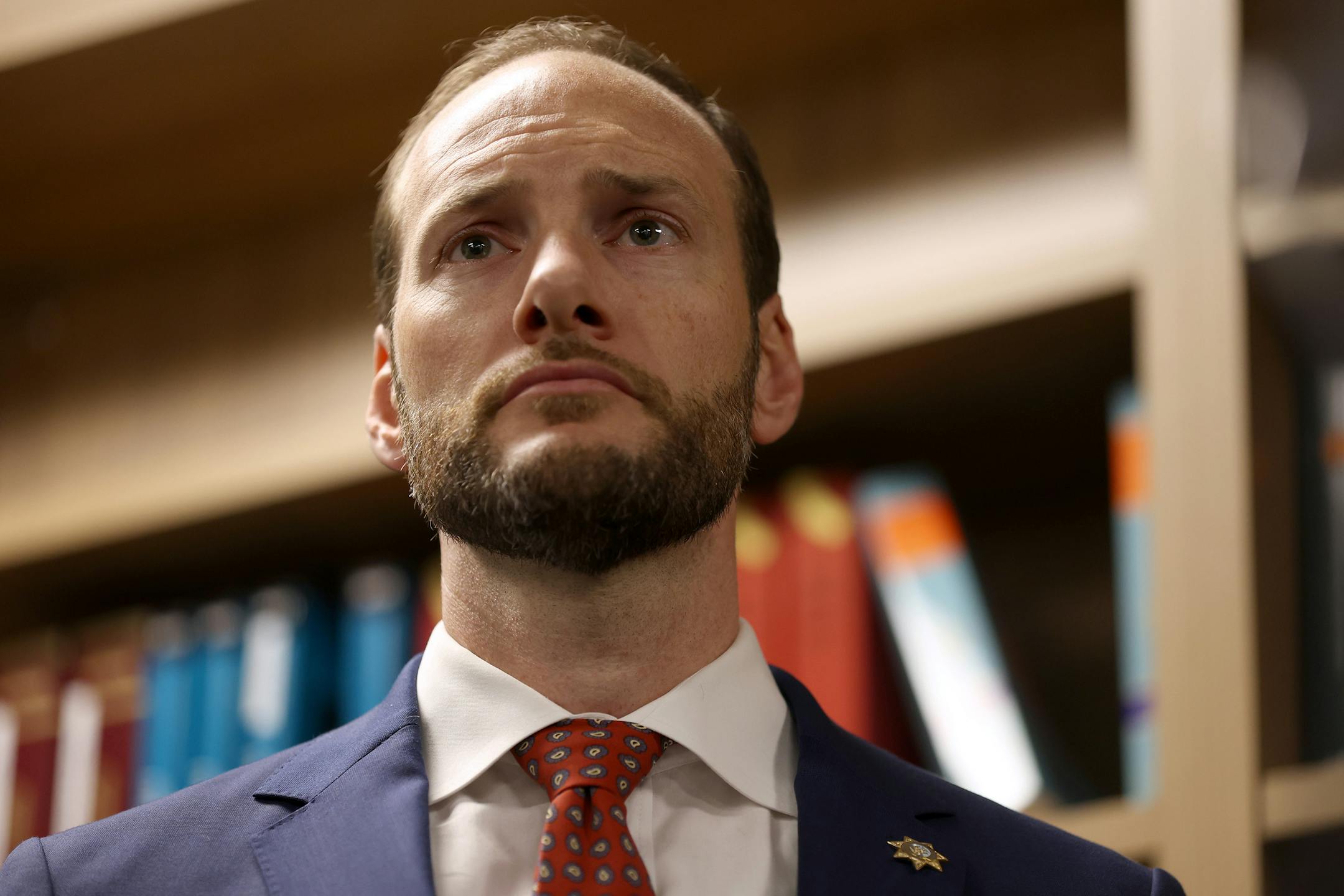
Opinion editor's note: Star Tribune Opinion publishes a mix of national and local commentaries online and in print each day. To contribute, click here.
•••
On its face, the effort to recall San Francisco District Attorney Chesa Boudin is a debate over how a relatively small, atypical city battles crime, a philosophical dispute over how often to lock up offenders and the relative success of efforts to divert nonviolent criminals into treatment programs that keep them out of jail.
In reality, the recall is a battle over facts vs. feelings, a case study in the power of millionaires to set a political agenda, a lesson on the limits of enacting reform through progressive prosecutors and the difficulty of changing the status quo.
That's why the June 7 referendum on Boudin holds significance far beyond the 47 square miles of San Francisco, where violent crime rates are near historic lows, viral videos of smash-and-grabs and the twin crises of homelessness and drug deaths notwithstanding.
Since his upset victory, Boudin has made the establishment uneasy: Yale-educated public defender, son of imprisoned Weather Underground leaders, relative newcomer and political novice in a city where politics is a blood sport and people proudly trace their local lineage back generations. He emerged from obscurity in 2019 to campaign on a detailed platform that promised to upend a system that disproportionately prosecutes black and brown people.
As Democrats across the country face voters' fears about rising crime rates, many have retreated from reforms — including Los Angeles District Attorney George Gascón, who faces a likely recall himself later this year. Boudin has instead implemented the ideas that got him elected: Jail as a last resort. No cash bail or gang enhancements. Not prosecuting juveniles as adults. Charges against police who use excessive force. Increased victim services. Review of lengthy sentences handed down under obsolete laws during the war on drugs. Charges against employers for wage theft.
Boudin's policies have won him newspaper endorsements, but he faces an uphill battle in the recall election. His core mission — to rethink crime and punishment — is a jolt to the status quo at an already fragile moment. The rush to blame him for myriad long-standing ills has resonated amid the frustrations and anger at all the life-altering changes of the last two years. Tragedies and mistakes are easy to exploit, especially in the wake of a pandemic that has exacerbated the city's glaring inequality, upset its economic base of tourism and tech, and heightened fears of crime.


