Kathy Hamilton of Hugo recently spent several weeks power-walking the flat, sandy beaches in Florida. So it's especially gratifying for her to return home and not miss a beat, hitting the newly updated Hardwood Creek Regional Trail for regular mornings of fitness.
"To have this here is really nice," she said as she passed Hugo City Hall, heading south at a brisk pace. "Now, I can walk from here all the way to Forest Lake without stopping if I want. It's wonderful."
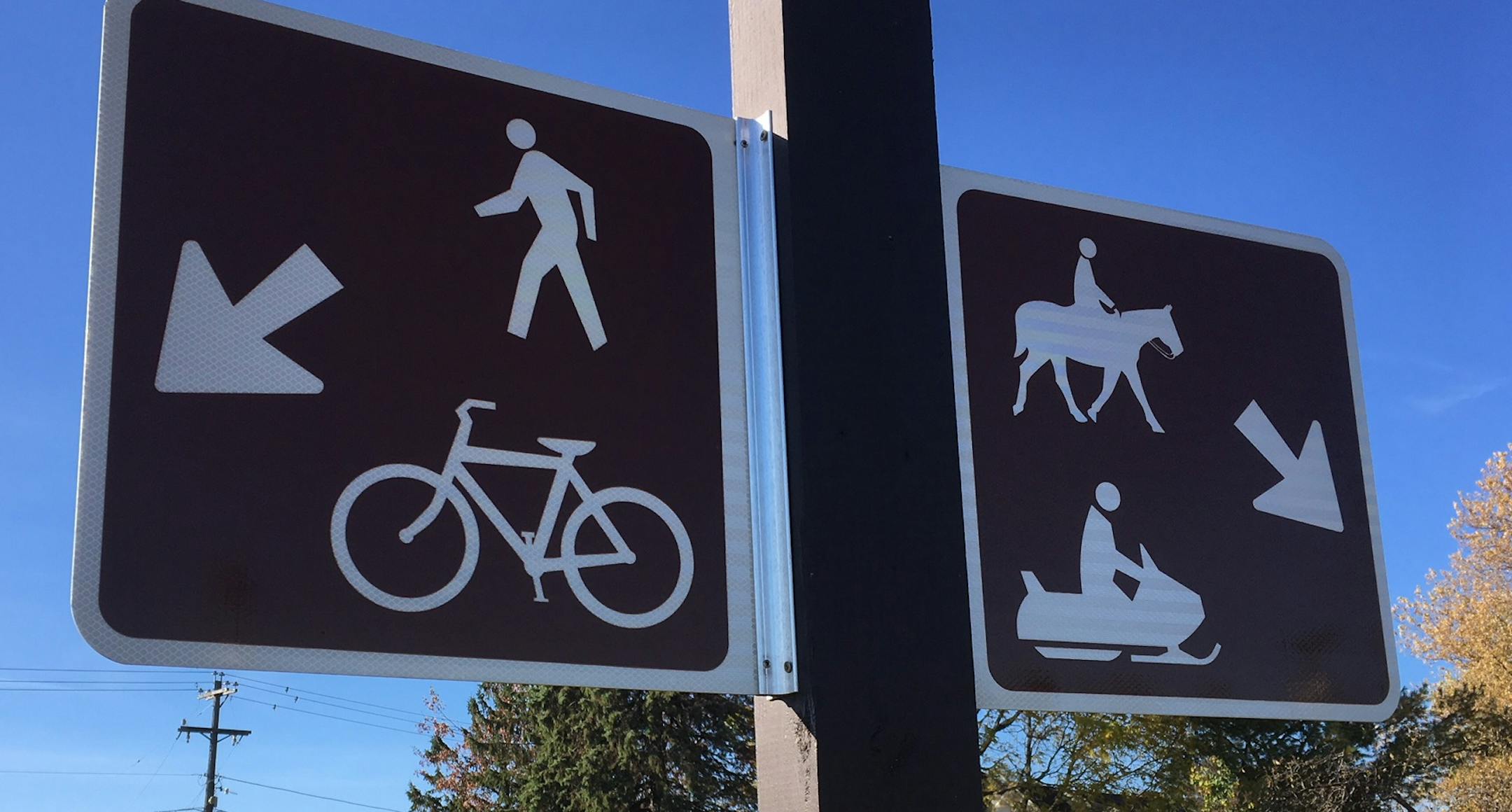
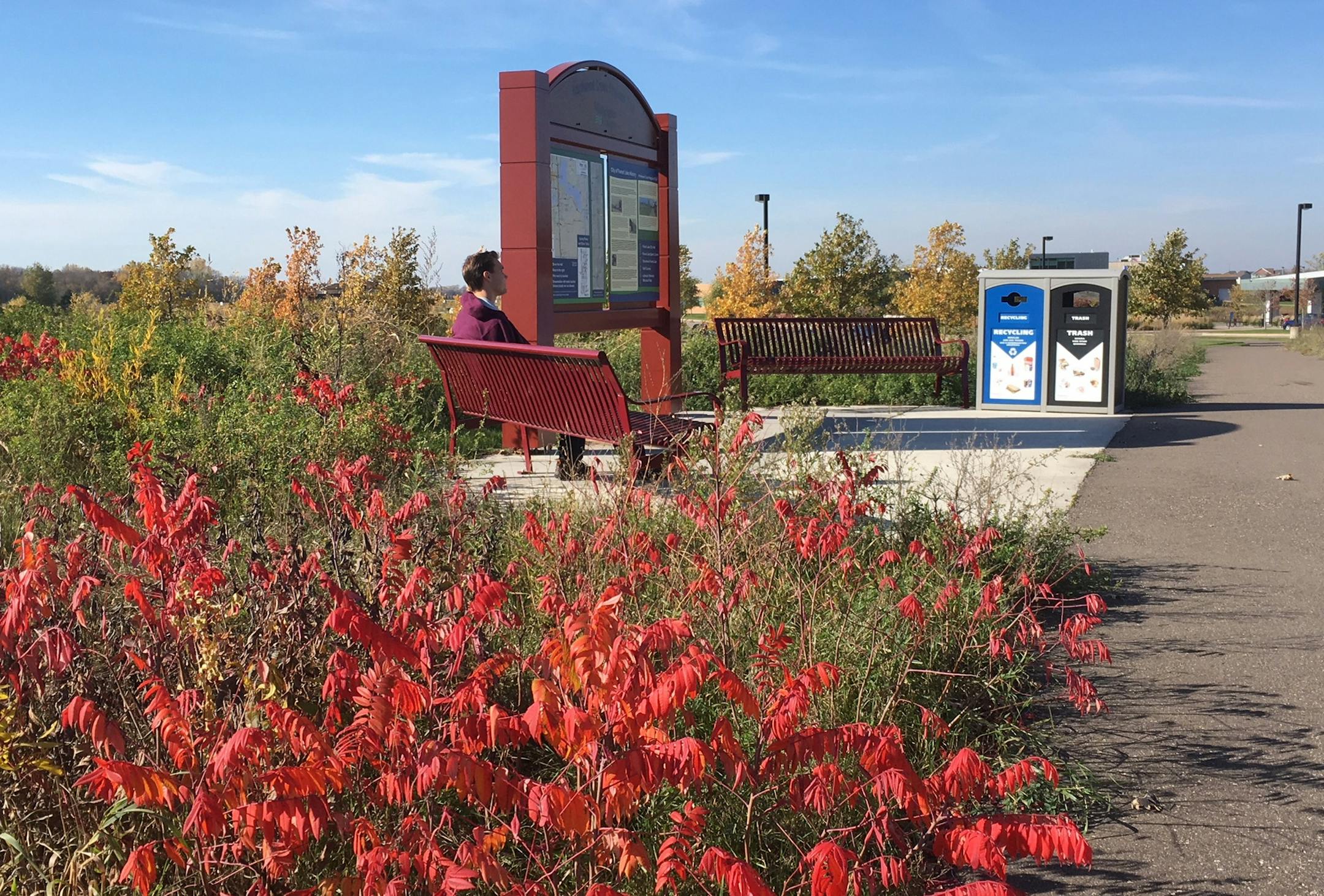
Regular users of the trail have discovered a series of improvements over the past three years, including new informational kiosks highlighting local history, rest areas with benches, and improved signs along the 9-mile trail in northern Washington County. The kiosks and new signage, which helps delineate the part of the trail for walkers, runners and bicyclists from the unpaved part used by horseback riders and snowmobilers, were completed this summer.
"We consider this trail to be a real jewel in our system," said Wayne Sandberg, Washington County engineer and deputy director of Public Works. The trail connects with Chisago County's Sunrise Trail and serves as a segment of the North Star Route allowing bicyclists to pedal from the Capitol in St. Paul to the Canadian border through Duluth.
In 2014, Washington County extended the trail south to 140th Street in Hugo, a move that Hamilton endorses because it enables her to miss "several dogs" along her old neighborhood walking route. In 2015, the county paid $1 million to repave the trail.
"We discovered there are a lot of people who want to use it — walkers, cyclists, in-line skaters." Sandberg said. "And, in the winter, fat tire bikers, snowshoers, cross-country skiers and walkers. But there was confusion over who went where."
So, in 2016, a Washington County task force looked at how to further improve the trail. The Hugo Snowmobile Club, the Forest Lake Snowmobile Club, the cities of Hugo and Forest Lake, the state Department of Natural Resources, the Washington County Parks and Open Space Commission and members of the public participated.
The result: four rest stops along the trail with kiosks and benches and more than 300 signs telling users who goes where. That part of the project cost $270,000, Sandberg said.