

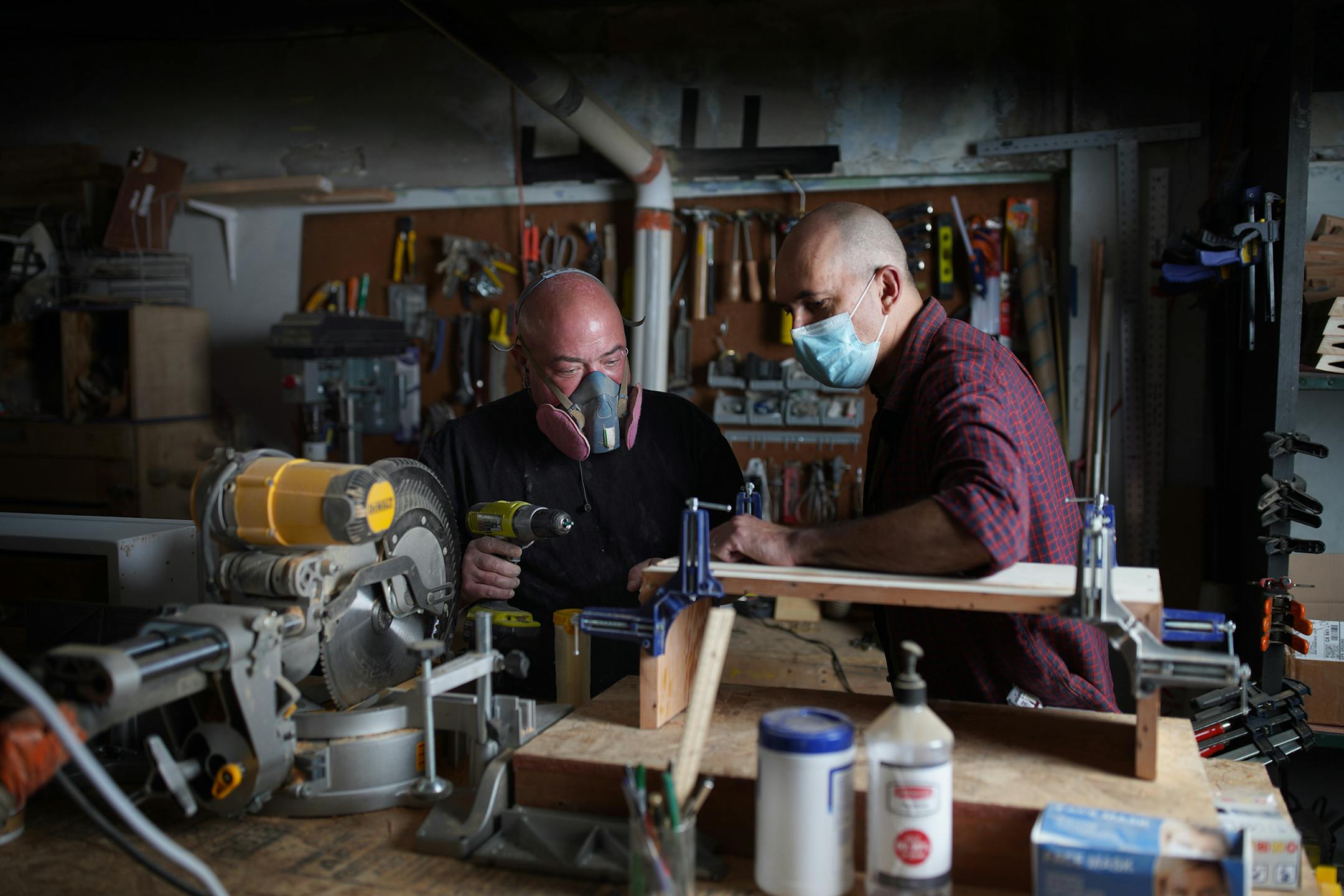
Sasha Plotitsa wasn't one of those business titans who climbed steadily up the corporate ladder. He worked in construction, ran a cannabis dispensary, invented a meal tote for weightlifters, created Braille signs and styled interiors. Now, at age 50, he's taken bits of every job and baked them into Formr, a small San Francisco furniture company.
The name of the one-year-old company starts with the word "form" and relates to the formerly incarcerated individuals hired to produce the pieces from formerly used (repurposed) wood. The minimalist, playful lap desks, candleholders, floating end tables and wine racks (there are 12 designs) come in quirky colors and have offbeat names like the "HANGover" coat rack and the "SHELFish" shelf. Priced from $89 to $619, they are handmade in a former car repair shop in San Francisco's Hayes Valley.
Plotitsa's earlier pursuits focused on being successful financially and making a profit. But he's always found time to give back to causes he believed in. A few years ago, he decided to direct more of his attention on that kind of work.
"I wanted to find a way to do something that I am passionate about, and that is designing, and combine it with a social mission," he said.
His little company is getting noticed. In June, West Elm added Formr to its Local online program, which showcases handcrafted and artisan-made products from 150 small businesses, bringing the designs of underserved communities to a national audience. "We loved Sasha's business sense and his storytelling," says Larysa Polansky-Hayes, head of the West Elm program.
Plotitsa was 7 when he left Odessa with his parents and came to the U.S. He said he also has always been "a curious person who enjoys experimenting."
After college at San Jose State, he joined an acquaintance on a venture to import night-vision binoculars from Russia. "I was the entire art department," he said. He spent some time in the sign business and at his father's construction company, helping with interiors, specifying tile and finishes, and sourcing green building materials. At work sites, he said, he was "blown away" by all the wood scraps and other material that ended up at the dump.
From 2008 to 2018, he worked in the cannabis dispensary business, which was closed down by the federal government. But while he was running it he encountered many people who had been imprisoned after being caught with marijuana. "It opened my eyes to the concept that people like this needed a fresh start," he said.



