

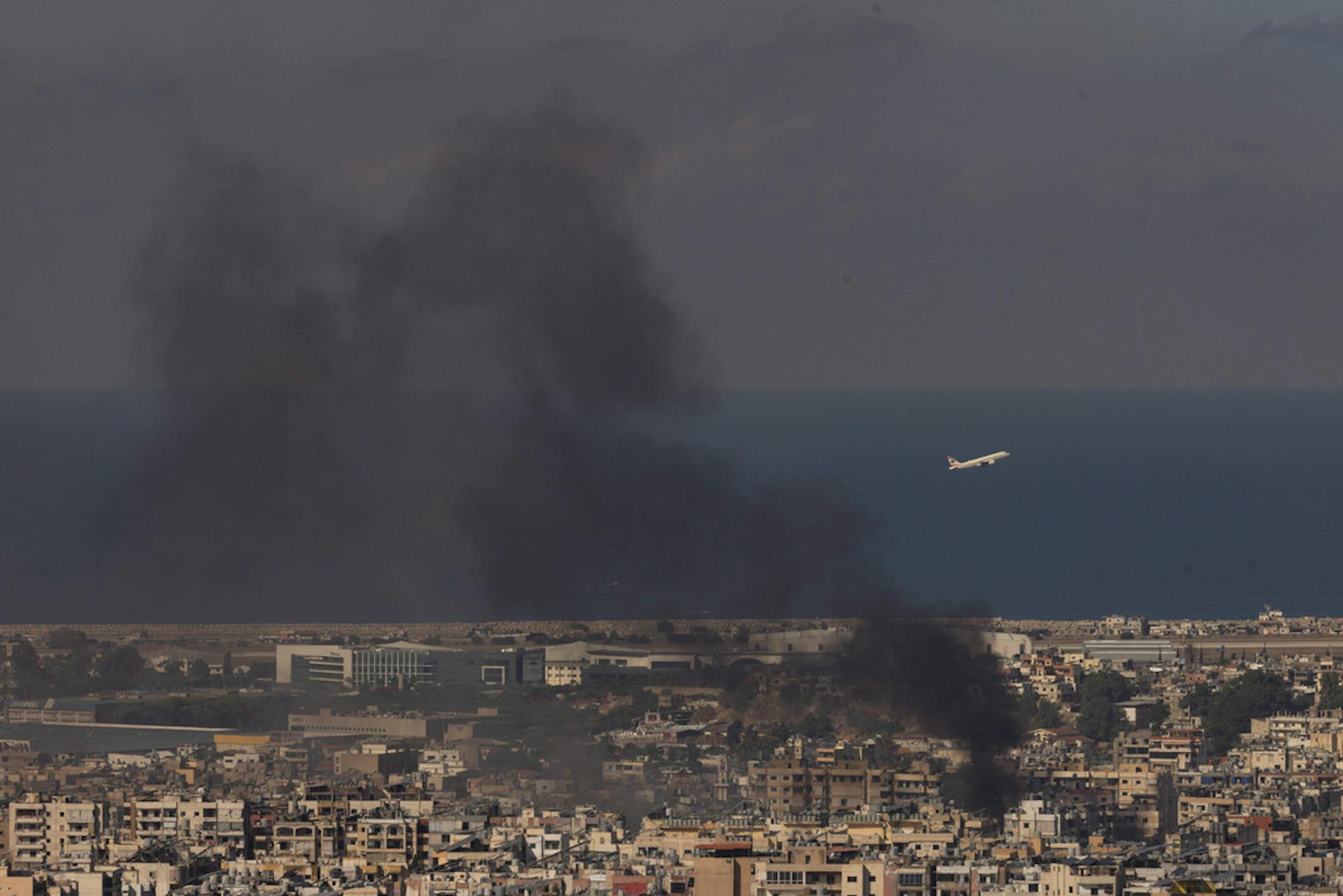
BEIRUT — Israel carried out another series of punishing airstrikes Friday, hitting suburban Beirut and cutting off the main border crossing between Lebanon and Syria for tens of thousands of people fleeing the Israeli bombardment of the Hezbollah militant group.
The overnight blasts in Beirut's southern suburbs sent huge plumes of smoke and flames into the night sky and shook buildings kilometers (miles) away in the Lebanese capital. Additional strikes sent people running for cover in streets littered with rubble in the Dahiyeh neighborhood, where at least one building was leveled and cars were burned out.
The Israeli military said it targeted Hezbollah's central intelligence headquarters around midnight. It did not say who it was aiming for or if any militants were killed in that strike, but it claimed to have killed 100 Hezbollah fighters in the last 24 hours.
Lebanon's state-run National News Agency reported more than 10 consecutive airstrikes in the area. Some 1,400 Lebanese, including Hezbollah fighters and civilians, have been killed and some 1.2 million driven from their homes since Israel escalated its strikes in late September aiming to cripple Hezbollah and push it away from the countries' shared border.
And a hospital in southern Lebanon said it was shelled Friday evening after being warned to evacuate. The Salah Ghandour Hospital in the city of Bint Jbeil said in a statement that the shelling ''resulted in nine members of the medical and nursing staff being injured, most of them seriously,'' while most of the medical staff were evacuated. A day earlier, the World Health Organization said 28 health workers in Lebanon had been killed in the past 24 hours.
Meanwhile, Hezbollah launched about 100 rockets into Israel on Friday, the Israel military said.
The Israeli military also said that a strike in Beirut the day before killed Mohammed Rashid Skafi, the head of Hezbollah's communications division. The military said in a statement that Skafi was ''a senior Hezbollah terrorist who was responsible for the communications unit since 2000'' and was ''closely affiliated'' with high-up Hezbollah officials.
Thursday's strike along the Lebanon-Syria border, about 50 kilometers (30 miles) east of Beirut, led to the closure of the road near the busy Masnaa Border Crossing — the first time it has been cut off since Hezbollah and Israel began trading fire almost a year ago.
