

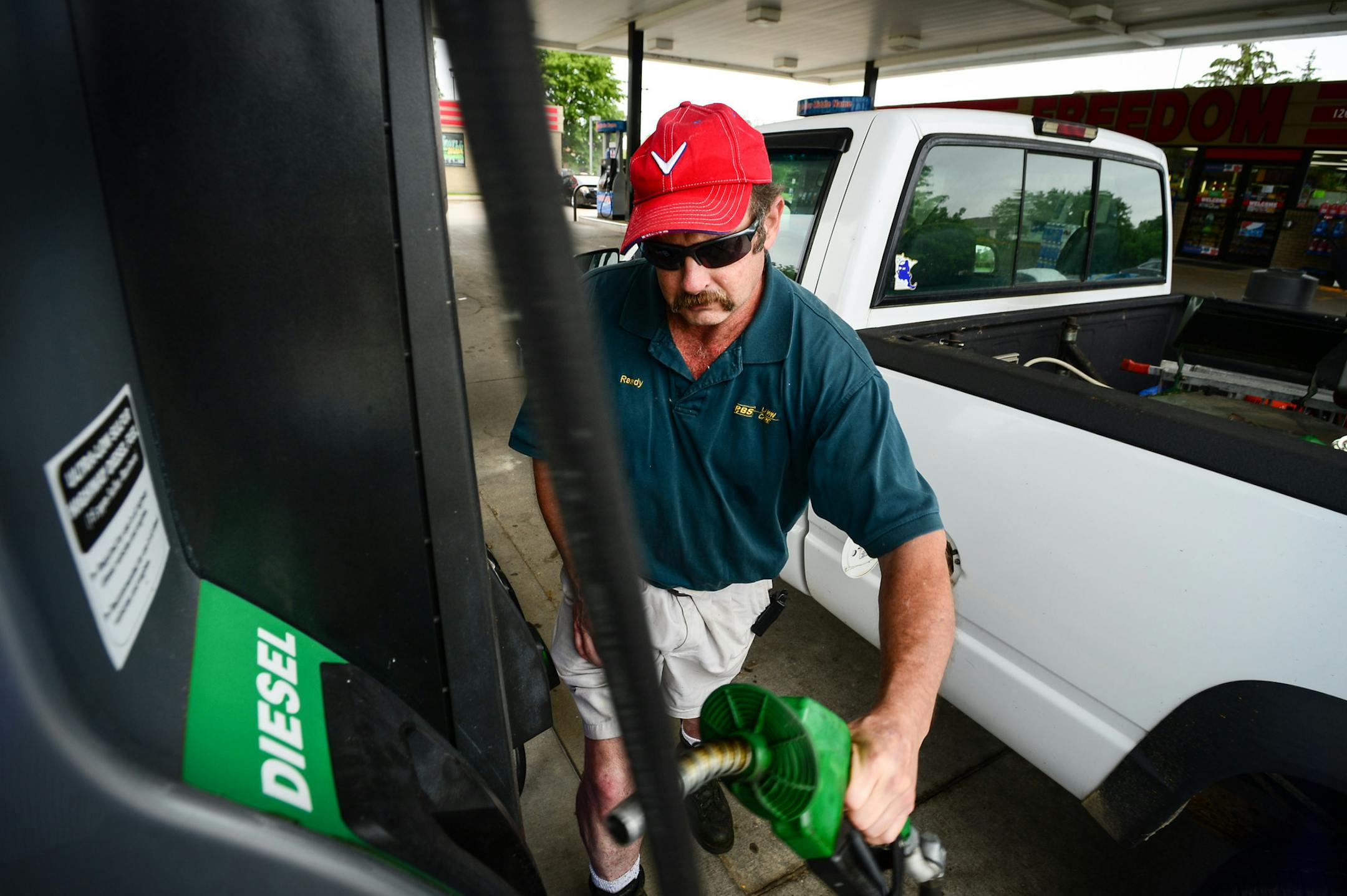
In a boost for the biofuels industry, Minnesota on Tuesday becomes the first state in the nation to mandate a 10 percent minimum blend of biodiesel in diesel fuel sold at the pump.
While only 2.7 percent of Minnesota's vehicles operate on diesel fuel, the mandate is still a major gain for the biofuels industry.
Sales of biodiesel, refined from soybean and other oils, are expected to jump in Minnesota from 40 million to 60 million gallons per year. That's near the total capacity of the state's three biodiesel production plants.
"It keeps us at the forefront," said Steven Rupp, vice president of Ever Cat Fuels of Isanti, referring to Minnesota's position as the first state to impose a biodiesel blending mandate in 2005.
Sixteen other states now have mandates or tax incentives to blend biodiesel with petroleum-based diesel, according to the National Biodiesel Board, a trade group. Illinois offers a tax break to blend biodiesel at 10 percent or more, but only Minnesota mandates that high of a blend.
About 128,000 diesel vehicles operate in Minnesota. Since 2009, the state has required 5 percent biodiesel at the pump. The mandate for 10 percent, or B-10, was enacted by the Legislature in 2008 but delayed until now so fuel-blending capacity could catch up. Under the law, the biodiesel blend eventually will reach 20 percent.
The mandate has been resisted by some automakers and car owners.
Mercedes-Benz, a world leader in diesel technology, warranties engines to run on a maximum of 5 percent diesel, and says that owners need to closely monitor diesel engines when using higher blends — or risk engine problems.



