

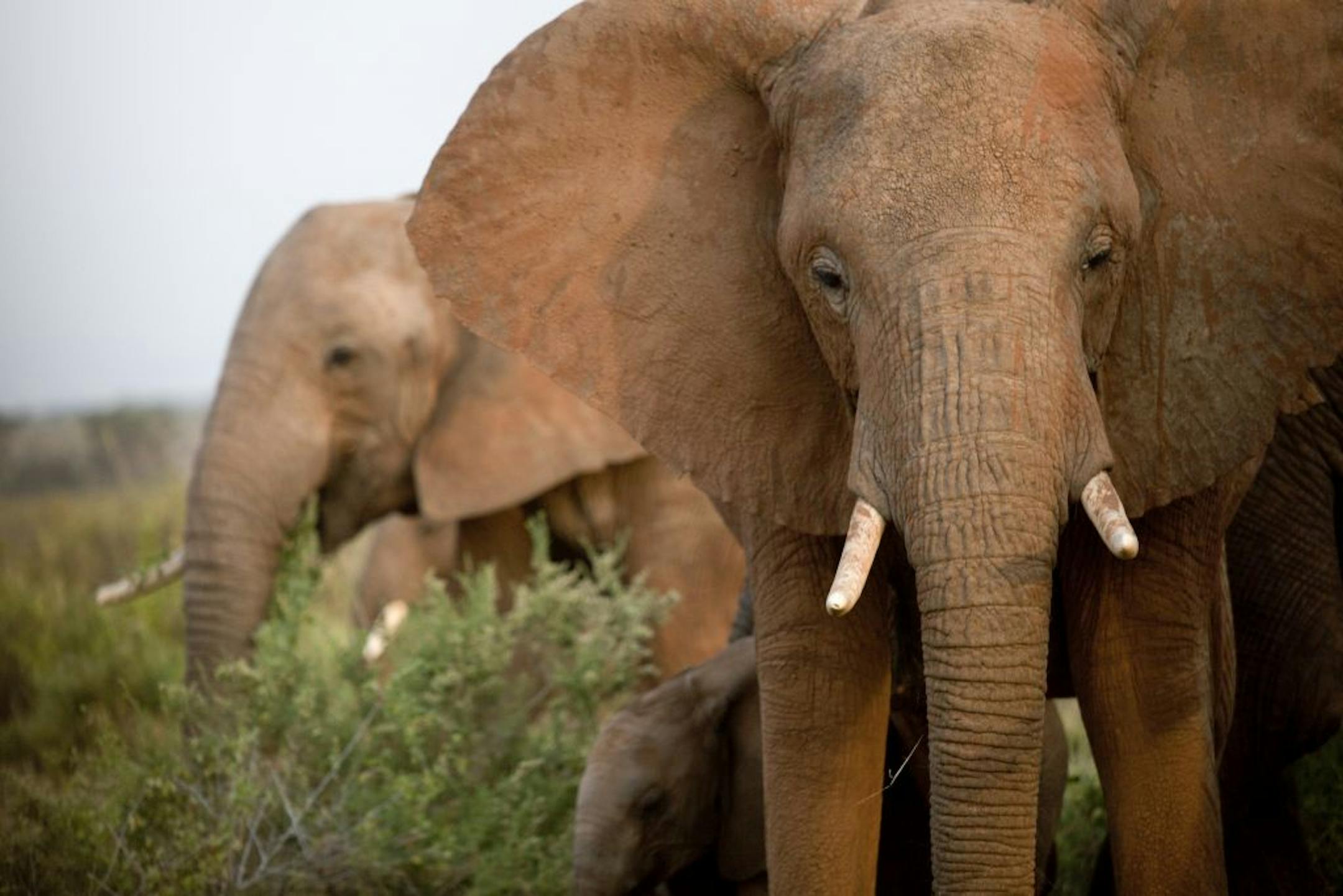
ARCHER'S POST, KENYA - Julius Lokinyi was one of the most notorious poachers in Kenya, accused of killing as many as 100 elephants and selling the tusks by the side of the road in the dead of night, pumping vast amounts of ivory into a global underground trade.
But after being hounded, shamed, browbeaten and finally persuaded by his elders, he recently made a remarkable transformation. Elephants, he has come to believe, are actually worth more alive than dead, because of the tourists they attract. So Lokinyi stopped poaching and joined a grass-roots squad of rangers -- essentially a conservation militia -- to protect the wildlife he once slaughtered.
Nowadays he gets up at dawn, slurps down a cup of sugary tea, tightens his combat boots and marches off with other villagers to fight poachers.
"We've got to protect the elephants," said Lokinyi, whose eyes now glow with the zeal of a convert.
From Tanzania to Cameroon, tens of thousands of elephants are being poached each year, more than at any time in decades, because of Asia's soaring demand for ivory. Nothing seems to be stopping it, including deploying national armies, and the bullet-riddled carcasses keep stacking up. Scientists say that at this rate, African elephants could soon go the way of the wild American bison.
But in northern Kenya, destitute villagers have seized upon an unconventional solution that, if replicated elsewhere, could be the key to saving thousands of elephants across Africa. In a growing number of communities, people are so anxious to protect their wildlife that civilians with no military experience are banding together, grabbing shotguns and rifles and risking their lives to confront heavily armed poaching gangs.
Tourists mean dollars
It is essentially a militarized neighborhood watch, with loping, 6-foot-6 former herdsmen acting as the block captains and the block being miles and miles of zebra-studded bush. These citizen-rangers are not doing this out of altruism or some undying love for pachyderms. They do it because in Kenya, perhaps more than just about anywhere else, wildlife means tourists, and tourists mean dollars -- a lot of dollars.


