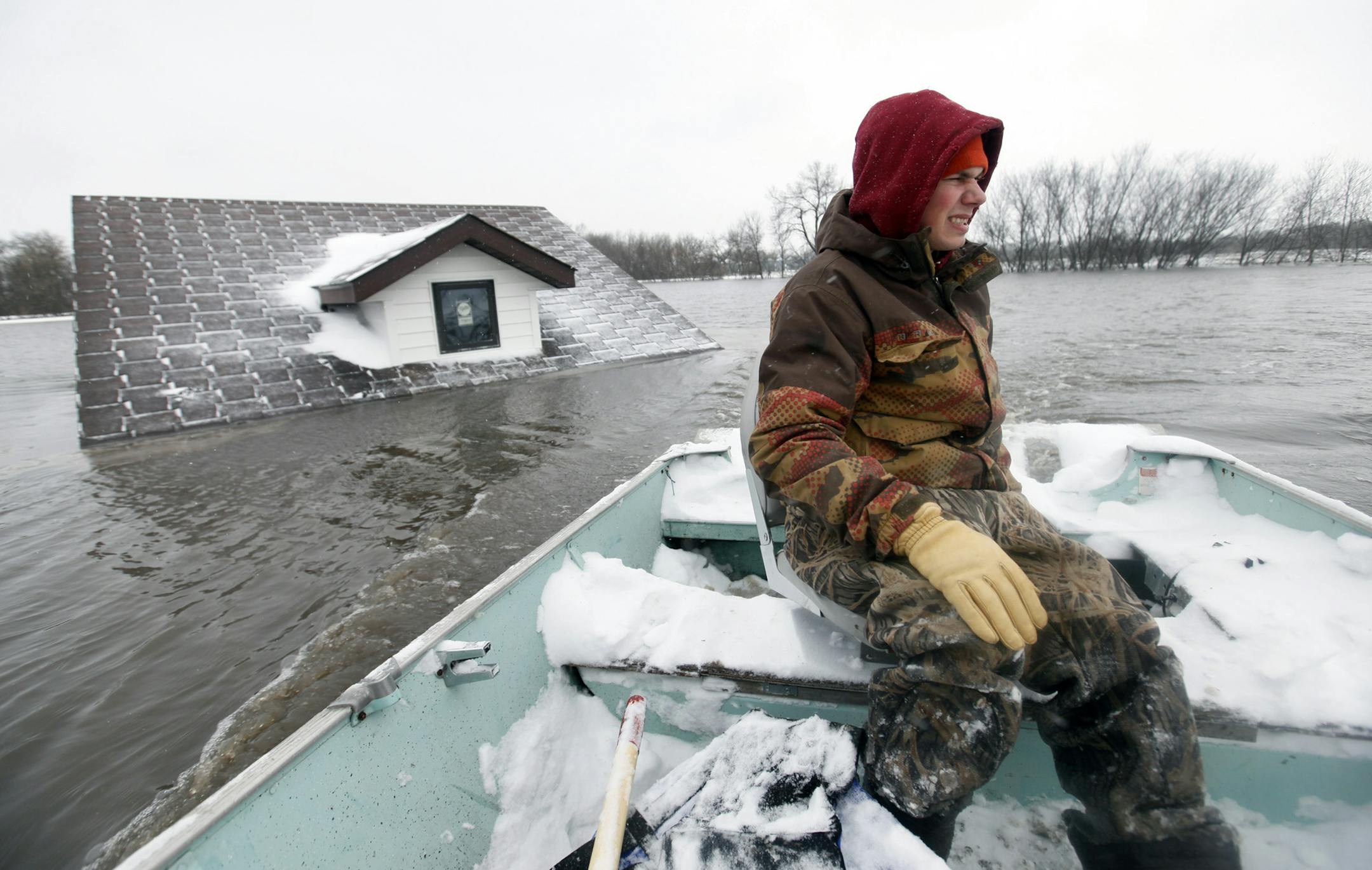
![MARLIN LEVISON * mlevison@startribune.com Assign. #00007283S March 29, 2009] GENERAL INFORMATION: With water levels at record setting high marks many Moorhead - Fargo residents are isolated in their homes - local streets are impassable with the only way in and out by boat. These photos shot at Crestwood subdivision 3 miles south of Moorhead where the remaining residents are essentially living on an island. IN THIS PHOTO: The Red River out of its banks just south of Moorhead.](https://arc.stimg.co/startribunemedia/S3HDAY7NPBTNZDWVG3HGNKMR6U.jpg?&w=1080)
When the Red River crested at Fargo-Moorhead on Tuesday, it was 7 feet below the peak that experts had considered very possible only two weeks before.
That was a break for residents who have had to fight off five of the eight highest crests in history since 2001. But it also exposed blind spots in a system of flood prediction that river cities rely on in mounting their annual preparations.
It also generated criticism in Fargo that the city spent more time and money — about $3 million altogether — than necessary to protect against the high water. The mayor and others, however, defended the forecasters and the steps taken.
Conditions this spring were "climatologically unprecedented," said National Weather Service hydrologist Greg Gust, who is based in Grand Forks, N.D., along the Red. In most years, when the snow begins to melt and rivers break free of ice, the landscape along the Red remains frozen and impermeable, allowing meltwater to run quickly across fields and ultimately, into the Red.
But this year, because the cold extended into late April, the ground thawed quickly under high sun and soaked up the snowmelt, limiting runoff. Dry weather also helped. The delayed cold wasn't something hydrologists could put into their models, Gust said, because it wasn't part of the climate record; the 2013 crest was the latest since 1887.
"To try to anticipate something that's never occurred before has become an interesting and odd challenge," Gust said.
Steve Buan, hydrologist in the Twin Cities office of the weather service, said flood forecasters look at many factors in building a prediction: precipitation, air temperature, ground and surface water levels, the calendar and the weather forecast, among others. But this year's experience showed a need for more information on regional soil moisture content and the depth of frost in the ground. Those factors are more important in the northern U.S. than elsewhere, Gust noted, since spring flooding to the south rarely occurs while the soil is frozen. Although Minnesota has thousands of volunteer weather observers, few outside of universities and research organizations measure soil moisture and frost depths.
The barriers? "Cost and maintenance," Buan said.