

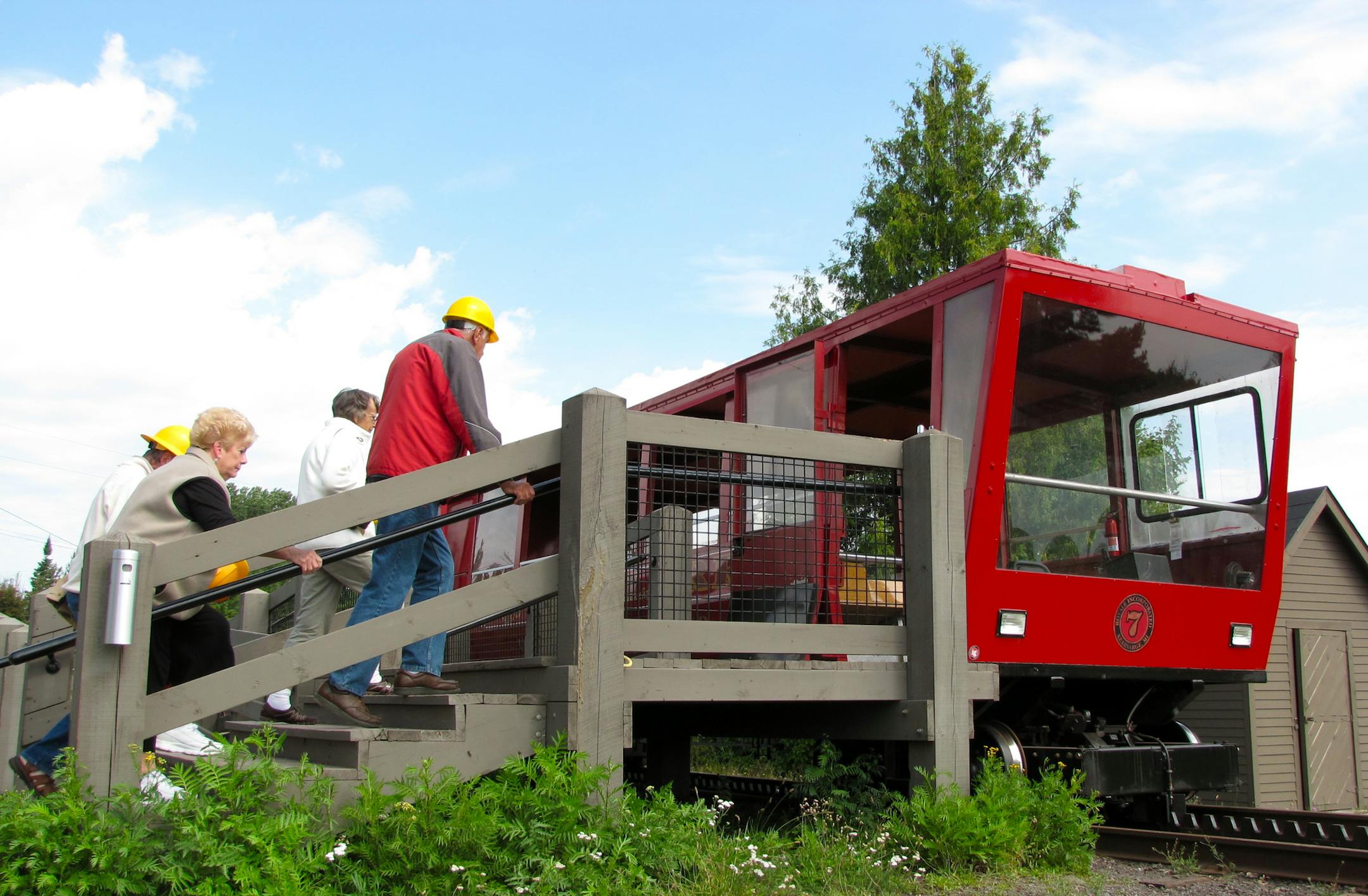
As gears shifted and the red cogwheel tram began descending a hill above Houghton, Mich., I felt a little like I was in a Swiss mountain town. While there were no mountains in sight, the Keweenaw Waterway ambled below, spanned by a bridge that connects Houghton (pop. 7,650) with the outdoorsy tip of the Keweenaw Peninsula, a 150-mile thumb of land hooking into Lake Superior.
My mom, Lyn, and I carefully turned our heads toward the view, careful not to dislodge our hard hats. We could imagine the valley ablaze in autumn gold and bronze. On such a beautiful and Superior-crisp day it seemed almost a shame to shrug into well-worn heavy coats for our destination: a damp, dark mining shaft at the historic Quincy Mine.
To fully appreciate the Keweenaw Peninsula — even if you're heading here solely for mountain biking, hiking or paddling among its small coastal towns — you have to acknowledge its mining legacy, with Houghton marking the gateway to Copper Country.
Like Minnesota's Iron Range, the Keweenaw Peninsula boomed in the late 1800s and early 1900s, humming with wealth, attracting a rich stew of Old World cultures and leaving a legacy of past prosperity.
While Quincy Mine tours offer a gritty glimpse at life underground and at engineering marvels (it boasts the world's largest steam-powered hoist), it's more fun to admire the discoveries at one of the nation's top rock and mineral museums.
A.E. Seaman Mineral Museum: This museum grabs visitors' attention quickly with its 850-pound chunk of copper and smaller delicate copper formations that twist and branch out like coral and miniature sculptures.
"This is natural art," says museum director Ted Bornhorst.
Glass cases glitter and glow with radiant colors and shapes that range from precisely cubed or spiky to polished or bubbly. Flashy fire opals, the sparkle of a 5-foot-tall amethyst and a dark room that shows off fluorescent rocks pull people down the aisles.


