

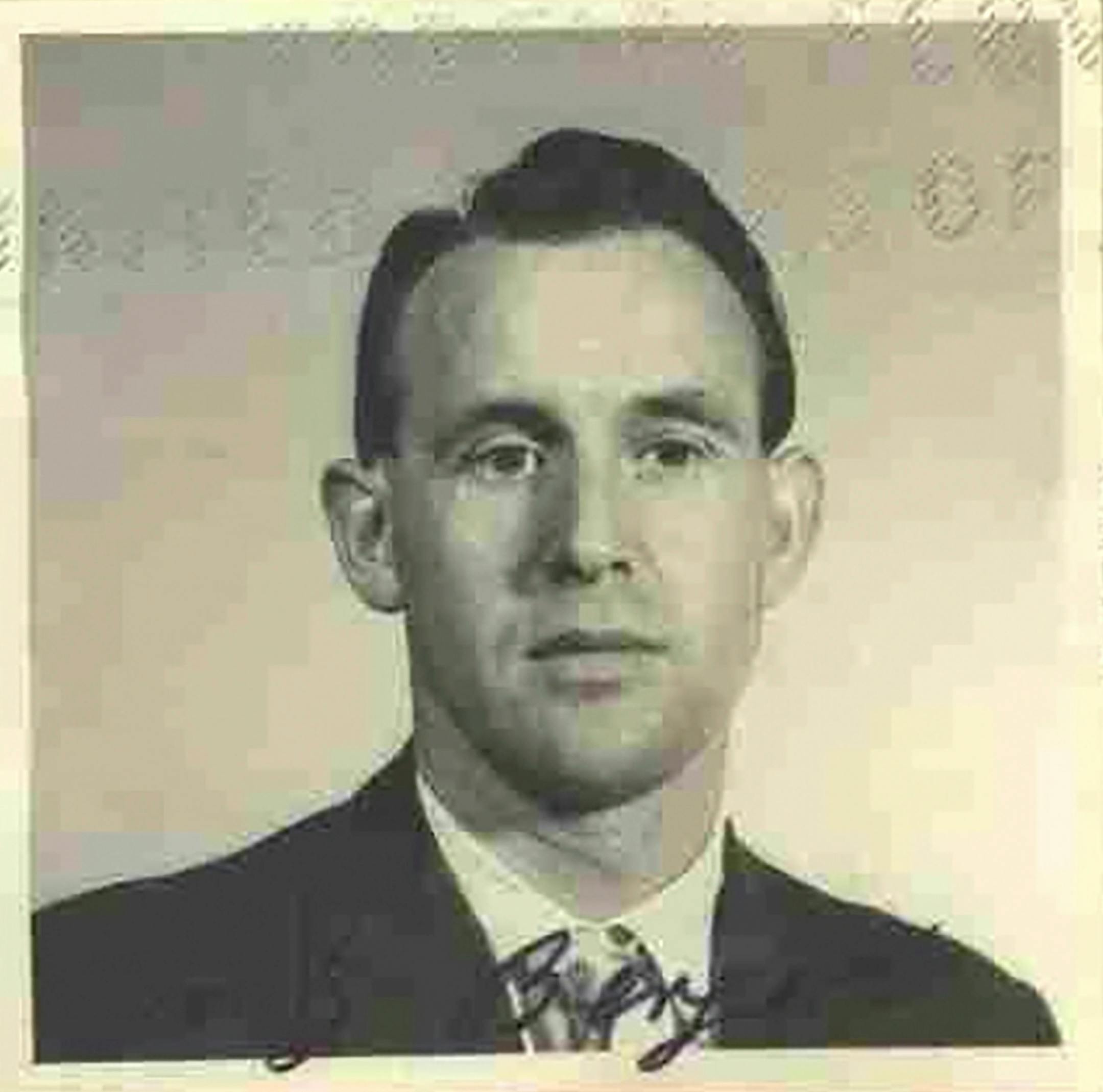
NASHVILLE — Two weeks ago, the U.S. government deported Friedrich Karl Berger, a longtime resident of Oak Ridge, Tenn., for participating in Nazi war crimes. Berger was returned to Germany, where authorities have declined to press charges of their own. He had lived in the United States since 1959.
The crime for which he was deported took place in the winter of 1945, during the last months of World War II, when Berger was 19 years old. According to the Justice Department, he was an armed guard at a satellite site of Neuengamme, a concentration camp near Meppen. His assignment was to supervise the prisoners digging armored trenches in deadly winter weather. When the Nazis were forced to withdraw, he guarded the surviving prisoners on a nearly two-week march back to the main camp. The evacuation alone killed some 70 people.
At his trial last year, Berger acknowledged working as a security guard at the subcamp. But he denied guarding the evacuation march, denied witnessing any mistreatment of prisoners, denied knowing of any deaths at the camps themselves. Nevertheless, a federal immigration judge in Memphis ruled that Berger's "willing service as an armed guard of prisoners at a concentration camp where persecution took place" amounted to a war crime.
At 95, Berger has had ample time — and achieved ample maturity — to examine his own conscience and repent of his own actions, but he appears to believe he did nothing wrong. Or perhaps he only believes that actions in the distant past no longer warrant repercussion: "After 75 years, this is ridiculous. I cannot believe it," he told the Washington Post last year. "I cannot understand how this can happen in a country like this. You're forcing me out of my home."
The dark irony of such an assertion aside, I wonder if Berger simply doesn't remember what he did, either because he's blocked it out or because so much time has passed since he trudged in the snow alongside people who were dropping dead in their tracks. I once asked my great-grandmother, then in her 90s, to tell me about my great-grandfather. They were married for more than 30 years, but by then he had been dead for longer than that, and she told me she no longer remembered very much. "It's almost like it happened in a dream," she said.
Maybe that's how memory works after a long succession of quiet days in a quiet life, but how does memory work when what you've lived is more a nightmare than a dream?
Some creatures are so manifestly vulnerable that they inspire a near universal tenderness: a lost child, a bird with a broken wing, a person near death. In the presence of vulnerability, most of us instinctively stop what we are doing and try to help. What are we to make of those who don't? Of those who respond to vulnerability with indifference, or worse?
We know enough about brain development to understand that such people are often too young to recognize the true import of what they are seeing or doing. Until 2005, this country allowed even juvenile offenders to be executed, though our laws don't treat juveniles as adults in other respects. Teenagers are neurological works in progress. They have not yet developed the full capacity for moral reasoning, for impulse control, for understanding the long-term implications of their behavior.


