

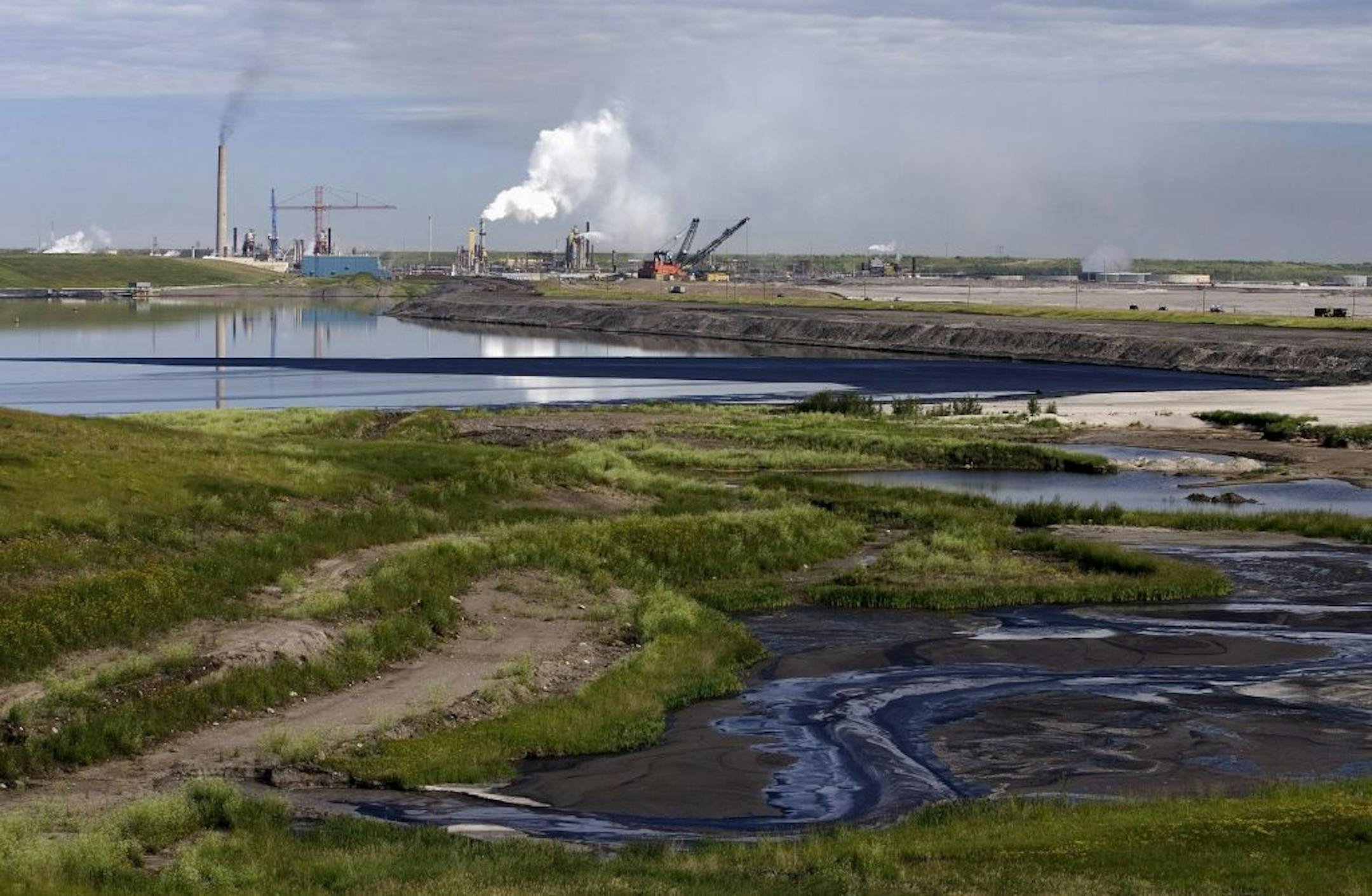
FORT McMURRAY, ALBERTA - Decades of open-pit mining have scarred northern Canada's forested landscape with massive, toxic ponds that are an eyesore for the oil industry and a flash point for environmentalists.
Now, facing a backlash, oil companies are combining forces to jointly develop technology for cleaning up the wet tailings -- a porridge of water, hydrocarbons, sand and clay left behind when a tar-like hydrocarbon called bitumen is extracted from mined oil sands.
The group effort is unprecedented among companies that pride themselves on guarding any information that might give competitors an edge.
"I can't think of any other collaboration of this magnitude, of this nature -- anywhere," said Eddie Lui, a 30-year industry veteran and the vice president of oil sands research and development at Alberta-based Imperial Oil, which is majority owned by Exxon Mobil Corp.
Imperial Oil and six other companies spent more than a year negotiating the details of their plan to join forces before agreeing last spring to create the Oil Sands Tailings Consortium. Under the final deal, they will pitch in money and research over the next five years -- even though it means sharing potentially lucrative intellectual property.
"We were very uncomfortable initially," Lui said of the discussions. "I wasn't too sure we were ever going to get there."
The collaboration already is spurring breakthroughs that could eliminate the need for more tailings ponds and speed up retirement of existing ones.
Separately, Houston-based ConocoPhillips has joined another oil company alliance that is focusing on reducing the environmental effects of methods for extracting bitumen deep underground without mining the sand that contains it.



