
Japan's pandemic policy: Wringing of hands followed by counting of money

A cauldron of inconsistent rules and policies makes no sense. At the top of the list is letting unvaccinated athletes from all over the world into japan.

July 22, 2021 at 12:09PM
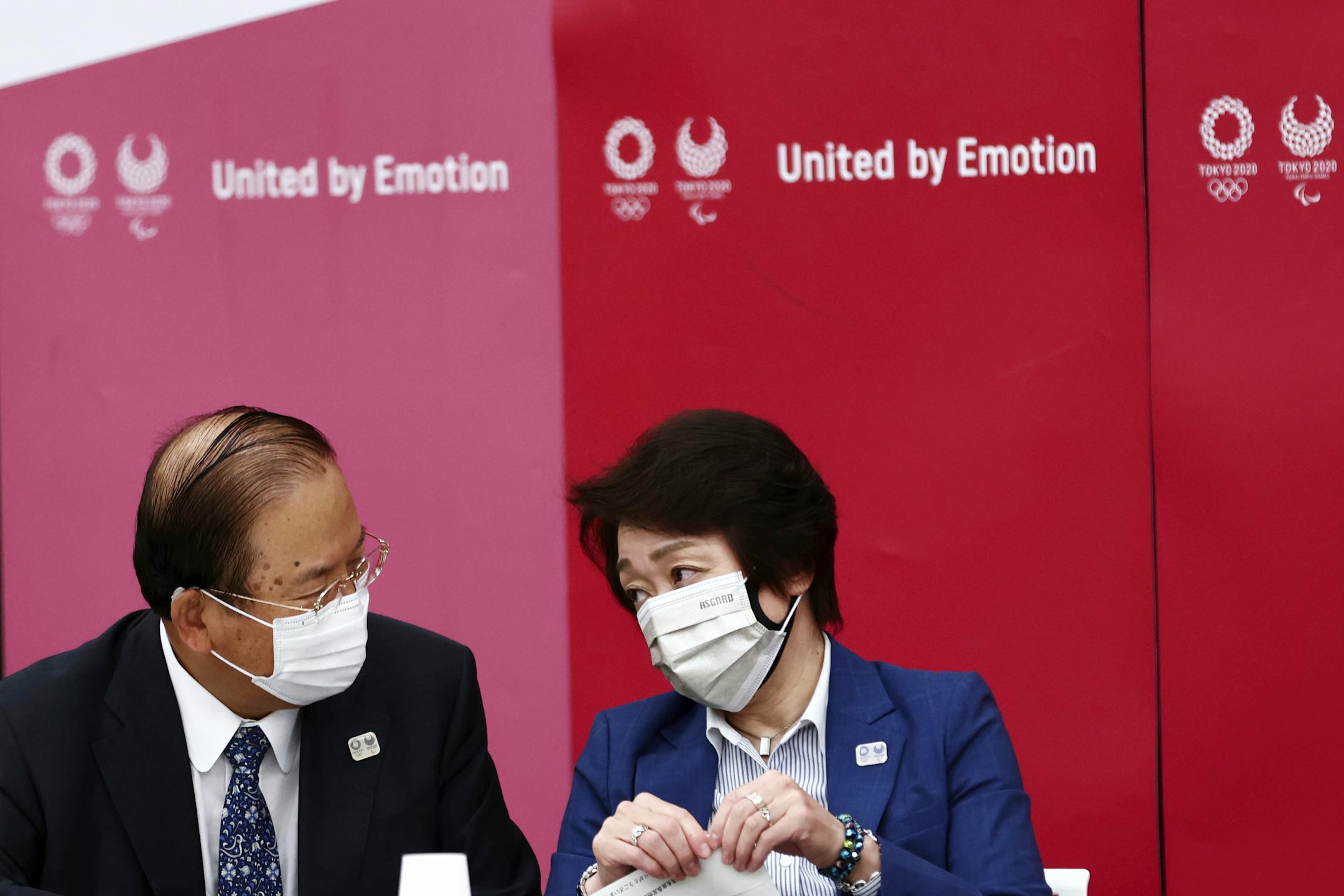
Tokyo 2020 leaders Toshiro Muto, left, and Seiko Hashimoto had tough decisions to make, and so far those their scorecards don’t look so good. (Behrouz Mehri, Associated Press/The Minnesota Star Tribune)

TOKYO — The United States Olympic & Paralympic Committee announced Wednesday that basketball player Sue Bird and baseball player Eddy Alvarez will be the United States' flagbearers during the Opening Ceremony, shortly after the International Olympic Committee announced that the official flag of the Tokyo Olympics just might be all white.

On Wednesday night in Tokyo, Toshiro Muto, the head of the Tokyo 2020 organizing committee, said that the Games could be canceled if athletes continue to test positive for COVID-19. Muto said this in the wake of a number of prime sponsors, including Japanese auto manufacturer Toyota, pulling their advertisements from the Games.

Through Tuesday in Tokyo, with the Opening Ceremony scheduled for Friday, there reportedly had been more than 90 cases of COVID since July 1 among accredited people who had arrived in Japan.

Japan's vaccination rates among its citizens are low compared to most developed countries, and various polls have shown Japanese citizens are against hosting the Olympics during a pandemic.

On Tuesday, the Japanese Ministry of Health reported 3,743 new cases in the country, 1,425 more than the previous day, according to the BBC.

So the Olympics find themselves where most major American sports found themselves over the past year and a half, knowing that the safest decision they could make would be canceling everything, but that there may be ways to mitigate risk and let the Games begin.

Major League Baseball survived COVID breakouts early in its season, finished its abbreviated regular season and imposed a bubble for the postseason. The WNBA and NHL played in bubbles in 2020 and thrived, and had no major problems playing without bubbles in the following season. The NFL played largely without fans or a bubble and survived. (This is a pandemic-era version of "survived"; we don't know if any athletes will experience long-term problems caused by COVID while playing a season.)

It's hard to know now what Muto and his fellow decision-makers should do.

ADVERTISEMENT

What is clear now is what they should have done weeks ago: require that everyone entering Japan, including athletes, be vaccinated. While the IOC organized a vaccination program for athletes and officials going to the Olympics, officials also needed to make a dramatic change of protocol and tell unvaccinated athletes to get the shot or don't come.

If everyone competing would have been vaccinated, the risks here would be minimal. But now, as the Olympic cauldron is about to be lit, the primary risk of these Games — inviting people into your country from all over the globe — has already been taken.

Muto is a renowned business leader and this smacks of political posturing. He can bemoan the positive tests among athletes, commiserate with the citizenry, then, later in the week, throw his hands up and say that stopping the Olympics at this point would be difficult as stopping a runaway train.

There are billions of dollars on the line. Just about everyone and everything is already in place. The penalties for testing positive are already in place: if you're an athlete, you don't get to compete, and if you're a visitor, you would have to quarantine for two weeks.

Japan's handling of this continues to puzzle.

Athletes don't need to be vaccinated? That makes no sense.

Neither does this: Wednesday night, we got off the bus in front of our hotel in Tokyo. We were all vaccinated and wearing masks, and have had our saliva and temperatures checked. We were required to go directly into the hotel and to our rooms.

We are allowed to leave the hotel if we sign out and return within 15 minutes. We are not allowed in the hotel restaurant until Saturday.

As we obeyed these many rules, there was a party going on about 20 paces away at a rowdy bar. You could see bottles of beer and smell food. A couple dozen people (most of them white) were drinking, yelling, toasting, having a good, loud time.

They were not wearing masks or practicing social distancing, and no one was making them.

Japan's new policy seems to be wringing hands before counting money.

To alter a golf adage: Worry for show, proceed for dough.

about the writer

about the writer

Jim Souhan

Columnist

Jim Souhan is a sports columnist for the Minnesota Star Tribune. He has worked at the paper since 1990, previously covering the Twins and Vikings.

See Moreicon

More from Olympics

See More
card image
Luca Bruno/The Associated Press

An opening ceremony stretching across northern Italy officially kicked off 2026 Winter Olympics on Friday.

card image
card image